15 Best Dropshipping Clothing Suppliers in 2026: Compared by QC, Custom Branding & Shipping Speed
Compare 15 clothing suppliers and platforms by apparel quality control, custom labels, fulfillment models, shipping options, and costs to find the right fit for your store.


Match the supplier model to your business: integrated sourcing and fulfillment, domestic apparel wholesale, print-on-demand, and supplier marketplaces solve different needs.
Define garment inspection standards for measurements, color, workmanship, and SKU accuracy. Approve samples and confirm how repeat orders will be checked.
Verify branding support product by product, including hangtags, neck labels, logo application, and packaging. Confirm material MOQs, application fees, and required labeling information.
Compare total order costs, not just garment prices. Include inspection, handling, packaging, shipping, applicable import charges, and expected after-sales costs.
Separate sourcing and production time from processing and transit. Confirm the exact stock location, shipping route, destination, and conditions behind delivery estimates.
Test samples and real shipments before scaling, and reconfirm inventory commitments, integration support, and claim procedures as your requirements change.
Selling apparel online is rarely a traffic problem—it is almost always a margin retention problem caused by backend fulfillment failures. Many fashion stores scale ad spend on winning styles only to watch net profits vanish into return shipping and customer refunds.
A single garment style often spans dozens of color and size variants, where manual warehouse picking leads to frequent mis-shipments and missing items. Worse yet, shipping uninspected wholesale stock directly from market stalls exposes buyers to color discrepancies, sizing deviations, loose threads, and generic polybags with Chinese factory tags still attached.
Choosing a supplier for fashion is not about installing another product-importing plugin; it is about locking in a dedicated apparel fulfillment workflow that enforces item-by-item quality control, slashes volumetric shipping weight, and executes private-label branding under one roof.
Quick Comparison of the 15 Best Dropshipping Clothing Suppliers (2026)
Before diving into individual reviews, use the comparison matrix below to filter out platforms that do not match your current order volume, branding requirements, or target markets.
Note: Third-party platform subscription fees and delivery estimates reflect 2026 public baseline plans and are subject to real-time updates on each provider's official website.
The 4 Core Types of Apparel Dropshipping Suppliers (Which One Fits You?)
Many fashion stores stall out because they use a beginner product-testing tool to run a scaling brand. The 15 suppliers above operate on four fundamentally different supply chain models, each dictating your gross margin, return rate ceiling, and ability to survive a viral traffic spike:
Type 1: End-to-End Sourcing & 3PL Fulfillment Partners (e.g., FFOrder, CJdropshipping)
Instead of acting as a passive software directory, an end-to-end partner connects sourcing, production, QC, warehousing, order fulfillment, global shipping, and after-sales support through a single operating team. Taking FFOrder as the benchmark, a unified operations team coordinates factory sourcing, production scheduling, warehouse management, order execution, and global delivery—transforming a fragmented supply chain into a stable, visible, and scalable delivery system.
Why scaling fashion brands migrate here: Apparel is a high-SKU, high-return category. An integrated partner holds controlling interests in core apparel factories and partners with 40,000+ factories to secure fabric consistency and production capacity. Inside the warehouse, dedicated teams execute 100% inbound apparel inspection (checking color, size, and workmanship item by item with traceable records), label cutting/debranding, custom hangtag attachment, size label replacement, custom logo sewing, and vacuum compression that shrinks parcel volume by 60%+.
Seamless stage progression: You can start with a zero-inventory dropshipping fulfillment service for 1688 off-the-shelf items (free quoting, 72-hour warehouse arrival, free storage), upgrade winning styles to Product Sourcing for OEM/ODM customization (>95% custom product fidelity), or ship self-owned factory stock into 3PL warehousing (private inventory, regular stock counts, 98% 24-hour dispatch rate for in-stock items).
Type 2: US & EU Domestic Fast-Fashion Wholesalers (e.g., Trendsi, My Online Fashion Store, BrandsGateway)
These suppliers pre-stock ready-made garments in US (typically Los Angeles) or European warehouses for domestic dispatch.
Pros & Trade-offs: Domestic shipping is fast (2–7 business days), and sizing generally follows Western retail standards. However, middleman markups are steep, catalog overlap across competing Shopify stores is high, and category coverage is narrow (Trendsi and MOFS focus almost exclusively on women's wear, while BrandsGateway charges €279/month for luxury resale). Most importantly, you are reselling fixed stock—you cannot alter garment patterns, upgrade fabric weight, or remove original brand tags on most items.
Type 3: Print-on-Demand (POD) & White-Label Streetwear Platforms (e.g., Printful, Printify, Apliiq, Gelato)
POD platforms hold blank basics (T-shirts, hoodies, joggers) and print or embroider your artwork only after a customer places an order.
Pros & Trade-offs: Zero inventory risk makes POD ideal for testing graphic designs, creator merch, or streetwear logos. Yet standalone POD platforms suffer from exorbitant unit costs ($20–$35+ per landed hoodie) that leave razor-thin margins for paid acquisition, and your silhouettes are restricted to generic wholesale blanks. (Tip: Full-stack partners like FFOrder also support zero-MOQ white-label POD production, while allowing you to transition proven graphic hits directly into OEM/ODM bulk production at controlled apparel factories to reclaim your margins.)
Type 4: Open Marketplaces & Directory Aggregators (e.g., AliExpress + DSers, Spocket, Syncee, Modalyst)
These platforms are software bridges or open bazaar directories; they do not own warehouses, inspect garments, or touch physical inventory.
Pros & Trade-offs: They offer the lowest barrier to entry for importing hundreds of listings on day one. However, once orders start flowing, uncoordinated fulfillment exposes sellers to four compounding operational failures—product selection & quoting, sampling & quality, inventory & fulfillment, and multi-SKU lead times—driving up landed costs, delaying delivery, triggering customer complaints, and destroying repeat purchases.
In-Depth Reviews of the 15 Best Dropshipping Clothing Suppliers (2026)
Tier 1: End-to-End Sourcing & 3PL Fulfillment Partners
FFOrder — Best Overall for 100% Inbound Apparel QC, Debranding & Factory-Direct Scaling
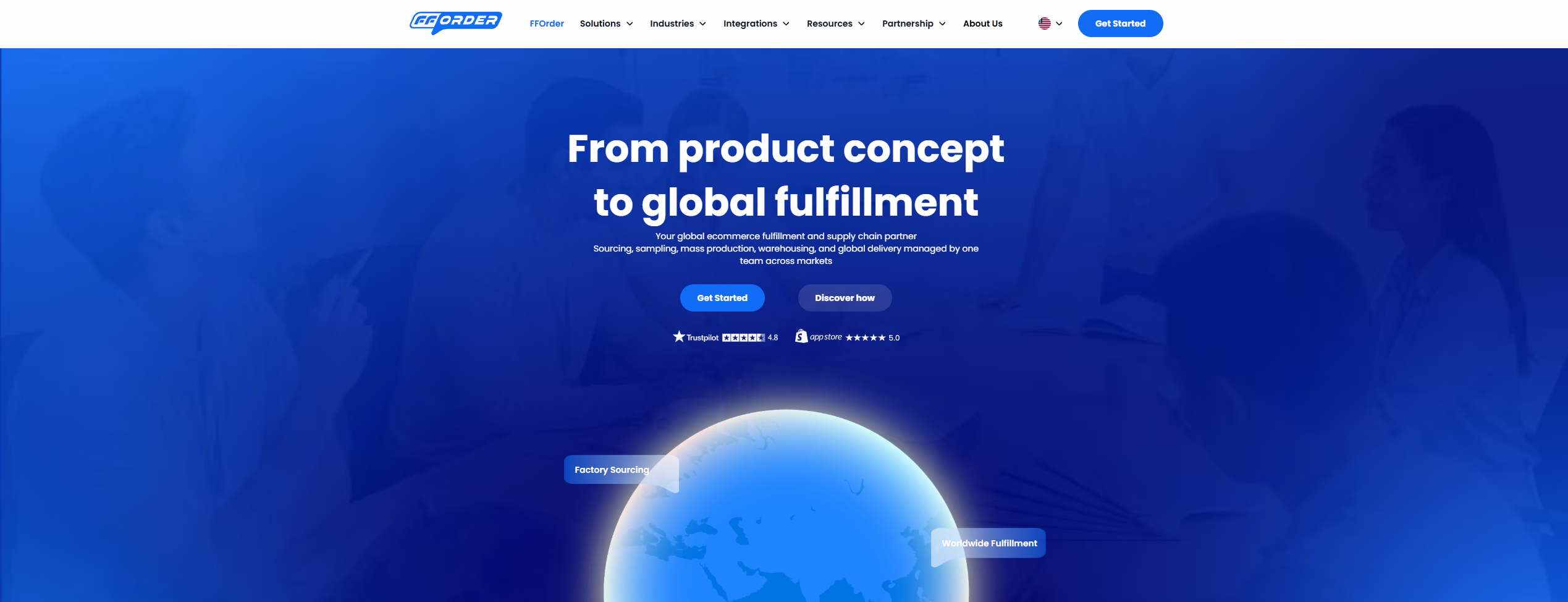
Target Customer Profile: Global cross-border ecommerce sellers sourcing from China—including Shopify and DTC brands, Amazon and TikTok Shop sellers, and independent online stores—ranging from zero-inventory starters to brands requiring 100% apparel QC, debranding, and OEM/ODM production.
Inventory & MOQ Model: Flexible progression across Dropshipping (zero inventory pressure, small-batch start on 1688 off-the-shelf goods), Product Sourcing (low-MOQ sampling and OEM/ODM/POD mass production), and 3PL Fulfillment (private inventory management for self-owned factory stock).
Key Commitments: 100% inbound apparel inspection | Vacuum compression with 60%+ volume reduction | Free quoting, 72-hour warehouse arrival & free storage for dropshipping | >95% custom product fidelity & 0-to-1 product breakdown | 98% 24-hour dispatch rate for in-stock items | 100% custom packaging labeling accuracy.
Supported Platforms: 100% open and free pre-built integrations with Shopify, WooCommerce, TikTok Shop, Amazon, Wix, Squarespace, PrestaShop, Shopline, OpenCart, Shopee, eBay, Etsy, and Latin American storefronts Yampi and Nuvemshop; enterprise clients can also engage FFOrder's 28-person engineering team for dedicated API and custom workflow technical feasibility assessments.
In-Depth Operational Breakdown: Founded in 2017 with over 9 years of ecommerce operations experience, FFOrder has served 100,000+ global cross-border sellers across Europe, North America, Australia, Latin America, and Southeast Asia. Rather than leaving you to juggle fragmented vendors, FFOrder acts as one operating partner connecting sourcing, production, QC, warehousing, order fulfillment, global shipping, and after-sales support. On the supply side, its 25-person professional sourcing team processes 2,000 SKU sourcing requests daily, backed by a 670,000+ core SKU library, 1.7M+ in-stock products (1.74M total inventory units), and 40,000+ partner factories. Crucially, FFOrder holds controlling interests in core factories across apparel, consumer electronics, health & beauty, and outdoor categories—giving apparel sellers direct leverage over fabric batches, production lead times, and unit costs.
For high-SKU fashion catalogs spanning T-shirts, hoodies, shirts, dresses, pants, outerwear, and activewear, FFOrder executes a specialized three-pillar apparel workflow:
- 100% Inbound Full Inspection & Automated Multi-SKU Sorting: Every garment arriving at the warehouse undergoes 100% item-by-item inspection across color, size, and workmanship standards, with fully traceable QC records to intercept defects before storage. Combined with 60% warehouse automation and deep multi-variant inventory management, FFOrder achieves near 100% dispatch accuracy and a 98% 24-hour dispatch rate for in-stock items.
- In-Warehouse Debranding & End-to-End Custom Packaging: Warehouse teams perform label cutting/debranding, hangtag attachment, size label replacement, and custom logo sewing. Through FFOrder's custom packaging solutions, brands can layer on 30+ packaging value-added services—including gift boxes, drawer boxes, rigid lid-and-base boxes, poly mailers, product bags, custom tape, and thank-you cards—backed by pre-production artwork verification, 100% labeling accuracy, and small-batch trial orders managed by one team from sampling to per-order assembly.
- 60%+ Vacuum Compression & Duty-Free Apparel Logistics: Bulky hoodies, sweaters, and jackets are vacuum-compressed in-house to shrink parcel volume by 60%+, slashing dimensional shipping costs. Orders ship from a 3-warehouse network totaling 17,000㎡—comprising the 10,000㎡ Dongguan/Shenzhen Port-side Warehouse (in operation, adjacent to Hong Kong), 1,000㎡ Zhengzhou Central Warehouse (in operation), and 6,000㎡ Yiwu East China Warehouse (under construction)—with a daily capacity of 50,000 orders (expanding to 65,000). Across 100+ global routes, FFOrder maintains a 99.8% delivery success rate within 7–15 days (7–9 business days to EU/US; 15–20 business days to Brazil, subject to specific routes) and offers a duty-free U.S. apparel shipping line via its VIP logistics network to protect margins against U.S. tariff shifts.
When you are ready to develop proprietary styles, FFOrder's product sourcing and OEM/ODM solutions support both zero-MOQ white-label POD and custom OEM/ODM production (>95% custom fidelity and accurate 0-to-1 product breakdown), alongside optional third-party on-site factory QC billed transparently by actual service days. Every client is supported by 100+ VIP account managers, 24/7 live human customer service, and clear after-sales policies (refunds for quality issues and reshipments for logistics issues), earning a 5.0 rating on the Shopify App Store (257–258 reviews) and 4.8 on Trustpilot (ratings update dynamically; refer to platforms for latest display).
Real Apparel Proof: How Two Fashion Brands Scaled with FFOrder
Case 1: Brazil Yoga Apparel DTC Brand (50% Lower Customization Cost)
Before: A Brazilian DTC activewear seller wanted to transition from reselling generic stock to building a proprietary brand, but faced inconsistent colors and workmanship, no stable special-process factory, high MOQs, expensive custom packaging, and inflexible inventory.
FFOrder Solution & Results: FFOrder matched the brand with verified factories by color and workmanship standards, secured a dedicated special-process production line, lowered MOQs, cut customization costs by 50%, and implemented a hybrid "partial dispatch + partial stocking" model—enabling the successful launch of 7 custom yoga set collections.
Case 2: São Paulo Apparel Brand on the Brazil DDP Route (<2% Customs Holds)
Results: By deploying customized clearance solutions and dedicated Brazil routing, the brand compressed its catalog launch cycle from 45 days to 21 days, reduced customs holds from 18% to under 2%, and drove a +47% increase in 90-day repeat orders.
Pros:
- Holds controlling interest in core apparel factories and bridges 1688 dropshipping, white-label POD, OEM/ODM sourcing, and 3PL under one roof.
- Enforces 100% inbound apparel QC, full debranding/relabeling, and 60%+ vacuum compression.
- Supported by China hubs (Guangzhou, Chengdu, Hangzhou, Zhengzhou), local teams in Brazil and Vietnam, and regional staff in Germany and Australia.
CJdropshipping — Best for Multi-Category General Stores Testing Apparel
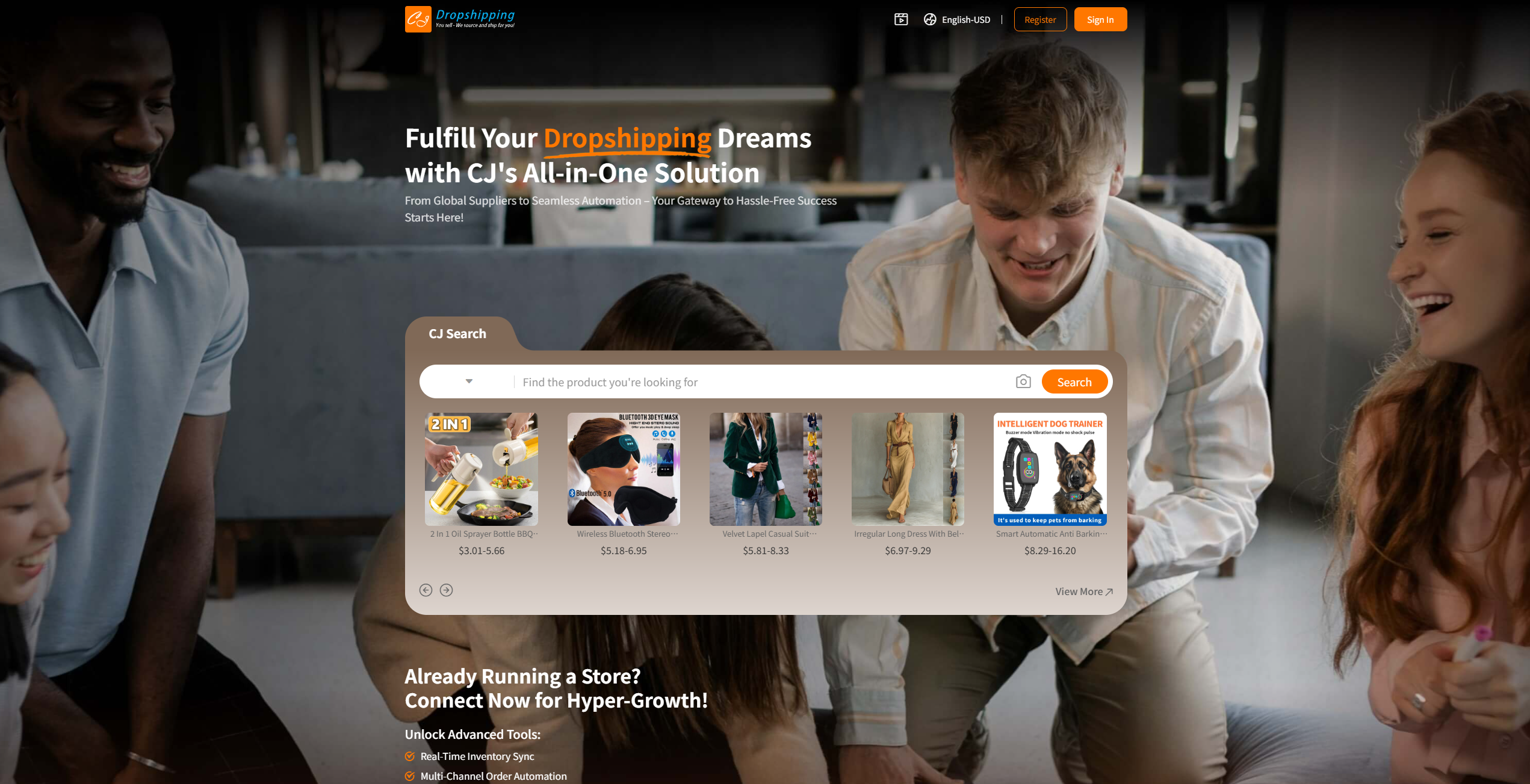
Target Customer Profile: General dropshippers testing clothing alongside home goods, gadgets, and accessories.
Inventory & MOQ Model: Zero-inventory off-the-shelf dropshipping; custom packaging and hangtags require pre-purchasing materials into CJ's warehouse.
Key Commitments: Large self-serve product catalog, pay-per-order fulfillment, and basic POD/custom packaging options.
Supported Platforms: Shopify, WooCommerce, TikTok Shop, eBay, Etsy.
In-Depth Operational Breakdown:
CJdropshipping is a widely used all-in-one dropshipping platform that lets beginners import products directly without browsing 1688 in Chinese. While it offers US/EU warehouse options and paid custom polybags, its warehouse operations are built for general merchandise rather than specialized fashion QC. Standard inbound workflows rely on spot checks rather than item-by-item 100% garment sizing and color verification, and vacuum compression is not applied by default.
Pros: Huge built-in product marketplace, automated order sync, and no mandatory monthly subscription fee.
Keep in Mind: Lacks controlling ownership in apparel factories and standardized 100% garment measurement checks, which can lead to batch-to-batch sizing variance when scaling a winning style.
EPROLO — Best for Low-Barrier Basic Label Swaps on Starter Stores
Target Customer Profile: Small fashion stores moving from unbranded dropshipping to basic hangtag and neck label attachment.
Inventory & MOQ Model: Zero-inventory dropshipping; light private-label hangtags and sewn labels carry small material MOQs (typically 50–100 units).
Key Commitments: Free platform access and entry-level branding services for hangtags and polybags.
Supported Platforms: Shopify, WooCommerce, Shoplazza, eBay.
In-Depth Operational Breakdown:
EPROLO caters to early-stage apparel sellers who want to add a custom hangtag or basic sewn label onto existing wholesale garments without committing to full OEM production. However, because its catalog relies heavily on open-market commodity stock, it lacks deep 0-to-1 pattern breakdown, specialized fabric production lines, or dedicated on-site factory QC for complex garments.
Pros: Free software integration, low MOQs for basic hangtags, beginner-friendly dashboard.
Keep in Mind: Limited OEM/ODM pattern development capabilities and less control over garment cut consistency across restocks.
Tier 2: US & EU Domestic Fast-Fashion & Boutique Wholesalers
Trendsi — Best for US-Focused Women's Fast Fashion & Plus-Size Boutiques
Target Customer Profile: US-targeted Shopify and TikTok Live boutiques selling women's fast fashion.
Inventory & MOQ Model: Zero-inventory dropshipping and low-MOQ open-pack wholesale.
Key Commitments: 2–5 business day delivery from its Los Angeles warehouse, licensed model photography, and a 7-day free return policy for eligible US orders.
Supported Platforms: Shopify, TikTok Shop, CommentSold.
In-Depth Operational Breakdown:
Trendsi solves two major headaches for US women's boutique owners: fast domestic shipping from California and ready-to-use Western model photography with accurate garment measurements. However, its catalog is almost exclusively limited to women's apparel, wholesale unit prices include a domestic middleman markup, and hundreds of US boutiques list the exact same seasonal items simultaneously.
Pros: Fast US domestic delivery, US return address support, high-quality model imagery included.
Keep in Mind: Restricted to women's fashion, lower gross margins due to wholesale markups, and no custom pattern or fabric modifications.
My Online Fashion Store (MOFS) — Best for Ready-Made US Casual Women's Catalogs
Target Customer Profile: Small North American online boutiques looking for a plug-and-play Los Angeles women's wear catalog.
Inventory & MOQ Model: Zero-inventory dropshipping gated behind a mandatory monthly subscription.
Key Commitments: 100% dispatch from Los Angeles, free return processing, and ~5,000+ women's apparel and accessory SKUs.
Supported Platforms: Shopify, Wix, WooCommerce, CommerceHQ.
In-Depth Operational Breakdown:
Operating as the dropshipping arm of CCWholesaleClothing, MOFS ships women's styles out of Los Angeles within 5–7 business days. The major drawback for brand builders is that MOFS does not offer debranding, size label replacement, or custom packaging—orders arrive in the wholesaler's standard packaging with third-party brand tags intact.
Pros: Reliable California dispatch and straightforward US domestic returns.
Keep in Mind: Zero private-label or debranding capabilities, women's wear only, and charges a recurring $29/month fee after a 14-day trial.
BrandsGateway — Best for High-Ticket European Designer & Luxury Fashion
Target Customer Profile: Well-capitalized luxury fashion retailers with established high-net-worth traffic channels.
Inventory & MOQ Model: Zero-inventory dropshipping with a high monthly/annual subscription barrier.
Key Commitments: Authentic off-season inventory from 100+ luxury labels (Dolce & Gabbana, Gucci, Michael Kors) shipped via DHL/FedEx in 3–7 business days.
Supported Platforms: Shopify, WooCommerce, Wix, Shift4Shop.
In-Depth Operational Breakdown:
BrandsGateway connects stores to authorized European and US designer inventory, offering high per-order dollar margins. However, at €279/month (€197/month billed annually), the fixed software overhead is steep, and you operate strictly as a third-partyauthorized reseller—meaning you cannot alter labels or build a proprietary DTC clothing brand.
Pros: 100% authentic luxury designer goods, high average order value (AOV), fast global express shipping.
Keep in Mind: Expensive €279/month subscription fee and high reverse-logistics exposure on international luxury returns.
FashionTIY — Best for Budget Fast-Fashion & Accessory Multi-Category Stores
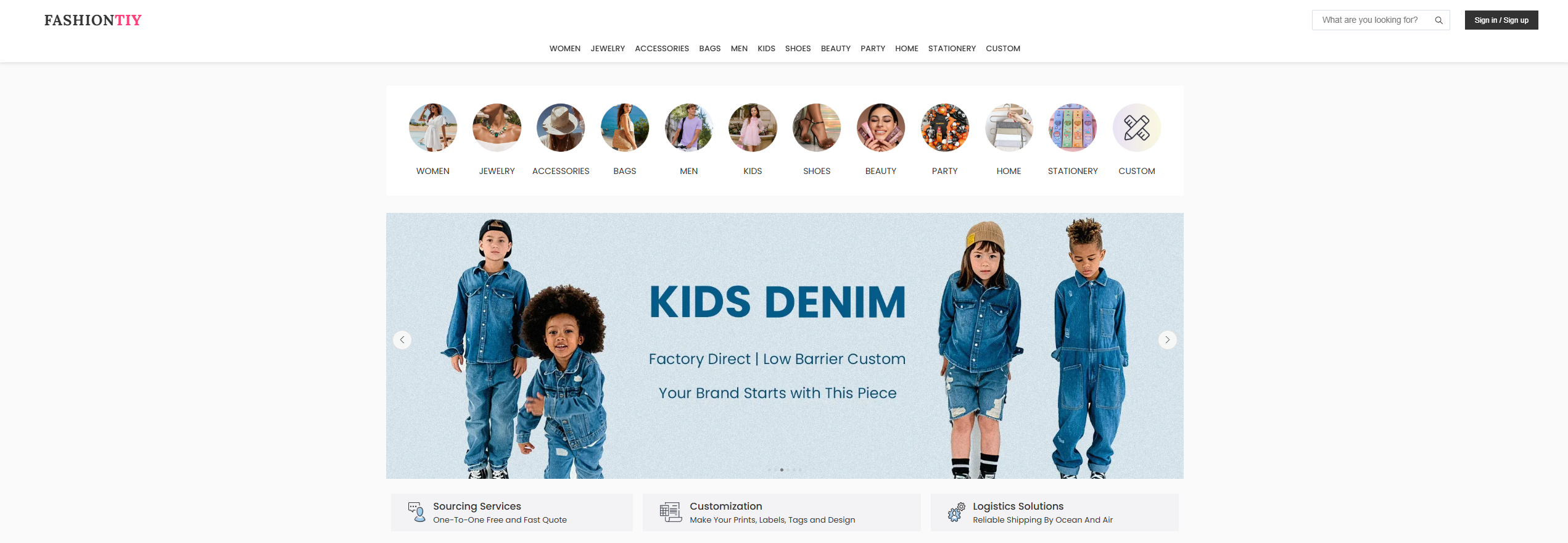
Target Customer Profile: Price-driven stores selling budget men's, women's, and kids' clothing alongside shoes and jewelry.
Inventory & MOQ Model: No-MOQ dropshipping and small-batch mixed wholesale.
Key Commitments: No monthly platform fee, low factory-direct wholesale pricing, and consolidated single-parcel shipping.
Supported Platforms: Shopify integration and bulk CSV order uploads.
In-Depth Operational Breakdown:
FashionTIY aggregates budget apparel and accessories from small Chinese workshops into a single English wholesale portal without charging monthly software fees. While paid tag swaps are available upon request, garment fabrics and cuts lean toward entry-level commodity stock, and economy shipping takes 10–20 days.
Pros: Low unit product cost, broad category mix, zero monthly membership fees.
Keep in Mind: Commodity-grade garment quality unsuitable for premium DTC positioning; slow economy shipping times.
Tier 3: Print-on-Demand (POD) & Streetwear Platforms
Apliiq — Best for US Streetwear Brands Needing Woven Labels & Cut-and-Sew Upcycling
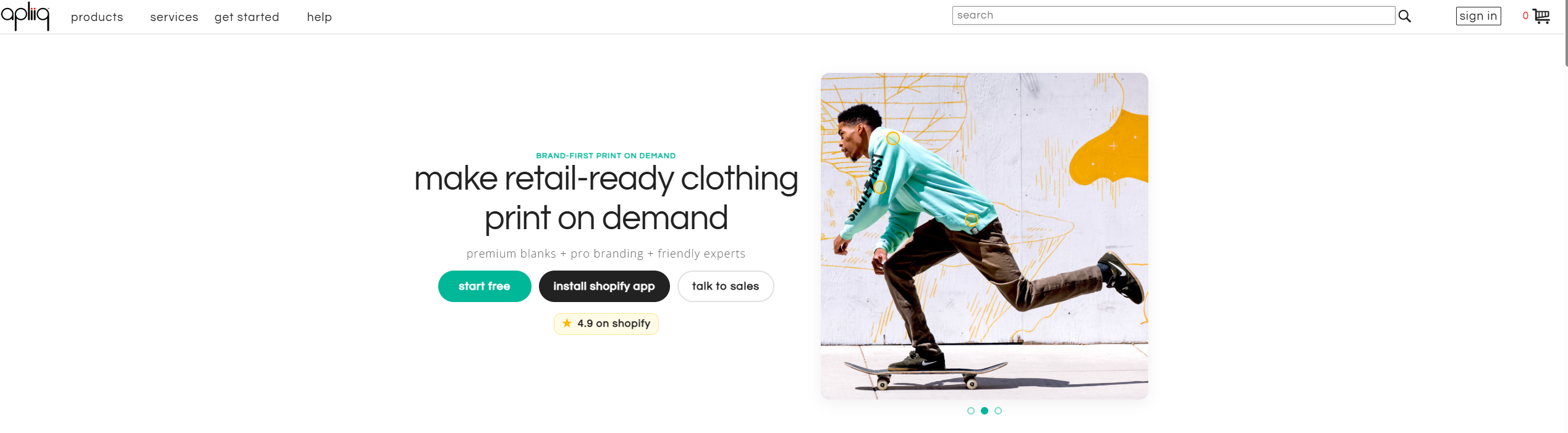
Target Customer Profile: Streetwear, skate, and lifestyle brands willing to pay premium unit costs for authentic woven neck labels and hood linings.
Inventory & MOQ Model: Single-unit POD fulfillment; custom woven labels require pre-purchasing label rolls (typically 100+ units) stored in Apliiq's US facility.
Key Commitments: Removes original blank tags and sews custom woven neck labels, hem tags, pocket tees, and custom kangaroo-pocket/hood linings in Los Angeles and Philadelphia.
Supported Platforms: Shopify, WooCommerce.
In-Depth Operational Breakdown:
Unlike standard POD platforms that only print ink inside the collar, Apliiq physically cuts off the blank manufacturer's tag and sews your woven label onto streetwear blanks. The trade-off is cost and speed: a heavy hoodie with custom embroidery and sewn labels often costs $30–$45+ per unit before ad spend, and manual sewing pushes fulfillment + shipping to 7–12 business days.
Pros: True cut-and-sew woven labels and custom hood linings for authentic streetwear presentation.
Keep in Mind: Very high unit production cost compresses profit margins; restricted to modifying existing catalog blanks rather than custom pattern making.
Printful — Best for Consistent Graphic Tees, Hoodies & Embroidered Basics
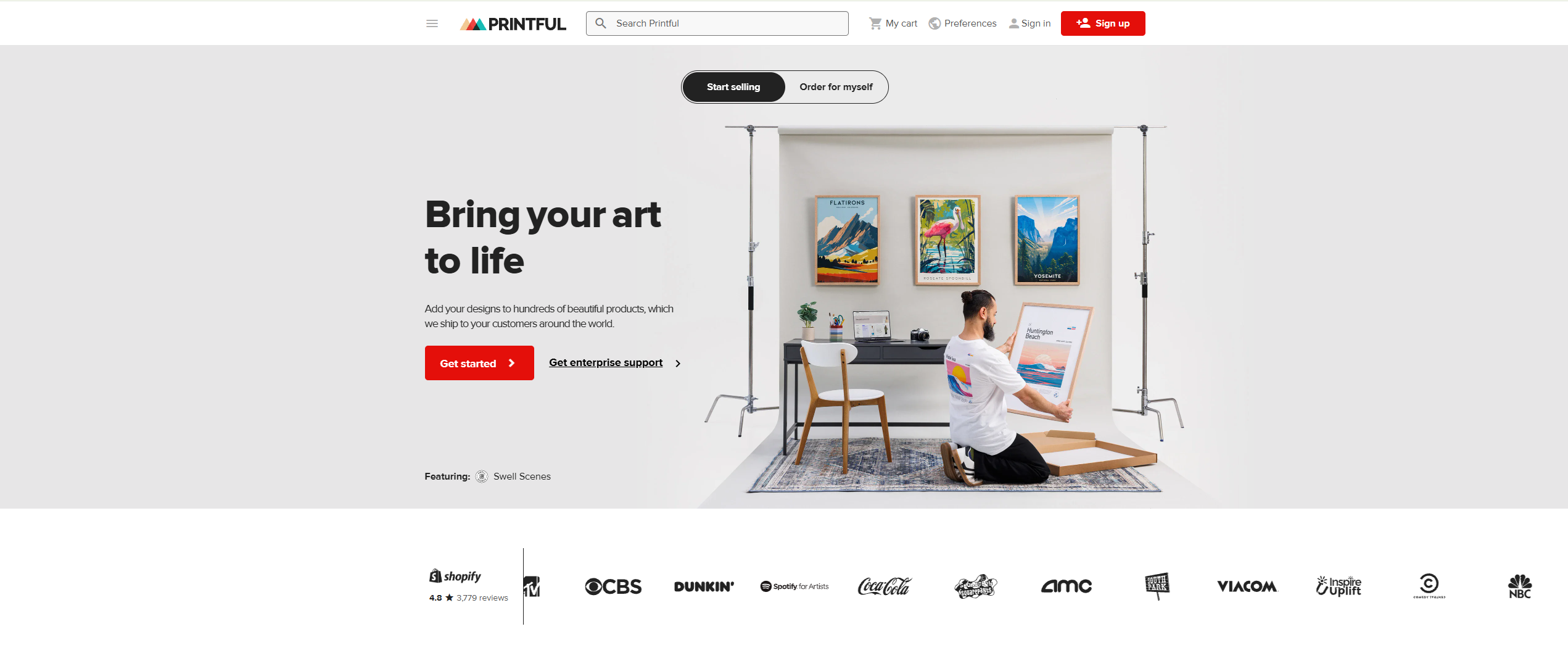
Target Customer Profile: Creators, artists, and merch stores prioritizing print durability and color accuracy on casual basics.
Inventory & MOQ Model: 100% zero-inventory on-demand printing with no MOQs.
Key Commitments: In-house global fulfillment centers, automated DTG and embroidery quality control, printed inside neck labels, and custom pack-ins.
Supported Platforms: Shopify, Etsy, WooCommerce, TikTok Shop, Amazon, Wix, Squarespace.
In-Depth Operational Breakdown:
Because Printful operates its own printing facilities across North America and Europe, its print consistency outshines outsourced POD networks. Still, Printful is a printing service, not a fashion manufacturer: you are limited to standard blanks (Gildan, Bella+Canvas, Stanley/Stella) at high unit prices, making it impossible to expand into denim, knitwear, tailored dresses, or technical activewear.
Pros: Reliable in-house print QC, industry-leading store integrations, fast local fulfillment in US/EU.
Keep in Mind: High base blank prices limit paid ad ROAS; cannot produce custom silhouettes or non-printable fashion categories.
Printify — Best for Price-Shopping Graphic Apparel Across Global Print Shops
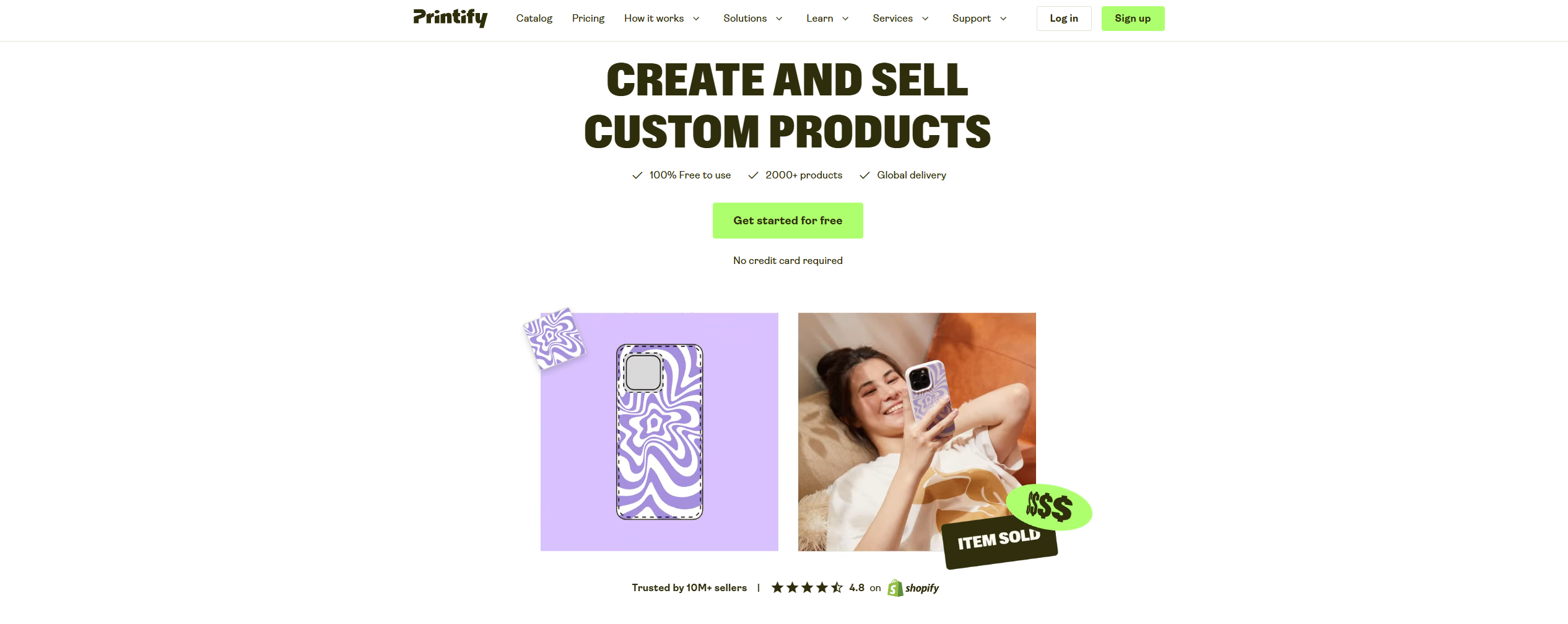
Target Customer Profile: High-volume Etsy, TikTok Shop, and Shopify POD sellers optimizing for the lowest blank tee/hoodie cost.
Inventory & MOQ Model: Zero-inventory POD.
Key Commitments: Access to 100+ global third-party print providers with transparent price/rating comparisons, plus up to 20% off blanks on the $29/month Premium plan.
Supported Platforms: Shopify, Etsy, Walmart, eBay, TikTok Shop, WooCommerce.
In-Depth Operational Breakdown:
Printify acts as a marketplace connecting your store to independent print shops worldwide, allowing you to source a Gildan tee for $2–$5 less than Printful. However, because each print provider runs its own equipment and inspection standards, print vibrancy and garment sizing can fluctuate if you switch providers, and custom hangtags or branded polybags are rarely supported.
Pros: Lowest unit blank and printing costs among major POD platforms.
Keep in Mind: Inconsistent QC across third-party print shops and minimal custom packaging or debranding options.
Gelato — Best for Localized Multi-Country POD Apparel Dispatch
Target Customer Profile: International graphic apparel stores selling simultaneously into Europe, North America, APAC, and LATAM.
Inventory & MOQ Model: Zero-inventory localized on-demand printing.
Key Commitments: Routes orders algorithmically to 140+ local print partners across 32 countries for 3–7 business day local delivery.
Supported Platforms: Shopify, Etsy, WooCommerce, Wix, Squarespace, BigCommerce.
In-Depth Operational Breakdown:
Gelato excels at geographic routing—printing a French customer's hoodie in Europe and a US customer's tee in the States to eliminate cross-border customs delays. However, Gelato's roots are in paper and wall art printing; its apparel blank catalog is narrow, and it offers virtually no garment-level branding beyond paid paper inserts.
Pros: Fast 3–7 day local production across 32 countries with low cross-border shipping fees.
Keep in Mind: Limited fashion blank selection and no sewn label, hangtag, or custom mailer support.
Tier 4: Open Marketplaces & Directory Aggregators
Spocket — Best for Browsing US/EU Third-Party Merchant Directories
Target Customer Profile: Stores willing to pay monthly software fees to import products from independent US and European vendors.
Inventory & MOQ Model: Zero-inventory dropshipping capped by subscription tier product limits.
Key Commitments: Curated directory of ~70%–80% US/EU-based independent suppliers with automated inventory sync and neutral branded invoices.
Supported Platforms: Shopify, Wix, WooCommerce, BigCommerce, Squarespace.
In-Depth Operational Breakdown:
Spocket is a software directory rather than a fulfillment operator. While it surfaces Western suppliers, you pay $39.99–$99.99/month before making a single sale, and Spocket never inspects the physical clothing—meaning fabric quality, loose threads, and dispatch speed depend entirely on each third-party merchant, with zero central debranding or vacuum-packing capabilities.
Pros: Clean UI and access to domestic US/EU niche suppliers.
Keep in Mind: High recurring software fees and no centralized warehouse QC, label removal, or consolidated multi-item packaging.
Modalyst — Best for Mixing Independent Labels with Dropship Catalogs on Wix & Shopify
Target Customer Profile: Stores curating a mix of independent Western fashion labels and general dropshipping items.
Inventory & MOQ Model: Zero-inventory dropshipping (free up to 25 products; $35–$90/month for higher limits).
Key Commitments: Automated SKU/price syncing and direct access to independent fashion brands.
Supported Platforms: Wix (owned by Wix), Shopify, BigCommerce.
In-Depth Operational Breakdown:
Owned by Wix, Modalyst lets you list established independent labels alongside global marketplace goods. In practice, independent brands typically offer only 30%–40% wholesale discounts off retail—leaving very little room for customer acquisition costs—and orders containing items from two different suppliers ship in separate parcels with mismatched delivery dates.
Pros: Native Wix/Shopify integration and curated independent brand directory.
Keep in Mind: Thin retail-to-wholesale margins, 25-SKU cap on the free tier, and fragmented multi-vendor shipping.
Syncee — Best for Syncing External B2B Apparel Wholesaler CSV/XML Feeds
Target Customer Profile: Retailers who already have relationships with B2B fashion wholesalers or want to browse a global B2B directory.
Inventory & MOQ Model: Zero-inventory dropshipping or wholesale purchasing ($29–$99/month based on synced product count).
Key Commitments: Automated daily DataFeed inventory syncing to prevent out-of-stock overselling on multi-size apparel.
Supported Platforms: Shopify, WooCommerce, Wix, Squarespace, Ecwid, BigCommerce.
In-Depth Operational Breakdown:
Syncee is a reliable technical pipe for keeping multi-variant apparel stock counts updated across B2B wholesalers. However, because Syncee does not operate warehouses or logistics lines, all quality control, sizing accuracy, and after-sales disputes must be negotiated directly between you and each individual wholesaler.
Pros: Strong automated XML/CSV inventory feed synchronization for multi-size catalogs.
Keep in Mind: Pure software connector with no physical QC, debranding, or dedicated logistics support.
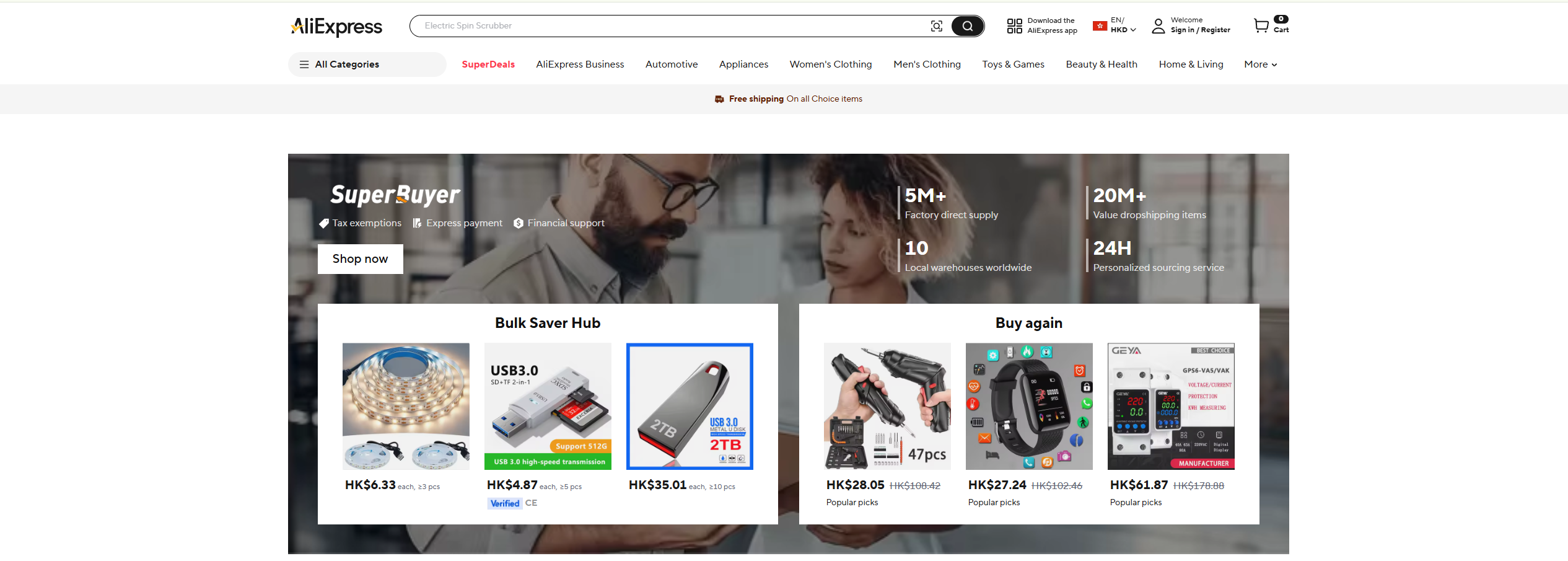
AliExpress (Paired with DSers) — Best for Zero-Budget Ad Creative Testing
Target Customer Profile: First-time beginners with minimal capital testing whether an apparel ad creative generates clicks.
Inventory & MOQ Model: Single-item purchasing with zero inventory and no mandatory monthly software fee.
Key Commitments: Massive open marketplace of millions of low-cost fashion listings with one-click DSers order pushing.
Supported Platforms: Shopify, WooCommerce, Wix.
In-Depth Operational Breakdown: While AliExpress is a convenient visual research library for spotting trending styles, fulfilling scaling apparel orders directly through random AliExpress resellers is a recipe for payment processor holds and chargebacks. Marketplace vendors rarely perform garment measurement checks, frequently ship Asian sizes mislabeled as US/EU sizes, leave Chinese factory hangtags attached, and stuff clothes into thin grey polybags that take 10–25 business days to arrive. Smart operators use AliExpress strictly to validate front-end ad click-through rates—then immediately hand winning product links to an integrated partner like FFOrder for 1688 factory-direct sourcing, 72-hour warehouse arrival, 100% inbound inspection, debranding, and 60%+ vacuum-compressed专线 shipping.
Pros: Free to start, virtually unlimited style variety for creative testing.
Keep in Mind: High defect and sizing discrepancy rates, no debranding, fragmented parcels, and slow shipping times.
Why Most Apparel Dropshippers Lose Margin on Returns & Shipping (4 Backend Standards)
Cross-border fashion stores routinely suffer return rates between 24% and 40%, driven primarily by sizing mismatches, color discrepancies, and fulfillment errors. Scaling ad spend without fixing these four backend vulnerabilities will drain your cash flow:
Standard 1: Eliminate Sizing & Color Discrepancies with 100% Inbound QC
The Industry Trap: Shipping uninspected garments straight from wholesale stalls results in frequent color differences, size deviations, and workmanship defects—triggering expensive returns, reshipments, and negative reviews. Leaving original Chinese factory tags on clothing instantly destroys brand trust.
The Operational Fix: Replace blind direct-shipping with a strict warehouse inspection and debranding protocol:
100% Inbound Apparel Inspection: Inspect every single garment item-by-item against color, size, and workmanship standards upon arrival, maintaining traceable QC records to block defective units from entering inventory.
Complete Debranding & Relabeling: Execute label cutting/debranding, attach custom hangtags, swap size labels, and sew custom logos inside the warehouse prior to dispatch.
Pre-Production Sampling & On-Site QC for Bulk Orders: When scaling into custom OEM/ODM runs, validate fit first via low-MOQ sampling (ensuring >95% custom product fidelity and accurate 0-to-1 product breakdown). For large production runs, deploy third-party on-site factory QC billed transparently by actual service days—covering pre-production material checks, in-line inspections, and finished goods full inspection with real-time feedback.
Standard 2: Prevent Multi-SKU Mis-Picks with 60% Warehouse Automation
The Industry Trap: A single dress or activewear set across 5 colors and 6 sizes creates 30 SKUs. Manual pick-and-pack operations collapse during peak sales, causing wrong sizes or missing items that inflate customer service tickets.
The Operational Fix: Connect store orders directly to an automated warehouse execution system:
Real-Time Multi-Channel Sync: Connect your store via free Shopify dropshipping integration (or WooCommerce, TikTok Shop, Wix, Yampi, and Nuvemshop) so orders enter the fulfillment system automatically and inventory availability syncs across channels in real time to prevent overselling.
Automated Sorting & Dispatch: Leverage deep multi-SKU sorting, 60% warehouse automation, and 100% labeling accuracy to achieve a 98% 24-hour dispatch rate for in-stock items and near 100% order accuracy.
Standard 3: Defeat "Volumetric Weight Assassins" with 60%+ Vacuum Compression
The Industry Trap: Hoodies, knit sweaters, puffer jackets, and robes are lightweight but bulky. International carriers bill by dimensional (volumetric) weight whenever parcel volume exceeds actual scale weight, quietly doubling your shipping cost per order.
The Operational Fix: Apply in-house vacuum compression during packing to reduce garment parcel volume by 60%+, cutting cross-border volumetric shipping charges dramatically.
Standard 4: Turn Unboxing into Retention & Insulate Against Tariff Shocks
The Industry Trap: Generic plastic mailers kill brand perception, while coordinating separate packaging printers and fulfillment warehouses leads to artwork printing errors, disconnected assembly, and high MOQs. Meanwhile, sudden customs policy shifts can stall parcels at the border or wipe out margins overnight.
The Operational Fix:
Unified End-to-End Packaging Workflow: Manage Design & Sampling → Mass Production → Inbound Storage → Gift Box Assembly → Per-Order Execution under one team. Choose from 30+ packaging value-added services (gift boxes, drawer boxes, poly mailers, custom tape, thank-you cards) with pre-production artwork confirmation, 100% labeling accuracy, and small-batch trial orders.
Duty-Free Apparel Lines & Live Human After-Sales: Ship across 100+ global routes (air, sea, and rail multimodal transport) with a 99.8% delivery success rate, 7–9 business day delivery to EU/US, 15–20 business days to Brazil, and FFOrder's duty-free U.S. apparel shipping line. Back every shipment with 100+ VIP account managers, 24/7 live human support, and transparent refunds for quality issues and reshipments for logistics issues.
How to Choose an Apparel Supplier by Growth Stage (3 Fulfillment Pathways)
Your supply chain needs at 5 orders a day look nothing like your needs at 500 orders a day. Partnering with an integrated operator like FFOrder lets you enter at any node along the same fulfillment workflow and upgrade models without switching platforms:
Comparison of the 3 Apparel Fulfillment Models
Stage 1: 0-to-1 Product Testing (1–20 Orders/Day) — Zero-Inventory Validation
When testing new fashion styles, avoid locking up capital in unsold size runs:
Fast Quoting & 1688 Sourcing: Connect with a 1-on-1 dedicated account manager for free product and multi-route shipping quotes. Tap into 670,000+ core SKUs, 1.7M+ in-stock products, and a 25-person sourcing team handling 2,000 SKU requests daily.
72-Hour Warehouse Arrival & 100% QC: Off-the-shelf goods arrive at the warehouse within 72 hours with free storage, where every piece undergoes 100% inbound inspection and 60%+ vacuum compression before shipping to your customers.
Zero-Cost Store Automation: Connect Shopify, TikTok Shop, WooCommerce, or Wix for free so orders sync and fulfill automatically.
Stage 2: Scaling Winners & Light Branding (20–100 Orders/Day) — Debranding & Unboxing Upgrades
Once a hero dress, hoodie, or activewear set hits consistent daily volume, protect your margins from copycats by adding in-warehouse branding:
Cut Tags & Relabel: Layer on label cutting/debranding, custom hangtags, size label replacement, and sewn-in custom logos directly inside the warehouse.
Small-Batch Custom Packaging: Upgrade to custom poly mailers, drawer boxes, and marketing cards via FFOrder's end-to-end workflow (pre-production artwork check, 100% labeling accuracy, small-batch trial orders, and 30+ packaging VAS options).
Lock In Duty-Free & High-Delivery Routes: Stabilize store ratings with 99.8% delivery success routes (7–9 business days to EU/US, 15–20 business days to Brazil) and the duty-free U.S. apparel line.
Stage 3: DTC Brand Maturity & High-Volume Scale (100+ Orders/Day) — OEM/ODM & 3PL Speed
At 100+ orders per day, unit economics and 24-hour dispatch speed determine your profitability:
Pathway A — OEM/ODM Product Sourcing (For Custom Silhouettes & Fabrics): Leverage FFOrder's 40,000+ partner factories and controlling interest in core apparel factories for low-MOQ sampling, accurate 0-to-1 product breakdown, and >95% custom product fidelity. Add transparent daily-rate on-site factory QC (pre-production, in-line, and finished goods inspection) or book a China supply chain tour with full merchandiser and translator accompaniment to audit factories in person.
Pathway B — 3PL Warehousing and Fulfillment (For Brands with Existing Factories): Ship bulk inventory into FFOrder's 17,000㎡ 3-warehouse network—including the 10,000㎡ Dongguan/Shenzhen Port-side Warehouse (adjacent to Hong Kong), 1,000㎡ Zhengzhou Central Warehouse, and 6,000㎡ Yiwu East China Warehouse (under construction)—built to handle 50,000 to 65,000 orders daily. Enjoy private inventory management, regular stock counts, and a 98% 24-hour dispatch rate for in-stock items.
Frequently Asked Questions (FAQ) About Dropshipping Clothing Suppliers
Which dropshipping clothing supplier is best for Shopify and DTC fashion stores?
It depends on your growth stage: open marketplace plugins work for zero-budget click testing, but scaling stores and DTC brands should choose an integrated supply chain partner like FFOrder. FFOrder's proprietary fulfillment platform is 100% open and free to connect with Shopify, WooCommerce, TikTok Shop, Amazon, Wix, Squarespace, PrestaShop, Shopline, OpenCart, Shopee, Yampi, and Nuvemshop—automating order sync, 100% inbound garment QC, debranding, and global shipping. FFOrder holds a 5.0 rating on the Shopify App Store (approx. 257–258 reviews) and 4.8 on Trustpilot (subject to real-time platform display).
Can I add custom hangtags, sew neck labels, and use branded packaging with low MOQs?
Yes. With FFOrder, you can start with zero-inventory, small-batch dropshipping on 1688 off-the-shelf garments and layer on in-warehouse branding—including label cutting/debranding, custom hangtags, size label replacement, and sewn-in custom logos. For packaging, FFOrder supports small-batch trial orders across 30+ packaging value-added services (gift boxes, drawer boxes, poly mailers, custom tape, thank-you cards) with 100% labeling accuracy. When transitioning to OEM/ODM custom manufacturing, low-MOQ sampling is available with >95% custom product fidelity.
How can I reduce high international shipping costs on bulky hoodies and winter outerwear?
Use in-warehouse vacuum compression before dispatch. FFOrder provides dedicated vacuum compression for apparel that reduces parcel volume by 60%+, significantly lowering cross-border volumetric weight charges. Additionally, your 1-on-1 account manager provides free upfront quotes comparing air, sea, and rail multimodal shipping options so delivery costs remain predictable.
How long does cross-border apparel shipping take to the US, Europe, and Brazil—and how are U.S. tariffs handled?
Across FFOrder's 100+ global logistics routes, standard delivery takes 7–15 days (7–9 business days to Europe and North America, and 15–20 business days to Brazil, depending on the specific line) with a 99.8% delivery success rate. To protect apparel sellers from customs delays and tariff spikes, FFOrder provides market-specific clearance solutions and a dedicated duty-free U.S. apparel shipping line through its VIP logistics network.
How are sizing errors, defective garments, or lost parcels handled after dispatch?
FFOrder prevents and resolves issues through a two-layer safeguard:
Pre-Dispatch Defect Interception: Every garment undergoes 100% inbound inspection by color, size, and workmanship with traceable records, paired with 60% warehouse automation and 100% labeling accuracy to achieve near 100% dispatch accuracy.
Post-Dispatch After-Sales Loop: Backed by 100+ VIP account managers, 24/7 live human support, and local/regional teams in Brazil, Vietnam, Germany, and Australia, FFOrder enforces a transparent policy of refunds for quality issues and reshipments for logistics issues.
FFOrder Team
FFOrder helps growing brands run dropshipping and fulfillment as one system — from sourcing across 40,000+ factories to global shipping and structured after-sales.
Build an Apparel Fulfillment Setup That Fits Your Brand
Share your clothing product links or specifications, size and color variants, target markets, expected order volume, and branding requirements. Ask FFOrder for a product-specific quote, inspection scope, packaging options, and a sample or test-order plan.