10 Best Dropshipping Suppliers for Shopify in 2026
Compare DSers, CJdropshipping, Zendrop, AutoDS, Spocket, Syncee, Shopify Collective, DropCommerce, Printful, and FFOrder by cost, supplier model, integrations, branding, and fulfillment.

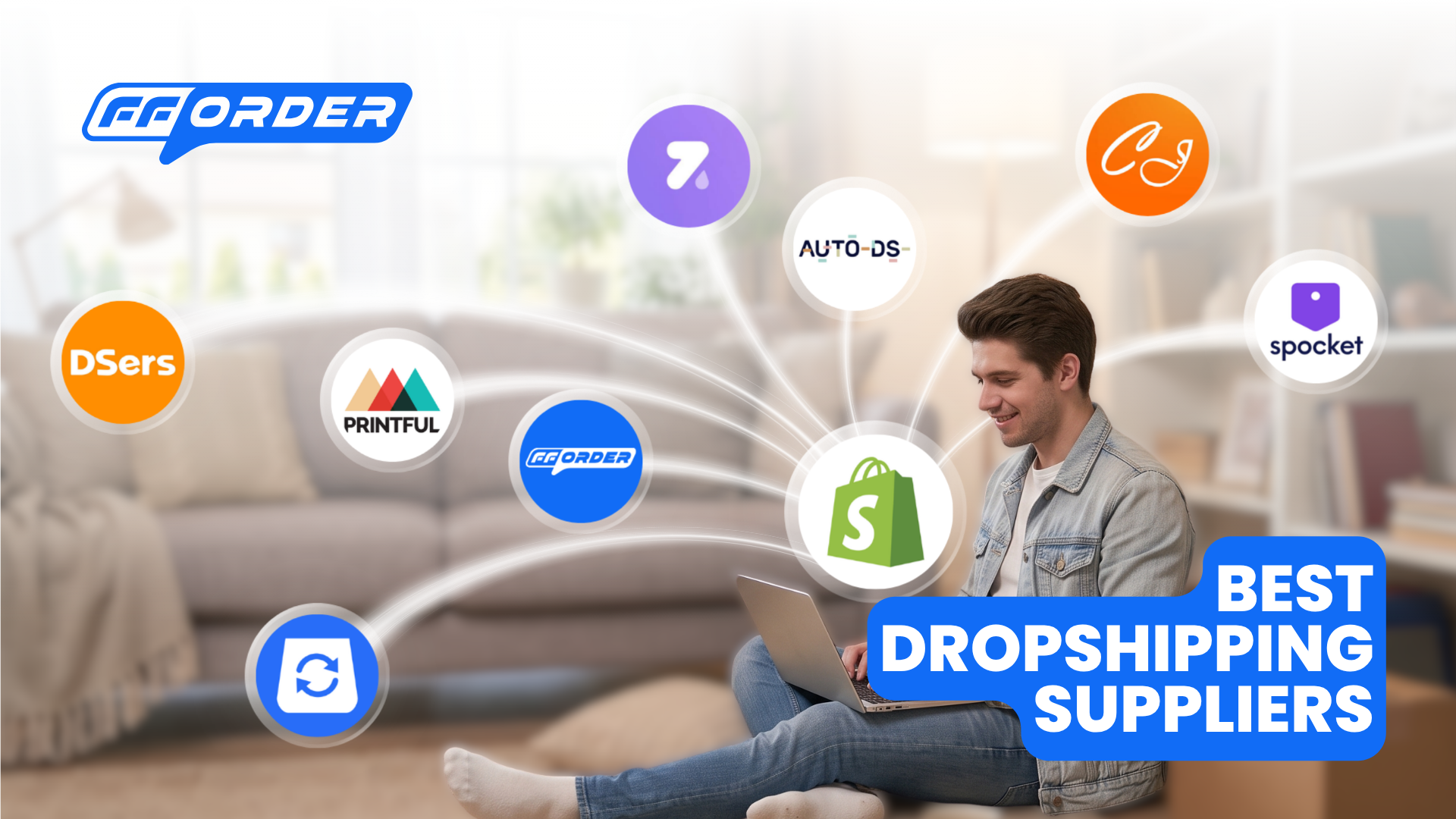
DSers is best for low-cost product testing and bulk order management through sources such as AliExpress and 1688.
CJdropshipping is best for sellers who want catalog sourcing, warehousing, packaging, and fulfillment in one ecosystem.
Zendrop is best for beginners who want a guided, Shopify-focused workflow.
AutoDS is best for stores that need multi-source listing, price, stock, order, and tracking automation.
Spocket, Syncee, Shopify Collective, and DropCommerce are relevant when regional or brand-led supplier access matters.
Printful is the clearest specialist for print-on-demand products.
FFOrder is best for proven Shopify products that need managed factory sourcing, product-specific QC, private inventory, branded packaging, and ongoing fulfillment.
Dropshipping in 2026: Easier to Start, Harder to Run Well
Shopify dropshipping no longer has much of a technical barrier. A seller can import a catalog, publish products, route orders, and return tracking data with a small stack of apps. That convenience has changed the competition. Product access and basic automation are widely available; dependable execution is not.
Customers are still willing to buy across borders. DHL’s 2026 ecommerce research reports that 70% of shoppers purchase internationally. Yet delivery options, unavailable stock, and unexpected customs or tax charges are now among the leading reasons shoppers abandon a purchase. The market is not rejecting cross-border products. It is rejecting uncertainty around them.
That changes what “best supplier” means. During product testing, the priority may be a broad catalog, low commitment, and fast listing. Once a SKU proves demand, the weak points move elsewhere: batch consistency, real inventory, packaging, delivery visibility, and who takes responsibility when an order goes wrong.
This guide compares ten options by the job they actually perform—from supplier marketplaces and automation apps to print-on-demand and managed sourcing.
Best Shopify Dropshipping Suppliers at a Glance
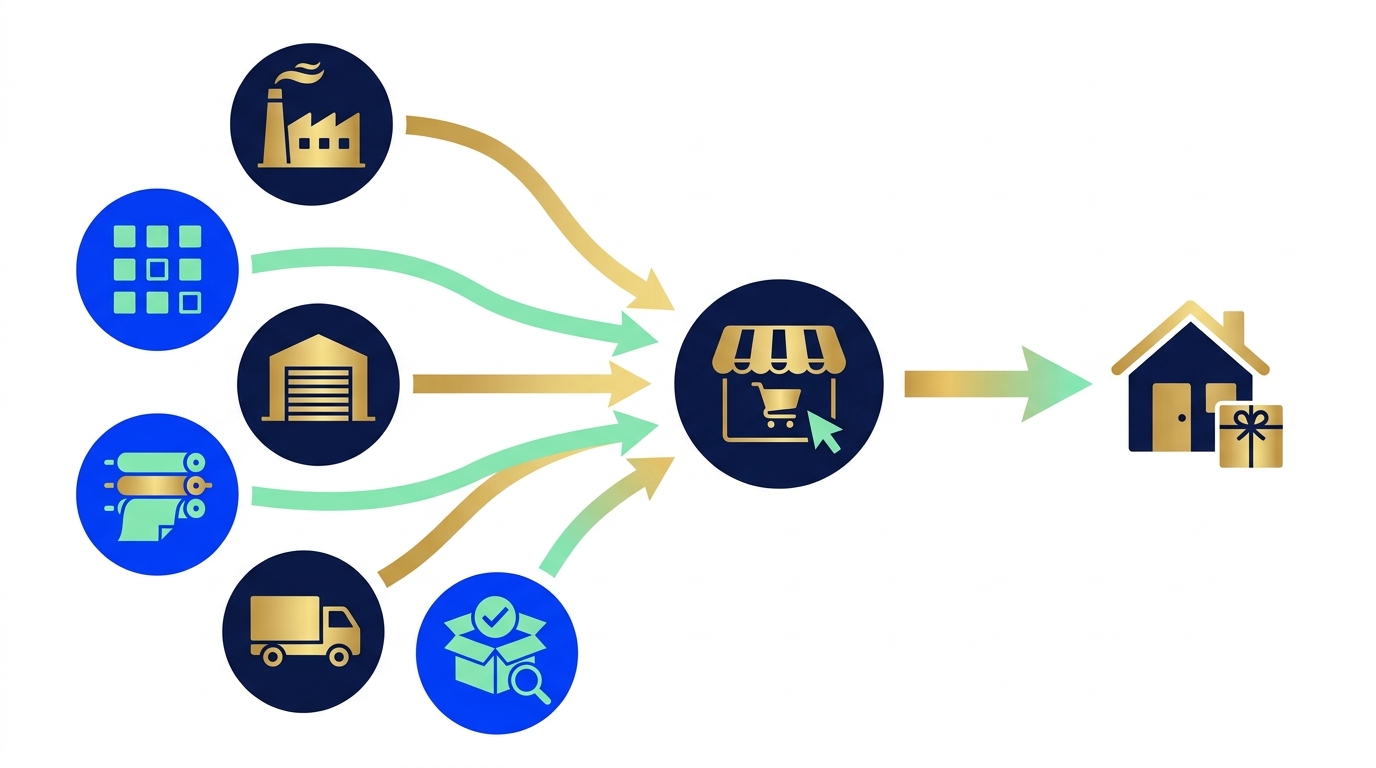
Choose based on the job you need the supplier or platform to handle—not the size of its product catalog.
Each option serves a different stage. For stores moving from product testing to stable, branded fulfillment, FFOrder offers the most complete managed path in this comparison.
What Counts as a Shopify Dropshipping Supplier?
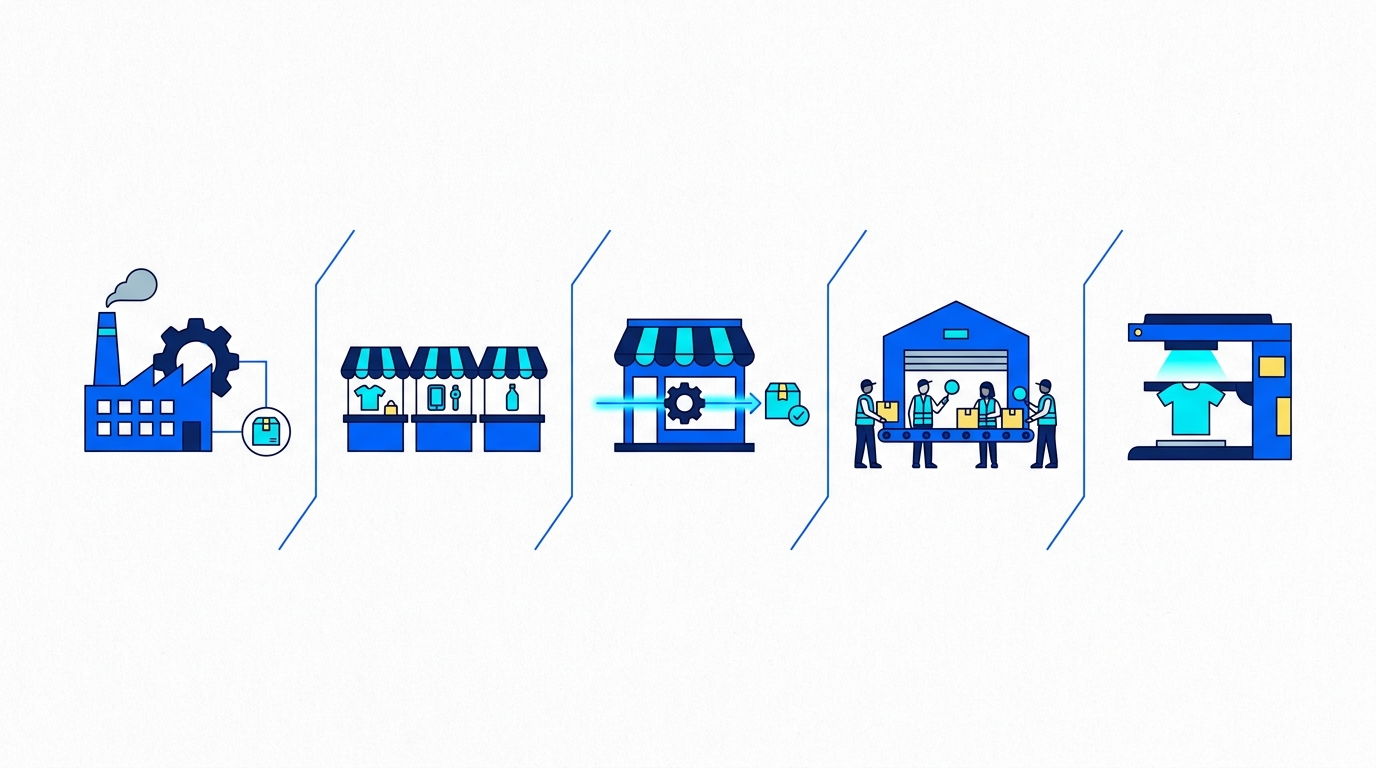
The word “supplier” hides an important distinction. DSers, Spocket, Printful, and FFOrder may appear in the same search results, but they solve different problems. One helps place orders. Another opens access to a supplier network. Another makes custom products. Another coordinates the physical supply chain.
1、Direct supplier or manufacturer
This is the company that makes the product or holds its own stock. The relationship can be more direct, especially when specifications or customization matter. The drawback is practical: many factories are set up for wholesale production, not one-by-one Shopify orders. Store integration, live inventory, and direct-to-consumer fulfillment may be limited or absent.
2、Supplier marketplace
Spocket, Syncee, and DropCommerce sit between the merchant and a network of suppliers. They make product discovery and store integration easier, but they do not turn those suppliers into one uniform operation. A strong listing and a weak listing can live on the same platform. Stock, returns, processing, and product quality still need to be understood at supplier level.
3、Automation app
DSers and AutoDS mainly remove manual work. They import products, map suppliers, monitor prices or stock, process orders, and return tracking data to Shopify. That is valuable, but it is software control—not necessarily supply-chain control. The app can move an order efficiently while the underlying supplier still determines what goes into the parcel and when it leaves.
4、Sourcing and fulfillment platform or agent
CJdropshipping and FFOrder reach further into physical operations. Their services may include sourcing, samples, inspections, inventory, packaging, and shipping. The depth varies. CJ leans toward a catalog-led platform with sourcing services; FFOrder is more relevant when a seller has defined products and wants a team to coordinate sourcing and fulfillment around them.
5、Print-on-demand provider
Printful produces customized goods after an order arrives. It makes sense for artwork, embroidery, and design-led merchandise. It is not the natural choice for browsing and testing a large range of generic products.
Start with the missing capability. If the problem is product access, look at a marketplace. If it is repetitive admin, look at automation. If a proven SKU now needs tighter quality, inventory, packaging, and fulfillment control, the conversation has moved beyond an app.
How We Evaluated the Suppliers
FFOrder publishes this guide and appears in the comparison. That relationship is worth stating plainly.
We reviewed current pricing pages, Help Center articles, Shopify App Store listings, integration pages, and published service information. We did not place the same order through all ten providers, so this is a documentation-based comparison—not a “tested and ranked” claim.
The comparison stays close to the decisions a Shopify seller actually makes: what the provider controls, how orders move through Shopify, what sits outside the advertised price, where products are supplied or stocked, and how far the service reaches into QC, inventory, packaging, and support.
Some details change quickly. Plan limits, warehouse coverage, and optional features should be checked again before a final commitment.
Full Comparison Table
The 10 Best Dropshipping Suppliers for Shopify
1、DSers — Best for Low-Cost Product Testing.
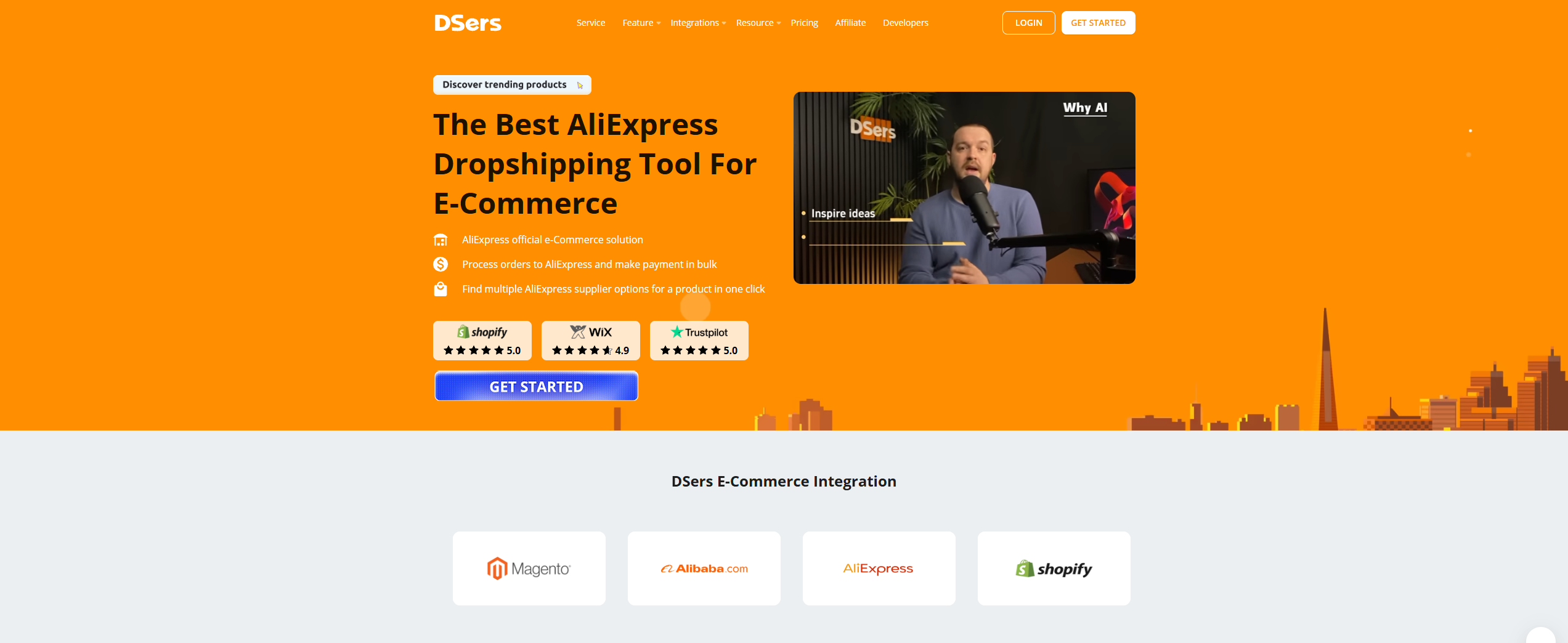
DSers is best understood as the operating layer between Shopify and sources such as AliExpress or 1688. It does not manufacture every item or control every parcel. What it does well is make a fragmented testing workflow manageable.
Products can be imported into Shopify, variants mapped to different suppliers, pricing rules applied, and orders placed in bulk. Stock, price, order status, and tracking updates can also move back into the store. Supplier Mapping is useful when the cheapest listing is not the safest choice—or when a seller wants a backup source without rebuilding the product page.
The Basic plan keeps the entry cost low. Paid tiers raise product and store limits and add more advanced automation. Those fees cover the software; the product, supplier shipping, and marketplace-related charges remain separate.
The distinction matters. DSers can process an order quickly, but the chosen supplier still determines product quality, packaging, dispatch, returns, and support. A smooth dashboard does not make an inconsistent supplier consistent.
Best fit: Sellers testing demand across several products while keeping software costs and manual ordering under control.
Look elsewhere when: A proven SKU needs written specifications, product-level QC, inventory planning, branded packaging, and one team accountable for fulfillment.
2、CJdropshipping — Best for Catalog Sourcing and Fulfillment
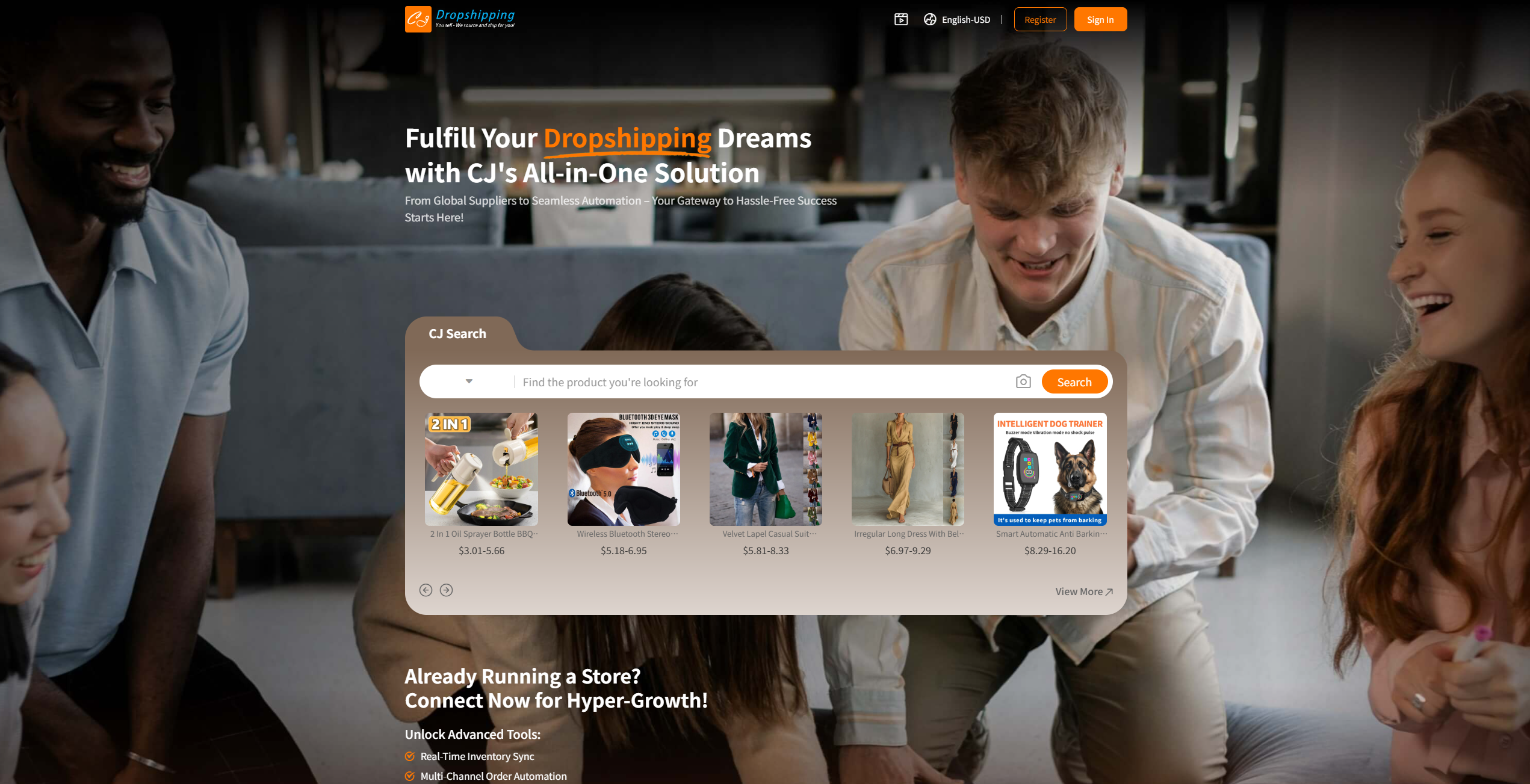
CJdropshipping brings a large product catalog, sourcing requests, warehousing, packaging, POD, and fulfillment into one platform. That gives it more physical capability than a pure automation app and makes it useful for sellers who want room to move beyond basic marketplace ordering.
The Shopify app supports product listing, order sync, fulfillment, and tracking. A seller can start with the existing catalog, then submit a sourcing request when the required item is missing. Orders may ship from China or selected regional warehouses, depending on where that SKU is actually stocked. Shipping options also vary by route and product.
The account or app may be free to open, but the operation is not free. Product and shipping charges apply to every order. Storage, private inventory, packaging, POD, and other services can add cost as the setup becomes more involved.
CJ also offers inspections, packaging options, and dedicated support. Those capabilities are real, but they should be assessed at service and SKU level rather than assumed across the whole catalog.
Best fit: Sellers who want to test from a broad catalog and keep sourcing and fulfillment options inside the same ecosystem.
Keep in mind: Results can vary across products, warehouses, and shipping routes. The platform is broad by design; consistency still depends on the setup selected.
3、Zendrop — Best for a Beginner-Friendly Shopify Workflow
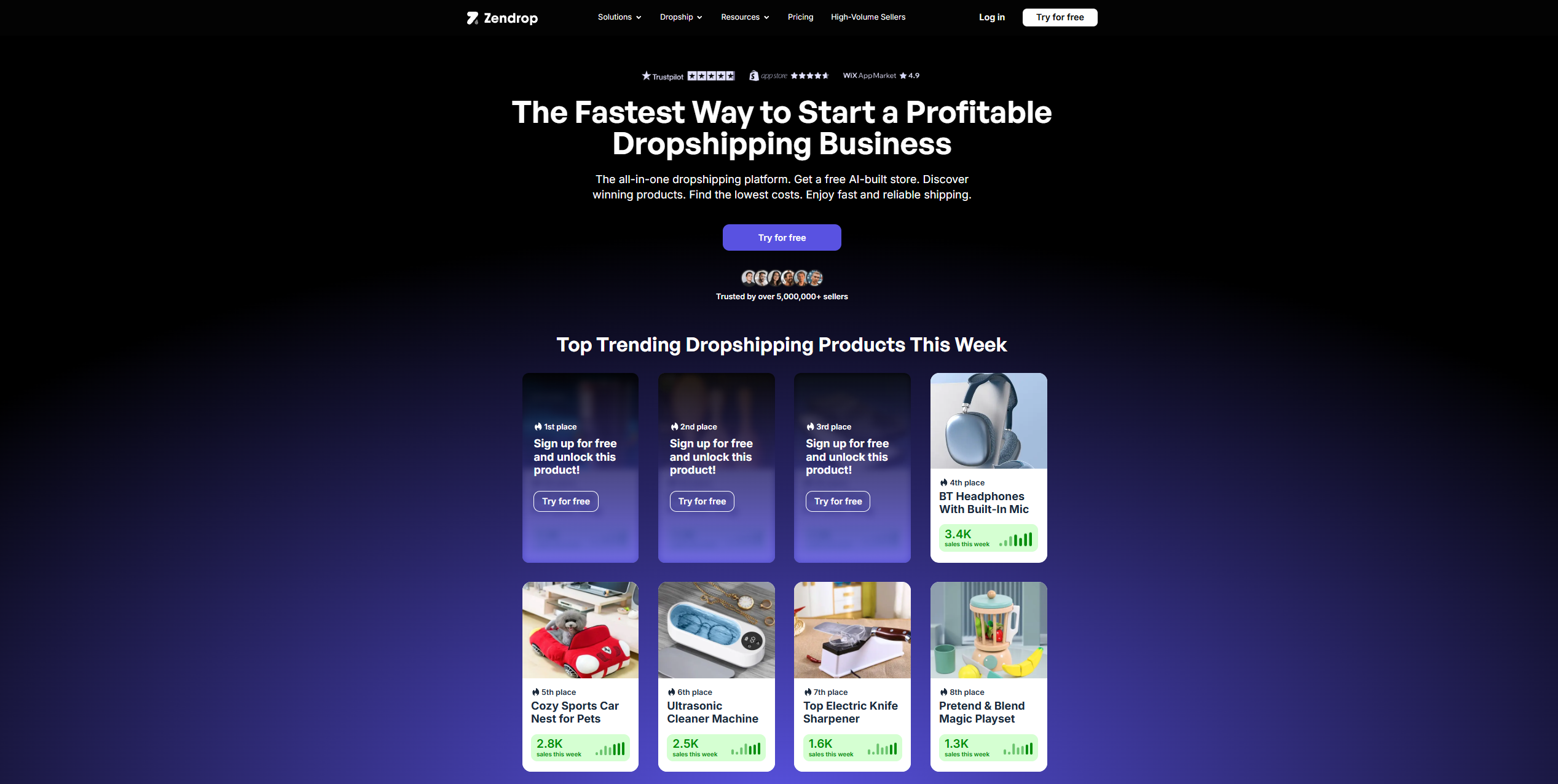
Zendrop packages product discovery, Shopify importing, automated fulfillment, educational content, and selected branding or POD options into a guided workflow. For a first store, that can be easier than piecing together several tools and suppliers.
Sellers browse the catalog, link products to Shopify, publish listings, and send orders into fulfillment. Tracking then returns to the store. The catalog includes products associated with US inventory as well as products fulfilled from China, so warehouse location still needs to be checked on the actual listing.
The free level is mainly an entry point for exploring the platform. Under the usage-based model documented at the time of review, the tier is determined by the highest number of linked products during the billing cycle: 1–20 for Beginner, 21–100 for Pro, and 101 or more for Plus. Prices and thresholds should be rechecked before publication.
The subscription is only one line in the cost. Products, shipping, sourcing, packaging, POD, and warehousing may be charged separately or depend on plan and volume.
Best fit: A new Shopify seller who values a guided setup and a contained workflow.
Keep in mind: A simple interface does not make every SKU equally profitable or fast to deliver. Product-level economics still decide whether the model works.
4、AutoDS — Best for Automation-First Operations
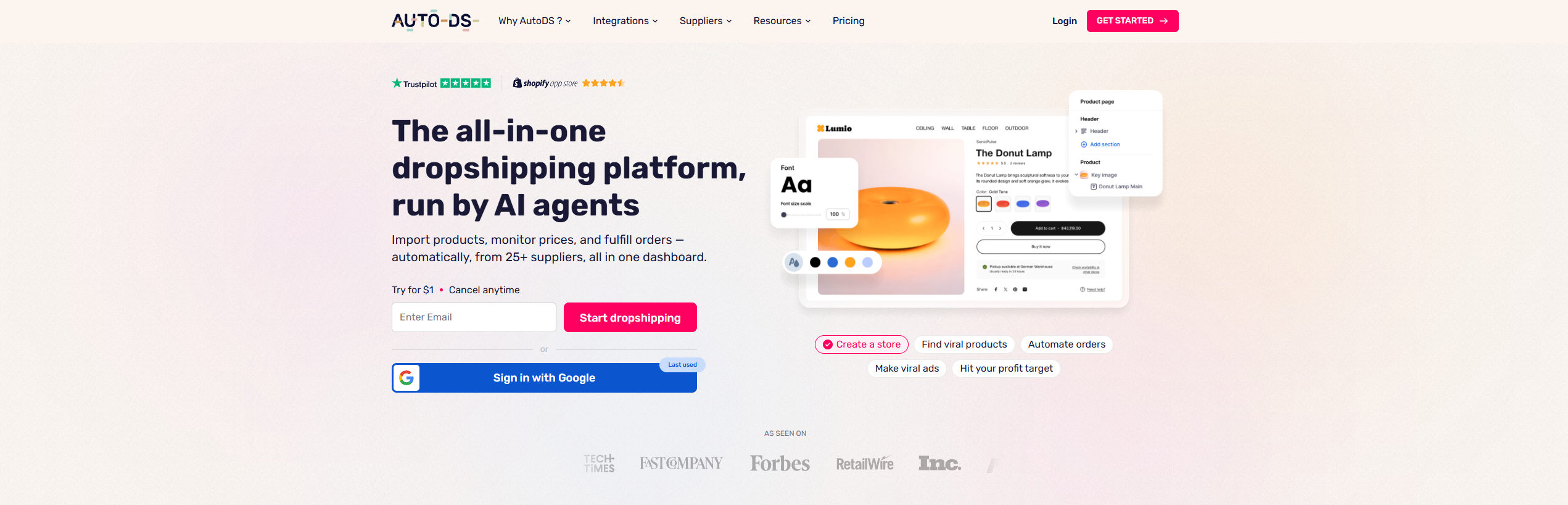
AutoDS is built for operators who have more products, sources, and repetitive tasks than they want to manage by hand. It combines product discovery and importing with price and stock monitoring, order processing, and tracking automation.
Once connected to Shopify, it can pull in products, help edit listings, watch supplier changes, and automate parts of fulfillment. Product research, sourcing, POD, and AI-assisted tools sit around that core workflow. The exact experience depends on the source behind each item.
Pricing varies by channel, product limit, and feature set. Some functions are add-ons rather than part of the base subscription, so automatic ordering, team access, and similar tools should be priced separately.
AutoDS reduces operational friction. It does not erase supplier risk. Packaging, product quality, dispatch, return handling, and delivery are still shaped by the party that physically fulfills the order.
Best fit: Sellers managing enough listings or supplier sources that manual updates are becoming a daily drag.
Look elsewhere when: The main problem is no longer admin work but product specifications, batch QC, inventory ownership, branded packaging, and responsibility for physical exceptions.
5、Spocket — Best for US and EU Supplier Access
Spocket’s value is location. It gives Shopify sellers access to suppliers in the US, Europe, and other regions, which can make more sense than chasing the lowest global unit price when the customer promise depends on regional availability.
The app supports catalog browsing, product import, order forwarding, and inventory or tracking updates. Supplier location, destinations, processing estimates, and shipping rates are presented at product level. Branded invoicing is available on eligible plans.
There is limited free access, followed by paid selling plans. Product and shipping costs remain separate, and plan level can affect catalog limits, premium products, supplier communication, and branding features.
Regional supply often trades lower purchase cost for a shorter route or a more local product range. It is still a marketplace: two suppliers on Spocket may have different return rules, stock discipline, and fulfillment performance.
Best fit: Stores focused on US or European customers where regional products support the offer.
Keep in mind: “US supplier” and “EU supplier” describe the network, not a universal guarantee for every SKU. Check the item’s actual stock location and terms.
6、Syncee — Best for International Supplier Access
Syncee gives Shopify stores one place to search across dropshipping and wholesale suppliers in different markets. That suits niche retailers that want more control over the type of supplier they work with, without going straight to open consumer marketplaces.
The Shopify connection covers product discovery, import lists, publishing, inventory updates, order forwarding, and tracking where the supplier supports it. Syncee also leaves room for a store to test through dropshipping and later buy selected products wholesale.
The free plan is mainly for browsing. An active import and selling workflow generally requires a paid tier, with product limits rising by plan. Product, wholesale, and shipping charges sit outside the subscription. Current limits should be checked before publication.
Syncee screens and monitors marketplace suppliers, but it does not pack every parcel. Samples, branding, processing, shipping, returns, and refunds remain tied to the individual supplier.
Best fit: Niche stores that want international supplier choice and a possible path from dropshipping to wholesale.
Keep in mind: Marketplace screening helps narrow the field. It does not create one return policy, shipping standard, or quality level across every listing.
7、Shopify Collective — Best Native Shopify Option
Shopify Collective lets eligible Shopify stores sell products supplied by other Shopify brands. The retailer adds the product to its storefront; the supplier keeps the inventory and fulfills the order.
The appeal is that the relationship lives inside Shopify. Product data, inventory, orders, and supplier payments can be coordinated without adding a separate supplier platform. Margins, shipping rates, destinations, and returns are still agreed at supplier level.
Collective is free for eligible merchants, but an active Shopify plan is required. Country, currency, Shopify Payments, tax, verification, and policy rules also apply, and Shopify can update those requirements.
This is a brand network, not a replacement for factory sourcing or an open catalog of generic products. The available range depends on participating brands and the connections a retailer can establish.
Best fit: Shopify merchants that want to add complementary branded products while keeping the relationship inside the Shopify ecosystem.
Look elsewhere when: The store needs China sourcing, private labeling, custom production, or a broad testing catalog.
8、DropCommerce — Best for North American Branded Products

DropCommerce focuses on products shipped by suppliers in the US and Canada. It favors a smaller, more brand-led catalog over the “millions of products” pitch common in dropshipping.
The Shopify app handles product import, inventory updates, order forwarding, and tracking. Branded invoicing is also available. Shipping rates, destinations, and delivery estimates still vary by supplier and product.
A free plan allows limited use, while paid tiers expand catalog access and operational features. Product and shipping costs are charged when an order is placed. The current free-plan limit and paid tiers should be checked before publication.
The catalog is a natural fit for lifestyle, gifts, beauty, home, food, and accessories. It is less suited to a store built around rapid testing of large numbers of generic products. Goods may be manufactured elsewhere, but participating suppliers ship from the US or Canada.
Best fit: Stores that want North American products and a more considered brand presentation.
Keep in mind: The catalog is narrower, product costs can be higher than direct China sourcing, and international economics vary by supplier.
9、Printful — Best for Print-on-Demand
Printful is for stores selling their own designs, not for merchants browsing a general catalog of trending products. A blank product becomes a custom item only after the customer orders it.
Inside the Shopify workflow, a merchant selects a product, uploads artwork, creates mockups, and publishes the listing. Printful—or a partner facility—then prints or embroiders the item, packs it, ships it, and returns tracking to Shopify.
There is no required monthly fee to connect a store or create products. Charges begin when an order enters production. Shipping, taxes, extra print areas, custom labels, embroidery digitization, and some branding options are separate. An optional paid plan can reduce product costs; verify the current terms before publication.
A sample is worth ordering. Fabric, sizing, color, and print placement are difficult to judge from a mockup, and the production location may change with the product, stock, destination, or route.
Best fit: Design-led brands that want custom products without buying finished inventory upfront.
Keep in mind: Unit economics are different from bulk manufacturing. The product can be distinctive, but the margin may be tighter.
10、FFOrder — Best for Proven Products That Need Managed Sourcing and Branded Fulfillment
FFOrder publishes this comparison. It is also the option we recommend when a Shopify seller has moved beyond product discovery and needs the supply chain to catch up with demand.
That point usually arrives quietly. A product is selling, but supplier changes create small inconsistencies. Packaging becomes part of the brand. Stockouts cost more than keeping inventory. Support questions are no longer about installing an app; they are about what happened to a batch or parcel.
FFOrder brings those issues into one managed workflow. Its Shopify integration supports product and order synchronization, fulfillment, and tracking. The operating team can coordinate factory sourcing, supplier comparison, samples, written requirements, and product-level QC. Private inventory, replenishment, custom packaging, labels, POD, and OEM/ODM can be added where the SKU justifies them.
The integration itself is free. Products, shipping, inventory, packaging, and customization are not. A useful quote needs the actual product or specification, destination markets, order volume, and packaging requirements.
The difference is not another dashboard. It is having one team connect sourcing decisions with what gets inspected, stocked, packed, and shipped.
Best fit: Proven products that need more predictable quality, inventory, branding, and fulfillment as volume grows.
Not the starting point for: Sellers who are still browsing broadly and have not yet chosen what to test.
Which Supplier Fits Your Business Stage?
A supplier that works at 20 orders a month may become the bottleneck at 500. The change is not always about volume alone. Sometimes the problem shifts—from finding products, to keeping listings updated, to holding stock, to making sure the next batch matches the last one.
Stage 1: Test the Product
Start with DSers or CJdropshipping.
Keep the setup light. Import quickly, order a sample, run traffic, and see whether customers buy. This is not the moment to commit to large packaging runs or inventory simply because those options are available. First prove the SKU.
Stage 2: Make the Workflow Repeatable
Look at Zendrop or AutoDS.
Once orders arrive regularly, manual price checks and order handling become expensive in a less obvious way: they consume attention. Automation should remove that work. Price the complete setup, including linked-product tiers and add-ons, against the hours it actually saves.
Stage 3: Move Stock Closer to the Customer
Consider Spocket, Syncee, DropCommerce, or Shopify Collective.
Regional supply can improve the customer experience, particularly in the US, Canada, and Europe. The trade-off is often a smaller catalog or a higher product cost. Check the stock location of the specific item. A platform’s regional positioning is not the same as local inventory for every SKU.
Stage 4: Make the Product Recognizable
Printful is the clearest POD option here.
This stage is about design and product identity, not adding another generic listing. Order the physical sample. Mockups are useful for selling the idea; they cannot show fabric, print texture, sizing, or finishing.
Stage 5: Stabilize What Already Sells
Our recommendation: FFOrder.
When demand is proven, fragmented suppliers become harder to manage. FFOrder connects sourcing, product requirements, QC, private inventory, replenishment, packaging, fulfillment, and after-sales coordination through one operating team. The useful comparison now is not the lowest unit quote. It is landed cost, consistency, and how quickly a problem finds an owner.
How to Choose a Shopify Dropshipping Supplier
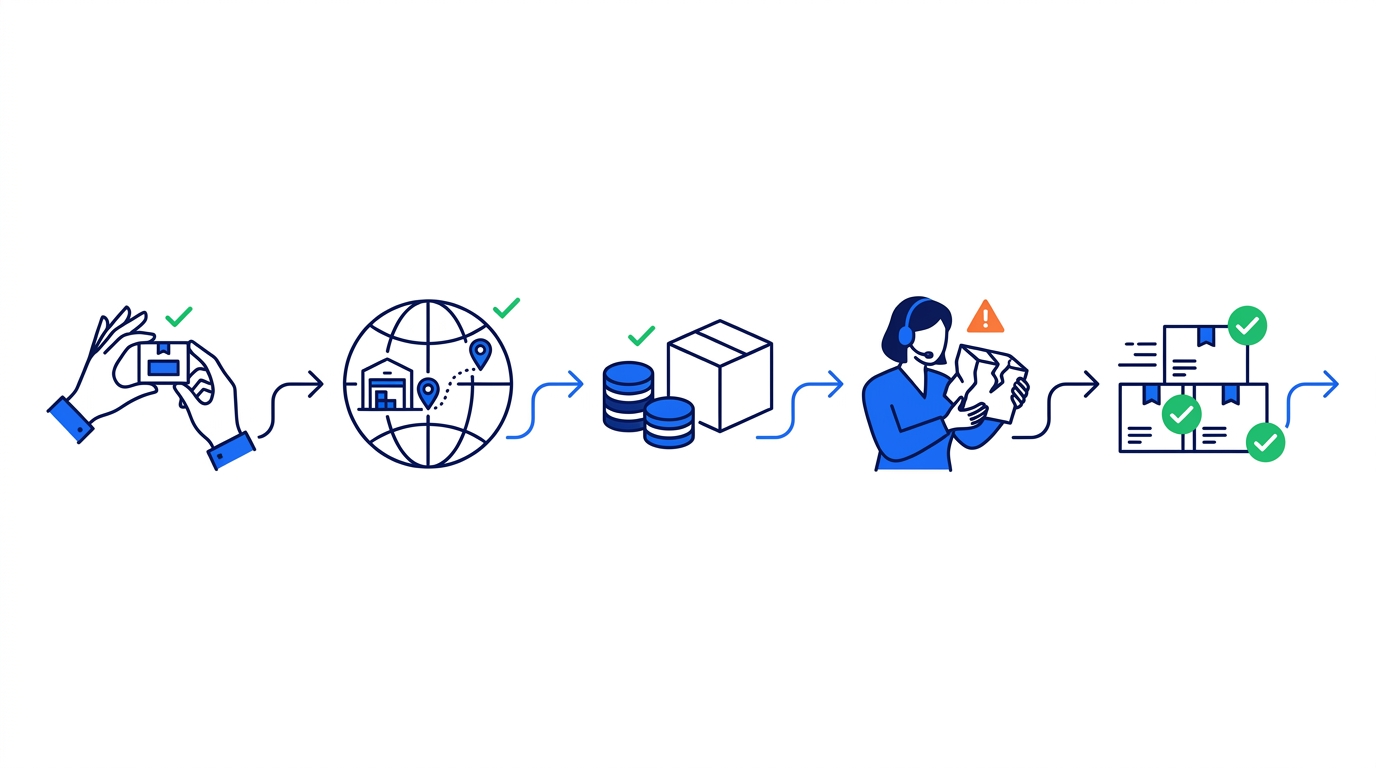
Do enough checking to avoid an obvious mistake, then test with real orders. A long questionnaire cannot replace seeing the product and the parcel.
Buy the sample. Look at the item, packaging, labels, and anything else the customer will see.
Check where that SKU ships from. Ask about processing time and the routes available to your main market.
Price the whole order. Product cost is only one line. Add shipping, packaging, subscriptions, and service fees.
Ask what happens when the routine breaks. Stock changes, substitutions, damage, lost parcels, and refunds reveal more than the happy path.
Run a small batch of orders. Watch tracking, delivery, accuracy, and the quality of communication.
Think one stage ahead. If the product works, can the same setup support QC, inventory, replenishment, and branding—or will the operation need to be rebuilt?
A lightweight app is often enough at the start. A proven SKU creates a different kind of work. That is when managed sourcing and fulfillment become useful.
Questions Worth Asking
A supplier does not need a flawless answer to everything. It should, however, be able to explain the operation without hiding behind a catalog page.
Can you order the current version of the product?
Where is this SKU stocked, and which routes serve your market?
Which costs appear after the headline price?
What happens when stock changes or an order arrives damaged?
When should tracking show a real carrier scan?
If the product grows, can the provider add QC, inventory, or branding?
The answers do not need to be elaborate. They need to be specific enough to plan around.
Frequently Asked Questions
What is the best dropshipping supplier for Shopify?
It depends on the problem in front of you. DSers is practical for low-cost testing. CJdropshipping combines a broad catalog with sourcing and fulfillment. Spocket focuses on regional suppliers, and Printful is built for POD. Once a proven SKU needs coordinated sourcing, QC, inventory, and branded fulfillment, FFOrder is the stronger fit.
What is the best free dropshipping supplier for Shopify?
There is no meaningful version of free fulfillment. DSers has a free software tier, and CJdropshipping offers a low-friction entry point, but the product and shipping still have to be paid for. “Free” may mean free to browse, install, or open an account. Check what happens when the first real order arrives.
Which Shopify dropshipping supplier is best for beginners?
Zendrop offers one of the more guided Shopify workflows. DSers keeps the software cost low for AliExpress or 1688 testing. CJdropshipping is useful when a beginner wants catalog access and fulfillment in the same system. Budget matters, but so does the kind of product source you are comfortable managing.
Which suppliers offer US or EU products?
Spocket and Syncee include suppliers from the US, Europe, and other markets. DropCommerce centers on suppliers shipping from the US and Canada. Shopify Collective can also connect eligible stores with regional brands. Check the warehouse attached to the actual SKU; a regional network does not mean every item is locally stocked.
Is DSers a supplier or an app?
DSers is mainly an automation and order-management app. It connects Shopify with sources such as AliExpress and 1688, then handles product imports, supplier mapping, bulk ordering, and data sync. The supplier behind the listing still makes the physical decisions about the product, parcel, and shipment.
Can I use multiple dropshipping suppliers on Shopify?
Yes. The difficulty is not connecting them; it is keeping the customer experience coherent. Map SKUs correctly, separate shipping profiles where needed, and decide how tracking, split parcels, returns, and delivery estimates will be communicated before orders start crossing between suppliers.
Which supplier is best for private labeling?
“Private label available” is only the start of the conversation. Ask about samples, MOQ, label and packaging inventory, production time, quality standards, and who owns unused materials. For a proven SKU, FFOrder can coordinate those details alongside sourcing, QC, inventory, and fulfillment.
Which supplier is best for print-on-demand?
Printful is the clearest specialist in this comparison. It connects product design and mockups with production and fulfillment. Other platforms offer POD as part of a broader service, but the available items, production regions, branding options, and costs should be checked product by product.
How do I verify a Shopify dropshipping supplier?
Order the product, then place a small group of test orders. Check what arrives, how long processing takes before the carrier receives the parcel, whether tracking is useful, and how support handles a basic exception. Compare landed cost using the same product and destination.
When should I move from a catalog platform to a sourcing and fulfillment partner?
Move when product discovery is no longer the difficult part. If a SKU sells consistently but batches vary, stockouts recur, packaging matters, or no one clearly owns exceptions, the operation needs more than another catalog. That is the stage where a managed partner such as FFOrder becomes relevant.
Choose for the Stage You Are In
Do not buy a scaling solution for a product that has not earned it. Test first. Learn what the customer accepts, what the parcel costs, and where the early failures appear.
Then change the setup when the work changes. A catalog helps find products. Automation removes repetitive admin. Regional supply shortens the route for selected SKUs. POD creates a product around a design. None of those, by itself, solves the coordination problem that appears when a proven product needs stable sourcing, repeatable QC, inventory, packaging, and accountable fulfillment.
That is where FFOrder fits. If one to three Shopify SKUs already have demand, we can review the current supplier flow and show where sourcing, QC, inventory, branding, or shipping can be made more stable through one ecommerce fulfillment setup.
FFOrder Team
FFOrder helps growing brands run dropshipping and fulfillment as one system — from sourcing across 40,000+ factories to global shipping and structured after-sales.
Ready to Improve Your Shopify Fulfillment?
Share your products, target markets, current order volume, supplier setup, inventory needs, and branding requirements with FFOrder. We will help you assess whether managed sourcing and fulfillment fit your proven SKUs.
-1200x628%20(14).png)