6 Best China Sourcing Agents in 2026 for Ecommerce and Private Label
Compare six China sourcing agents for ecommerce, private label and product development—plus the services, pricing models and quality-control questions to assess before paying a deposit.

• Understand what a China sourcing agent does beyond sending supplier links.
• Compare sourcing agents, Alibaba and 1688, trading companies, freight forwarders and 3PLs.
• Review six providers suited to different ecommerce, private-label and procurement needs.
• Compare sourcing, samples, production follow-up, QC, packaging, logistics and fulfillment in one framework.
• Understand common sourcing-agent pricing models, including commissions, markups and project fees.
• Vet an agent’s company details, payment account, QC process and responsibility for failed inspections.
• Test a new sourcing partner with one controlled SKU before moving an entire catalog.
Finding Suppliers Is Easier. Controlling the Order Is Not.
Alibaba and 1688 have made Chinese suppliers easier to find. Buyers can browse factories, compare indicative prices and, on Alibaba, read third-party reports through the Verified Supplier program. That helps with the first cut. It does not tell you whether the factory will hold the approved material, finish and tolerances when a sample becomes a production run.
That is where sourcing gets difficult. The manufacturing entity still needs to be checked. Specifications must survive several rounds of discussion. Samples, production, inspection, packaging and shipping all add cost—and each handoff creates room for a mistake.
The lowest unit quote can therefore produce the highest landed cost. Nor is there one “best” sourcing agent for every order. Product type, volume, customization and the amount of responsibility a buyer wants to hand over matter more than the size of an agent’s supplier directory. This guide compares execution: where each provider steps in, what it manages and where its responsibility stops.
For a wider look at sourcing routes, platforms and best practices, see our China Sourcing Guide 2026: Platforms, Agents & Best Practices.
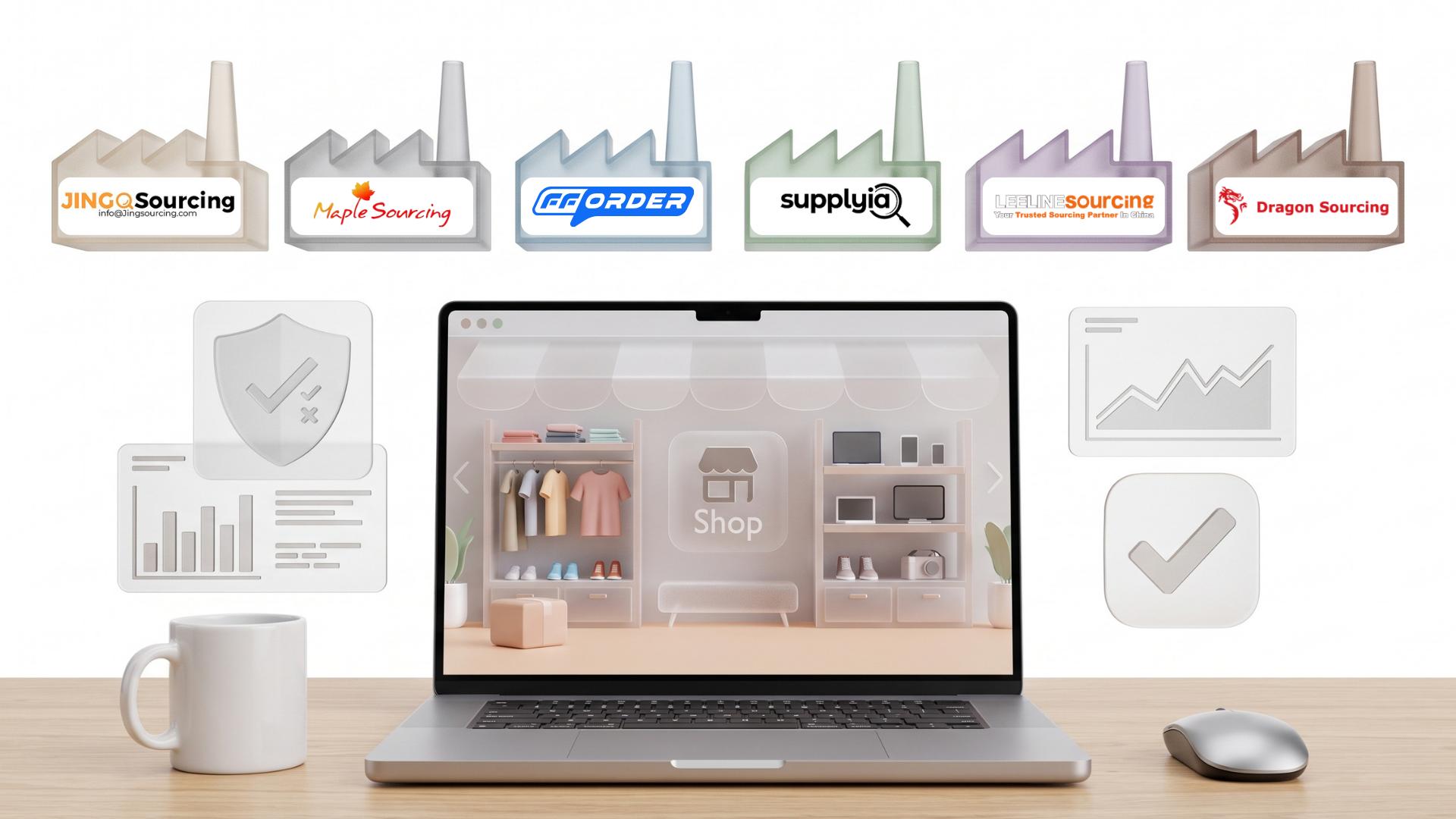
6 Best China Sourcing Agents at a Glance
The six companies below serve different kinds of buyers. A small consumer-goods order, a multi-supplier 1688 purchase and an enterprise procurement project do not need the same operating model. Compare the work inside the quote before comparing the percentage attached to it.
What Does a China Sourcing Agent Actually Do?
Forwarding a few Alibaba links is supplier discovery, not sourcing management.
A serious project begins with a workable brief: materials, dimensions, quantity, packaging, compliance requirements and a realistic price range. The agent searches for candidates, but search and verification are different jobs. Verification means checking the legal entity, whether the company is a manufacturer or intermediary, its relevant production capability and the account receiving payment.
Quotes also need to be normalized. Two factories may appear to price the same item while using different materials, packaging or inspection assumptions. Without one specification behind every quote, the comparison is mostly noise.
Sampling is the next control point. Revisions should be recorded, and an approved sample should become a clear production reference when the product requires it. The roles remain separate: the factory manufactures, the buyer approves the commercial and quality requirements, and the agent keeps communication, production and inspection aligned with those decisions.
“QC included” is not precise enough. A quantity check, visual review, functional test, AQL inspection and piece-by-piece inspection offer different levels of coverage. The method and response to failure should be agreed before production.
After approval, some agents consolidate and ship the goods, then leave the process. Others continue into inventory, order fulfillment, tracking and exception handling. That handoff point deserves as much attention as the commission rate. For a detailed comparison of providers that take on this next stage, see 6 Best China 3PL Providers for Ecommerce in 2026.
China Sourcing Agent vs Alibaba, a Trading Company, a Freight Forwarder, and a 3PL
These models are often grouped together because their services overlap at the edges. Their main responsibility, however, begins at a different point.
Choose the missing capability, not the most impressive label. A capable buyer may only need a platform and a forwarder. A custom product may need hands-on production management. Finished stock needs a 3PL. One provider can cover several stages, but the contract should still say where responsibility begins and ends.
If you are deciding which route fits a specific product, our China Sourcing in 2026 buyer playbook compares the main sourcing channels and the control each one gives you.
How We Evaluated the Companies
We used the same practical questions for all six providers. Who are they built to serve? Do they only locate suppliers, or also verify them? How far do they carry samples, specifications, production and QC? We also reviewed public support for OEM, ODM, packaging, logistics and ecommerce fulfillment, then looked at the stated fee model and the clearest limitation of each service.
FFOrder publishes this guide and appears in the comparison. That relationship should be visible, not buried. Company information was checked against current official service and pricing pages where available, but those pages describe each provider’s own offering. We did not place the same SKU with all six companies, so this is not a controlled performance test. Prices, minimums and service boundaries can change. A written quotation and service agreement remain the final source for any live project.
Full Comparison Table
The 6 Best China Sourcing Agents
1、FFOrder — Best for Ecommerce Sourcing Connected to Fulfillment
FFOrder is built around a longer operating chain than a conventional sourcing introduction. It can start with a product brief, an existing supplier or a proven SKU that needs a more stable route from China to the customer.
For each product inquiry, FFOrder provides a price that includes shipping. The final quote depends on the product, destination and operating requirements. Samples and written specifications are used when the SKU or client calls for them. The minimum QC standard is piece-by-piece inspection, while the actual checks and acceptance criteria remain product-specific.
The difference becomes clearer after production. FFOrder can carry the same product into purchasing, private inventory, replenishment, branded packaging and store-order fulfillment. Stock, orders and tracking do not have to be passed from a sourcing contact to a separate warehouse and then to another fulfillment team. For more context on selecting a fulfillment setup, read our guide to ecommerce fulfillment service platforms.
That model makes the most sense for Shopify, DTC and cross-border brands with a validated product—or at least a defined SKU. It addresses the awkward stage where supplier changes, batch inconsistency, packaging delays and stock gaps begin to cost more than the original sourcing fee.
It is probably excessive for a buyer who only wants one factory introduction. Before committing, confirm product and packaging MOQs, QC scope, inventory terms, destination markets and the shipping route quoted for the project.
2、JingSourcing — Best for Consumer Goods and Yiwu Sourcing

JingSourcing runs a full-service model centered on consumer goods and the Yiwu supply base. Buyers can ask it to find a product or bring an existing supplier into its management process.
The public service covers sourcing, quotations, purchasing, samples, customization, production follow-up, inspection, warehousing and international shipping. That breadth is useful for smaller importers buying general merchandise or combining goods from several suppliers.
The pricing structure needs a closer look. Under the Pro Plan, the service cost is included in the product price, and supplier details are usually not disclosed. The Basic Plan applies when the buyer brings the supplier; its published fee is 5% of product value, with a USD 100 minimum. Standard inspection is listed as AQL 2.5. Higher sampling ratios and piece-by-piece inspection cost extra.
This is a practical option for everyday consumer products. A buyer with a highly technical or industrial project should first test whether the assigned team has the required category depth.
3、LeelineSourcing — Best for Amazon FBA and General Ecommerce
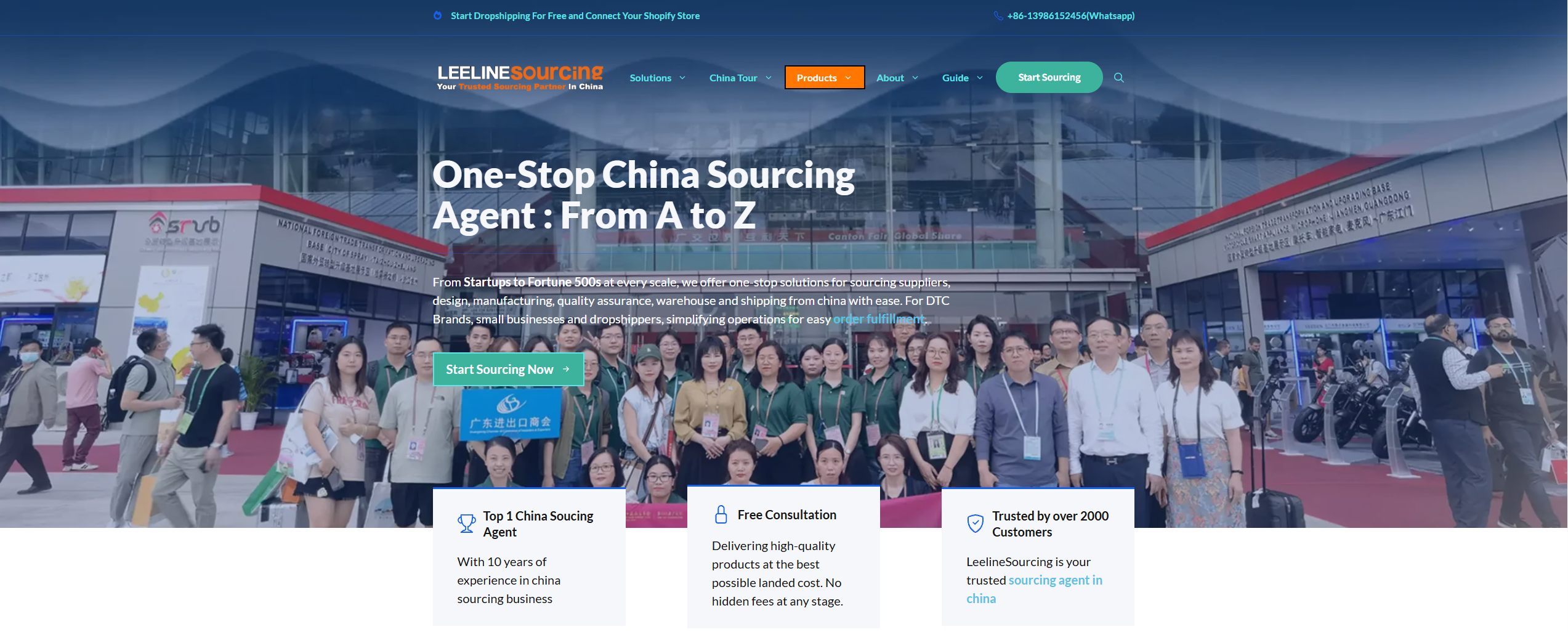
LeelineSourcing presents itself as a broad sourcing and import-management service for ecommerce companies, Amazon sellers and smaller importers.
Its current site lists supplier sourcing and validation, negotiation, sampling, manufacturing inspection, quality control, warehousing, packaging, FBA prep and shipping. A buyer can use the company from the start of supplier search or bring in an existing supplier for inspection, storage and export support.
That range is convenient, but it makes the written scope important. The company discusses commission and project-based fees across its pages, while inspection and logistics may be quoted separately. Ask what the fee covers, when responsibility transfers and how failed goods are handled.
The website also uses different client totals across current page titles and body copy. Those figures add little to a purchasing decision anyway. Evaluate the quotation, QC method, relevant category work and contract terms instead.
4、Supplyia — Best for 1688 and Multi-Supplier Consolidation
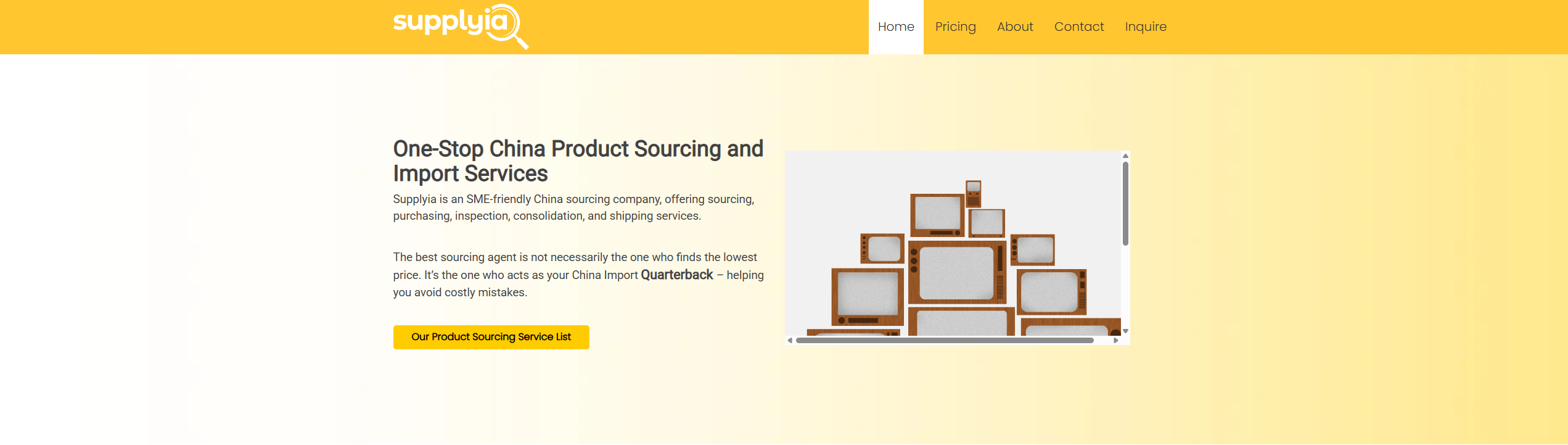
Supplyia is positioned as both a buying agent and a consolidation service, with dedicated offers for 1688, Yiwu, private-label work and orders spread across several suppliers.
Its public pages cover supplier search, RMB purchasing, sample development, production monitoring, inspection, consolidation, FBA preparation and international shipping. The model is especially useful when a buyer needs products from several marketplace sellers or factories collected at one warehouse, checked and repacked into a single shipment.
Pricing is modular. Supplyia currently publishes sourcing plans in the 5–9% range, flat fees for some tasks and per-unit or custom pricing for prep work. Extra SKUs, inspection, storage, documentation and freight may not sit inside one headline percentage.
Inspection language also varies by service. A particular plan may offer piece-by-piece checking, while the consolidation service states that its checks do not amount to a product quality guarantee. Define the inspection task, evidence and remedy before treating “QC” as settled.
5、Dragon Sourcing — Best for Structured and Enterprise Procurement
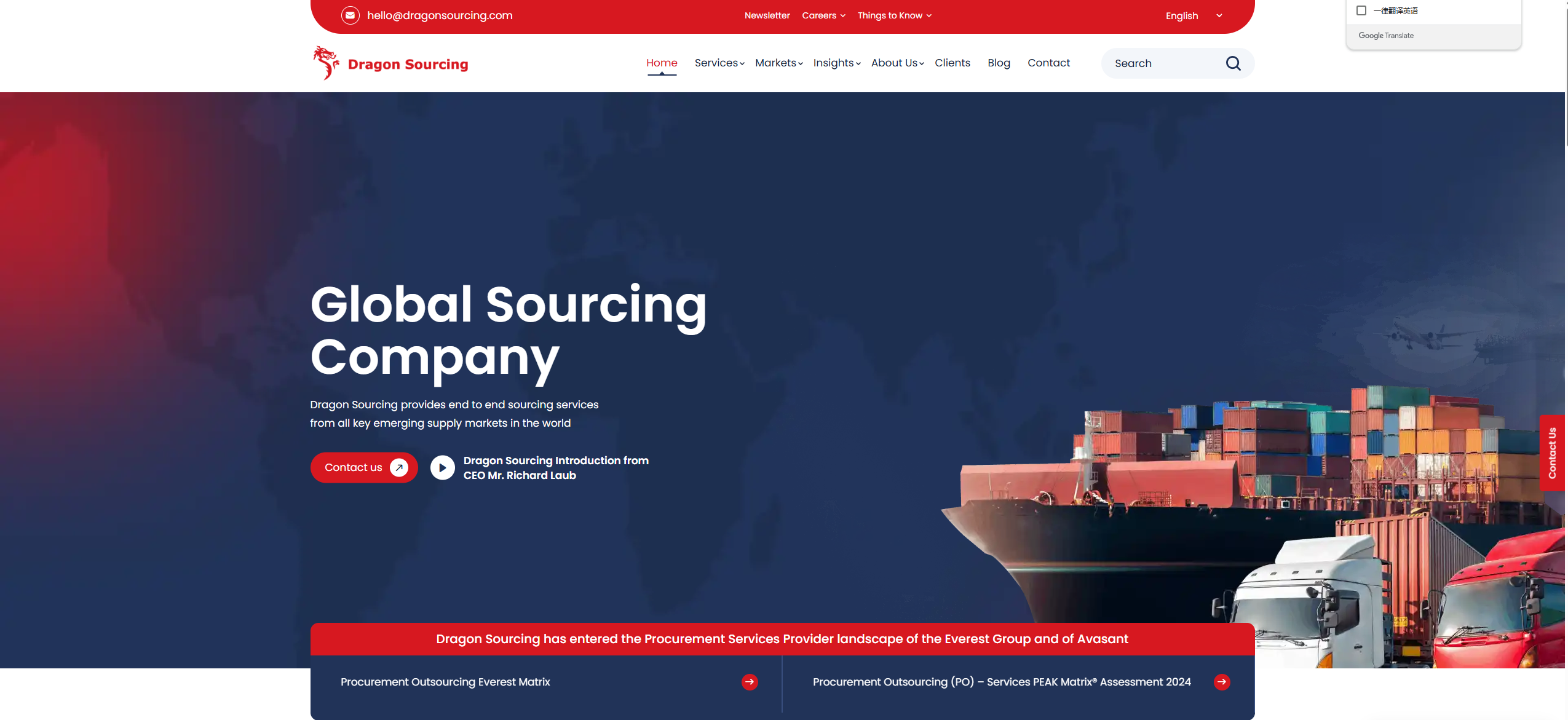
Dragon Sourcing works more like an outsourced procurement office than a lightweight marketplace agent. Its public process emphasizes formal supplier identification, qualification and project control.
The company lists factory audits, compliance checks, negotiation, quality inspection, purchase-order management and logistics coordination. Other official service pages state that supplier selection is independent and that Dragon Sourcing does not take commissions from suppliers.
This is a stronger fit for established companies, industrial buyers and projects that require a documented sourcing process. It can also suit organizations where several stakeholders need visibility into supplier decisions and risk controls.
The trade-off is weight. A consulting-led process can take more time and budget than a small ecommerce test order warrants. Ask about category experience, minimum project size, deliverables, reporting and the commercial proposal before assuming the enterprise model will improve a simple purchase.
6、Maple Sourcing — Best for Product Development and Manufacturing Control
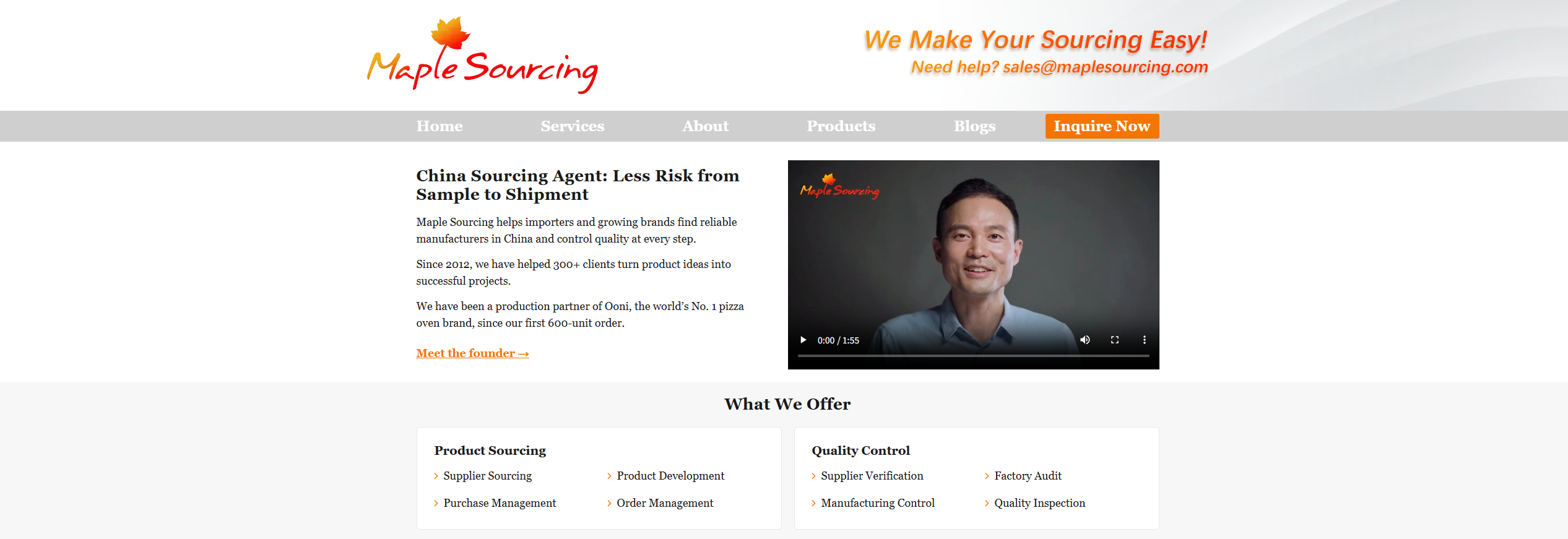
Maple Sourcing concentrates on the work between product idea and finished shipment: selecting suppliers, developing the product and keeping production on course.
Its public services include supplier sourcing and verification, factory audits, prototypes, samples, purchase and order management, manufacturing control, quality inspection and shipment support. This puts it closer to a production-management partner than a product directory.
The model suits brands with a defined concept or specification that still needs engineering decisions, repeated sample revisions or tighter manufacturing follow-up. It is less obviously designed for ready-stock dropshipping or direct-to-consumer order fulfillment.
Category fit is the main question. Ask for relevant project examples and confirm who owns drawings, molds, packaging files and technical records. Maple’s public educational content discusses commissions, fixed fees and mixed pricing, but it does not replace a project quote. Engineering, audits, testing, rework and logistics should appear as separate lines where applicable.
How Much Does a China Sourcing Agent Cost?
There is no standard fee. A straightforward reorder and a new molded product may carry the same purchase value but create very different workloads.
Purchase commission. Many public sourcing guides and service pages use 5–10% of product value as a common reference. It is not an industry tariff. The percentage can move with order size, product complexity and the work included.
Fixed project fee. This is easier to use when the task has a defined end: a supplier search, quotation comparison, factory audit or development project.
Monthly retainer. Ongoing procurement across several SKUs may be priced as continuing management rather than a fee on each order.
Product markup. Some agents fold their margin into the unit price instead of listing a service charge. The invoice looks simpler, but the original factory cost becomes harder to see.
Hybrid pricing. A commission or project fee may sit alongside separate charges for samples, inspection, storage, packaging, photography or logistics.
The percentage alone tells you very little. Put every quote on the same landed-cost basis:
Product + agent fee + samples + tooling + QC + packaging + domestic freight + international shipping + duties
Then look for the lines that tend to appear late: sample courier fees, failed inspections, rework, re-inspection, storage, export documents and customs support. A visible 8% fee can be cheaper than a nominal 3% if the lower quote hides margin in the product or leaves expensive problems until after shipment.
How to Vet a Sourcing Agent Before Paying a Deposit
Start with documents, not claims.
Match the company name across the business registration, contract, invoice and receiving bank account. If payment goes to a related company in Hong Kong or another jurisdiction, ask for the relationship in writing before sending funds.
Next, give the agent one specification and request comparable quotes. Materials, quantity, packaging and delivery terms must match. Otherwise, a cheap quote may simply describe a cheaper product. Ask whether each candidate is a factory or a trading company, and how that identity was checked.
Look at the sample process before discussing scale. Revisions should be traceable, and the approved version should become the production reference where the product requires one. The QC plan should name the timing, method, defect categories, functional checks, packaging requirements and evidence you will receive.
Also ask what happens when inspection fails. Who speaks to the factory? Who pays for rework and re-inspection? Can final payment or shipment be held? “We will solve it” is not a remedy.
Finally, settle ownership. Molds, drawings, packaging stock, approved samples and supplier records become difficult only when the relationship ends. Put the exit terms in writing, then test the process with one limited order.
Pilot One Product Before Moving the Whole Catalog
A new agent does not need the whole catalog to prove the model. One well-defined SKU is enough. If you are still validating a product or supplier before a larger commitment, follow the sample, delivery and supplier-check process in our guide on how to find reliable dropshipping suppliers.
Choose a product with stable materials and quality requirements that can be checked without guesswork. Use the pilot to test whether the supplier shortlist makes sense, whether the quote survives the final invoice and whether the approved sample matches the production goods.
Pay attention to the unglamorous details. Are updates prompt and specific? Does the QC report show defects and measurements, or only generic warehouse photos? Are labels, carton marks and packaging executed correctly? Does the delivery date move without explanation? When something fails, does the agent take ownership or simply forward the factory’s reply?
The aim is not to win the lowest first-order price. It is to see whether the agent can produce the same agreed result again, under more volume and with less supervision.
FAQ
1、What is the best China sourcing agent?
There is no universal winner. FFOrder is suited to ecommerce brands that want sourcing, inventory and fulfillment connected. JingSourcing is geared toward consumer goods and Yiwu. Dragon Sourcing fits a more formal enterprise procurement process. Product complexity, order size and delegated responsibility should decide the shortlist.
2、How much does a China sourcing agent charge?
Public references often place commission models around 5–10% of product value, but that is not a fixed market rate. Agents may instead use project fees, retainers, unit-price markups or mixed billing. Compare samples, QC, packaging, freight, duties and rework as part of the same landed-cost calculation.
3、Is a sourcing agent better than Alibaba?
They solve different problems. Alibaba helps buyers discover and contact suppliers. An agent adds local verification, quotation comparison, sampling, production follow-up or inspection. If you already manage a reliable factory and understand the process, the extra layer may offer less value.
4、How do I verify a sourcing agent in China?
Check the registered entity, business license, contract name and receiving bank account. Review an example supplier report, quotation comparison and QC report. Ask whether the agent receives supplier commissions. Before a large deposit or catalog move, run one limited order through the full process.
5、Can a sourcing agent negotiate lower MOQs?
Sometimes. An agent may use standard materials, simplify customization, combine production or negotiate a smaller run. The factory still decides what is commercially viable. A lower MOQ can bring a higher unit price, fewer packaging choices or less control over colors and materials.
6、Does a sourcing agent perform quality control?
Many do, but “QC” can mean anything from counting cartons to AQL sampling, functional tests or piece-by-piece inspection. Ask which method applies to your SKU, what evidence the report contains and what the agent will do if the goods fail.
7、What is the difference between a sourcing agent and a trading company?
A sourcing agent usually manages procurement for the buyer and charges for that service. A trading company buys and resells goods at a margin. Both can simplify exports, but a trading company may give the buyer less visibility into the original factory and factory price.
8、Can one agent handle sourcing and ecommerce fulfillment?
Yes. Some providers continue from production into receiving, inventory, packaging, pick and pack, tracking and exception handling. Confirm whether one team remains accountable throughout or whether the work is handed to separate warehouse and logistics partners.
FFOrder Team
FFOrder helps growing brands run dropshipping and fulfillment as one system — from sourcing across 40,000+ factories to global shipping and structured after-sales.
Need a Sourcing Partner That Stays Accountable After Production?
FFOrder connects product sourcing, piece-by-piece inspection, private inventory, branded packaging and ecommerce fulfillment in one workflow—so your supply chain does not break at handoff.
-1200x628%20(14).png)