
10 Best Ecommerce Fulfillment Companies in 2026
Compare ShipBob, ShipMonk, Red Stag, Amazon MCF, Flexport, DHL, Bigblue, eFulfillment Service, Shipfusion, and FFOrder by use case, coverage, costs, and operating model.

ShipBob is best for distributed direct-to-consumer fulfillment across multiple locations.
ShipMonk is best for complex catalogs, bundles, subscription boxes, and kitting operations.
Red Stag Fulfillment is best for heavy, bulky, fragile, or high-value products.
Amazon MCF is best for brands that already hold inventory inside Amazon’s fulfillment network.
Flexport and DHL are more relevant when freight, customs, warehousing, and multi-country logistics need broader coordination.
Bigblue is best suited to European direct-to-consumer fulfillment, while eFulfillment Service offers a more accessible starting point for smaller US businesses.
Shipfusion is relevant for brands that need high-touch account management or specialized handling.
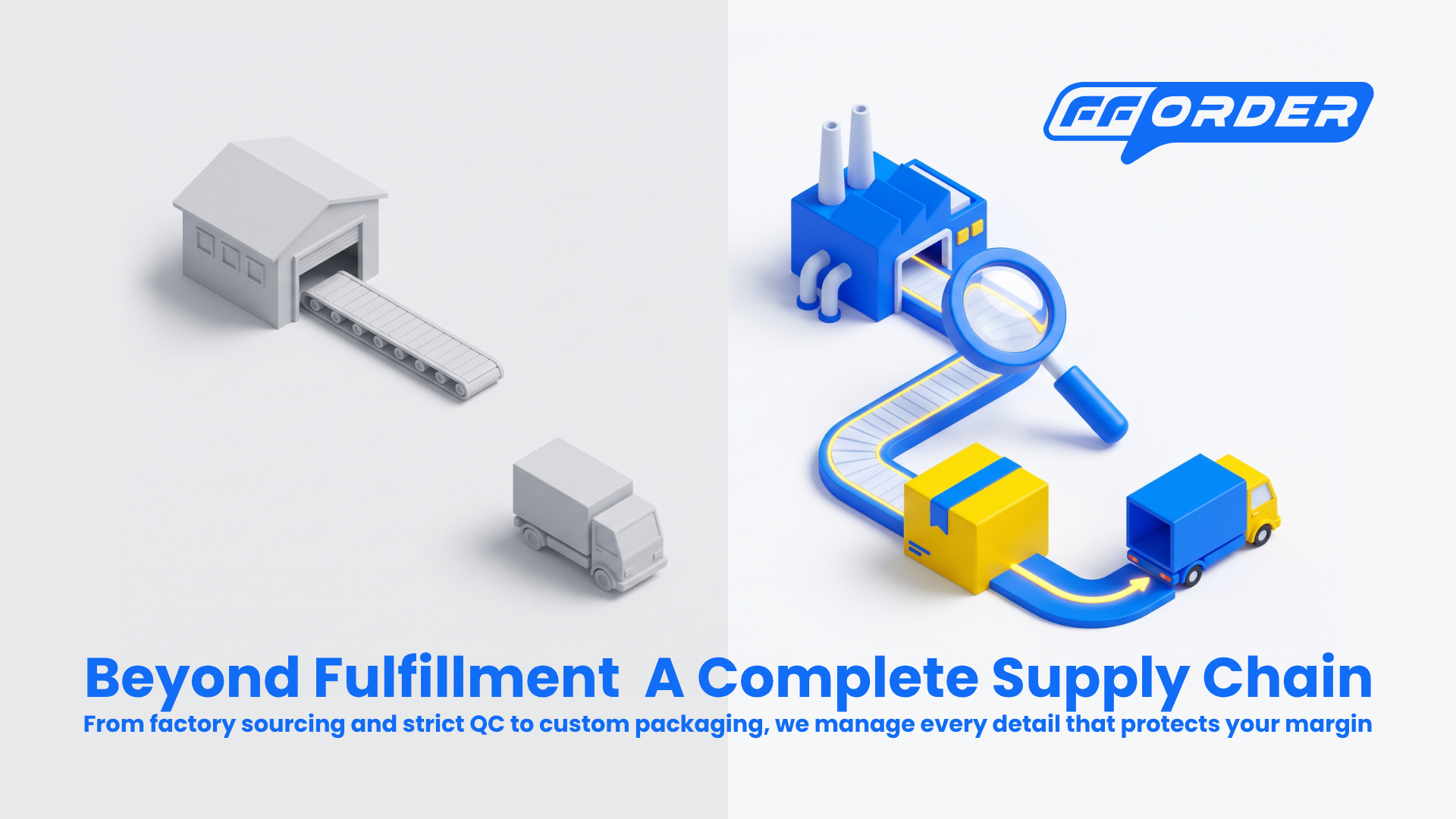
FFOrder is best for China-sourced products that need sourcing, samples, product-specific QC, private inventory, branded packaging, fulfillment, and after-sales coordination in one workflow.
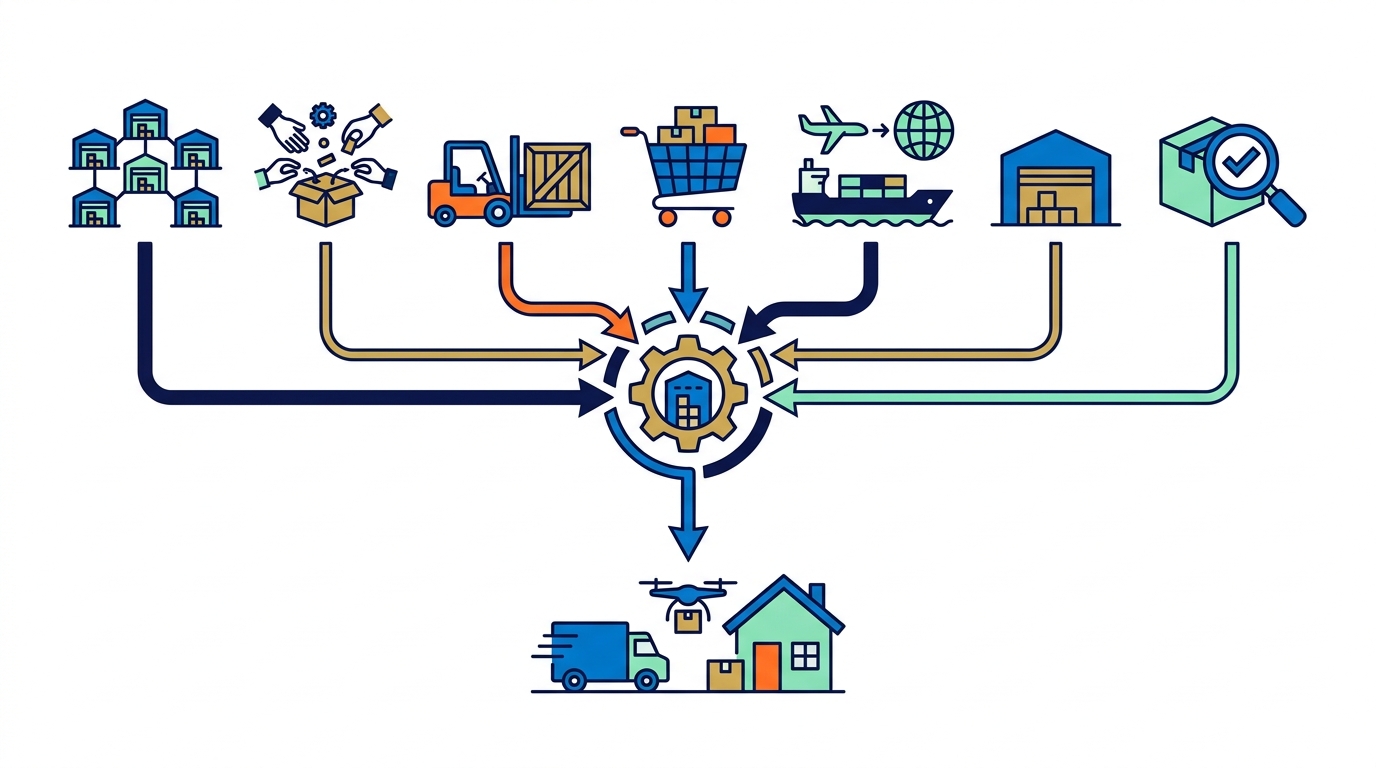
Best Ecommerce Fulfillment Companies at a Glance
Use this table to narrow the field according to operating need. The strongest option depends on what you sell, where inventory starts, and how much of the supply chain you want one provider to manage.
What Counts as an Ecommerce Fulfillment or 3PL Company?
The labels are loose. A warehouse operator, Amazon MCF, a freight platform, and a sourcing partner may all appear in the same search results, even though they take responsibility at different points in the supply chain. The useful distinction is where the handoff begins.
Ecommerce-focused 3PL
ShipBob and ShipMonk receive finished goods, store them, pick and pack orders, ship parcels, and process returns. Their software keeps that warehouse activity connected to Shopify and other sales channels. This is the standard 3PL model: the product is already made, approved, and ready to sell before it arrives.
Specialized fulfillment provider
Red Stag and Shipfusion are relevant when ordinary parcel handling is not enough. Heavy items, fragile products, high-value stock, temperature-sensitive goods, subscription boxes, or complex kitting can change the warehouse process. In those cases, a specialist with fewer locations may be a better fit than a broad network designed around small, standard parcels.
Marketplace fulfillment network
Amazon MCF uses Amazon inventory and infrastructure to ship orders placed outside Amazon. That shared stock pool is convenient, especially for Amazon-first sellers. The compromise is a standardized operating model with less room for custom packaging, inserts, and unusual warehouse instructions.
Freight-to-fulfillment or enterprise network
Flexport and DHL cover more ground. Freight, customs, distribution, warehousing, and final fulfillment can sit inside the same commercial relationship. That breadth is useful for complex international operations; it may be unnecessary for a smaller brand that only needs one domestic pick-and-pack location.
Integrated sourcing and fulfillment provider
FFOrder starts earlier. It can connect China sourcing, approved samples, written specifications, product-specific QC, private inventory, packaging, fulfillment, tracking, and after-sales coordination. The warehouse is one part of the system, not the starting point.
So before comparing logos, identify the missing layer. It may be local storage, specialist handling, marketplace delivery, international logistics—or ownership of the full path from supplier to customer.
How We Evaluated the Companies
The competitor information comes from official websites, Help Centers, Shopify documentation, integration pages, public pricing material, and current service terms. We did not route the same SKU through all ten providers, so this is not a hands-on test dressed up as a league table.
We looked for the details that change an operating decision: where the provider takes responsibility, which products and order volumes fit its model, which facilities a customer may actually use, and how orders and inventory move between the warehouse and sales channels. We also checked receiving, storage, pick-and-pack, returns, kitting, packaging, support, minimum commitments, and the most important limitation of each option.
The FFOrder section goes further because its service begins before conventional warehouse fulfillment. Internal brand and operating documents were used to verify the sourcing, sampling, QC, inventory, packaging, integration, and after-sales workflow described here.
Public information was last checked on August 21, 2026. Prices, minimums, warehouse access, and facility-level capabilities can change. A current written quote based on real SKUs, dimensions, inventory, destinations, and monthly volume remains the final reference.
Full Comparison Table
The table keeps the competitor comparison to the points that materially change the decision. Pricing remains quote-based for most providers.
The 10 Best Ecommerce Fulfillment and 3PL Companies
1、ShipBob — Best for Distributed DTC Fulfillment
ShipBob is a technology-led ecommerce 3PL with proprietary warehouse software and fulfillment locations in the US, Canada, Europe, the UK, and Australia. Its Shopify integration automates order transfer and returns inventory and tracking data to the store. Brands can use one or several facilities, depending on their contract and inventory plan.
The model works best when a growing DTC brand has enough stock and regional demand to justify distributed inventory. Custom packaging and B2B workflows are available, while pricing is provided through a custom fulfillment quote.
More locations can shorten shipping distance, but they also increase inbound freight, forecasting, stock allocation, and replenishment work. Confirm the exact facilities and commercial terms assigned to the account.
2、ShipMonk — Best for Complex SKU and Kitting Operations
ShipMonk combines ecommerce fulfillment with OMS, inventory, transport, automation, and reporting software. It is a strong fit for brands managing large catalogs, variants, bundles, subscription boxes, B2B orders, or recurring kitting work.
Its official pricing page confirms custom pick fees, storage and fulfillment charges, project-based fees, and a Monthly Minimum calculated from expected volume and the first-item pick fee. Custom packaging is billed as an additional picked item, while special projects are quoted separately.
The technology and project support are useful for complex operations, but can be excessive for low-volume stores with simple products. Confirm onboarding, platform, monthly minimum, and special-project charges in the proposal.
3、Red Stag Fulfillment — Best for Heavy, Bulky and High-Value Products
Red Stag is a US specialist for products many parcel-focused 3PLs avoid. Its official site centers on big and heavy shipping, high-value inventory, DTC and B2B orders, returns, kitting, and special projects. It operates company-run facilities in Tennessee and Utah and supports Shopify and other sales channels through its fulfillment technology.
This is a product-fit decision rather than a network-size decision. The model is most relevant when dimensional weight, handling, damage, or high item value materially affects cost.
A specialist built for difficult products may not be the most economical option for inexpensive lightweight parcels. Pricing is custom, so evaluate handling and damage exposure alongside the warehouse fee.
4、Amazon Multi-Channel Fulfillment — Best for Amazon-First Sellers
Amazon MCF uses Amazon inventory to fulfill Shopify and other off-Amazon orders. The official Shopify app supports catalog mapping, automatic order routing, inventory updates, tracking, and unbranded packaging. Sellers can use MCF without selling on Amazon, although the app’s market availability and Buy with Prime features differ by country.
Fees are pay as you go and vary by product size, weight, delivery speed, and current pricing rules.
MCF is efficient when Amazon already holds the inventory, but the warehouse process is standardized. Brands have limited control over packaging, inserts, kitting, and other physical customizations.
5、Flexport — Best for Freight-to-Fulfillment Visibility
Flexport connects freight, distribution, and ecommerce fulfillment through one logistics platform. Its official fulfillment service integrates with Shopify through the Shopify Fulfillment Network app and supports more than 50 ecommerce and retail platforms. Inventory-placement tools and international DDP or DDU options make it relevant to brands moving stock across borders.
Established companies that want international freight, customs, inventory movement, and destination fulfillment connected in one system.
The model is broader than standard domestic pick-and-pack. Confirm which facilities and partners will handle the account, along with current fulfillment minimums and pricing.
6、DHL Fulfillment Network — Best for Enterprise Global Coverage
DHL offers a global fulfillment network for larger ecommerce and omnichannel businesses. Its official Shopify service uses standard APIs to connect order processing and returns with DHL fulfillment operations. Services and facility access are defined by region and contract rather than granted across the full DHL network by default.
Established companies that need multi-country warehousing, DTC and B2B fulfillment, transportation, and enterprise logistics support.
Onboarding, commercial requirements, and operating processes may be too heavy for an early-stage brand seeking a low-minimum warehouse with flexible manual handling.
7、Bigblue — Best for European DTC Fulfillment
Bigblue is a European commerce operations and fulfillment platform with warehouses in France, Germany, Spain, and the UK. It supports DTC and retail operations, branded packaging, samples, delivery options, and returns. Its official pricing combines a fulfillment fee, a required Bigblue App subscription, and optional usage-based experience packs.
Consumer brands focused on European delivery, returns, and branded post-purchase experiences.
Brands centered on North America or Asia may still need another provider. Confirm the assigned warehouse, minimum volume, specialist storage, and returns scope.
8、eFulfillment Service — Best for First-Time 3PL Users
eFulfillment Service is a US provider that publicly advertises no setup fees, no minimum order requirements, pay-as-you-go service, and no long-term contracts. Its scope includes storage, pick-and-pack, Shopify and other cart integrations, returns, kitting, subscription boxes, and custom packaging.
Smaller businesses moving from self-fulfillment to a straightforward US 3PL.
A lower entry barrier comes with a smaller network and fewer enterprise features. “No order minimum” also does not mean storage, labor, packaging, and shipping are free.
9、Shipfusion — Best for High-Touch and Specialized Fulfillment
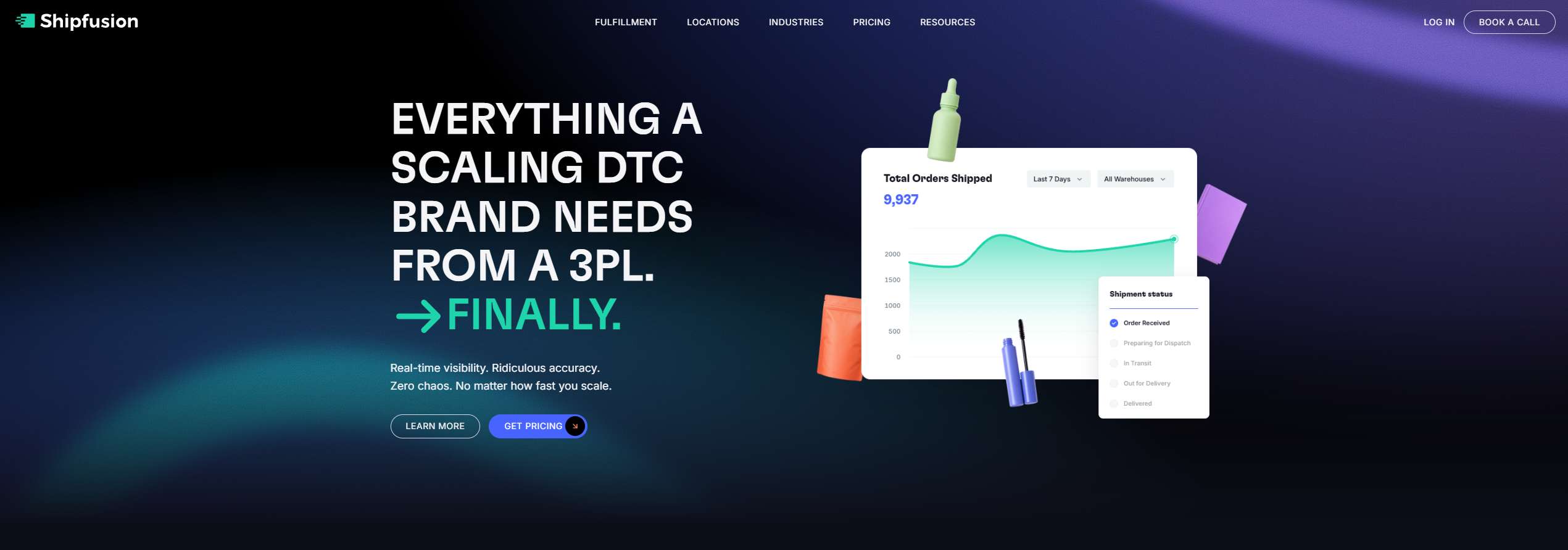
Shipfusion operates company-owned North American fulfillment centers and combines its warehouse software with dedicated account management. Its official service pages list real-time inventory, reverse logistics, lot and expiry tracking, FIFO/FEFO controls, temperature-controlled areas, kitting, bundling, custom packaging, and Shopify integration.
High-growth DTC brands that need specialist handling and a named operational contact.
Pricing is custom, and capabilities such as temperature control or compliance should be confirmed for the assigned facility and product.
10、FFOrder — Best for China-Sourced Products That Need Integrated Fulfillment
FFOrder publishes this comparison. Unlike a destination-market 3PL that begins once finished stock reaches the warehouse, FFOrder is built to connect the work before and after that point.
Its ecommerce fulfillment service can start from an existing SKU, a sourcing brief, or a supplier requirement. The operating workflow may include factory sourcing and comparison, samples, written product specifications, product-specific QC, warehousing, private inventory, and replenishment. An approved sample and agreed inspection points can become working references, reducing the risk that later production batches drift from the product the brand originally approved.
FFOrder also coordinates the materials surrounding the product. Custom packaging, labels, inserts, kitting, POD, OEM, and ODM can be scoped around the SKU rather than managed as disconnected warehouse requests. Product stock and packaging stock can be planned together, which becomes more important once the same item is reordered repeatedly.
The store connection is part of the operating loop, not the full service. FFOrder publishes workflows for order import, SKU mapping, inventory synchronization, tracking write-back, and structured exception handling. When a case crosses the supplier, warehouse, carrier, and after-sales process, the dedicated operating team coordinates the next action instead of leaving the brand to move the case between separate vendors.
There is no platform membership fee, but physical work is paid. Products, production, inventory, storage, packaging, customization, shipping, and selected services are quoted according to the SKU and workflow. Product- or service-specific minimums may apply and should be confirmed in writing.
Growth-stage ecommerce brands with proven or clearly specified China-sourced products that need repeatable quality, planned inventory, branded fulfillment, and one team responsible for physical execution.
FFOrder is not the default choice for a locally sourced brand that only needs standard US or European warehousing. Its advantage is strongest when sourcing, product control, packaging, fulfillment, and after-sales need to work as one system.
Which Fulfillment Company Fits Your Business Stage?
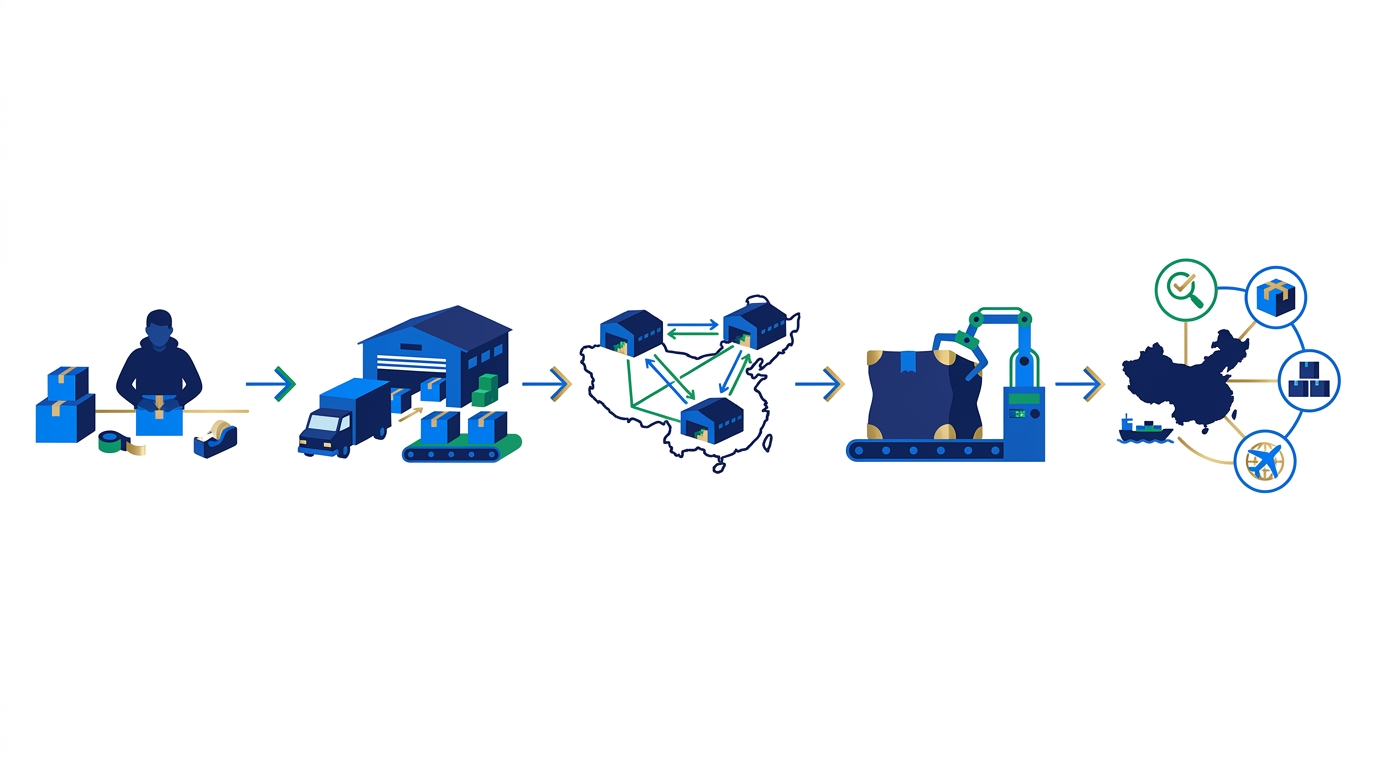
The answer changes as the bottleneck moves. Early on, the problem is usually time and space. Later it becomes stock placement, product handling, or the number of people required to keep suppliers and warehouses aligned.
Still shipping a few orders yourself
A 3PL may be premature. Receiving fees, storage, onboarding, and monthly minimums can outweigh the labor saved. Use this period to clean up SKU names, record packed dimensions and weights, and settle on packaging that can be repeated. Those details become the handoff file when outsourcing finally makes sense.
Moving into a first warehouse
A lower-commitment provider such as eFulfillment Service—or a flexible regional 3PL—can be enough. Look for a receiving process you understand, dependable pick-and-pack, visible tracking, and returns that do not disappear into a queue. Before moving stock, confirm the minimum spend and the cost of removing it later.
Scaling a DTC operation
ShipBob and ShipMonk become more relevant when volume is stable, the catalog is larger, or orders come from several channels. Their software can reduce manual updates and expose inventory problems earlier. Multi-location storage only earns its keep when there is enough demand and stock to place inventory intelligently; otherwise it creates several smaller stock problems instead of one manageable one.
Expanding by market or product type
This is where specialization matters. Red Stag is built around big and heavy products in the US. Bigblue is oriented toward European commerce. Amazon MCF is efficient when Amazon already holds the stock. DHL is better suited to larger, multi-country operations. The right choice follows the product and destination, not the best-known logo.
Connecting China supply with fulfillment
FFOrder becomes relevant when a proven product is being managed across a factory, inspector, packaging vendor, warehouse, carrier, and support team. At that point, the warehouse fee tells only part of the story. Product consistency, private inventory, replenishment, packaging stock, tracking, and exception ownership all affect the cost of keeping the SKU available and repeatable.
The benefit is not another dashboard. It is fewer handoffs, with one operating team responsible for moving the physical workflow forward.
How Much Does Ecommerce Fulfillment Cost?
A single “price per order” is rarely a fair comparison. One brand may ship a lightweight item from a compact catalog. Another may store 200 SKUs, build bundles, use branded cartons, and process frequent returns. The order count can be identical while the warehouse work is not.
A useful quote separates the cost into its real parts:
- Setup: onboarding, SKU mapping, integrations, and implementation.
- Receiving: unloading, counting, labeling, pallet handling, and any item-level checks.
- Storage: pallet, shelf, bin, unit, or cubic-volume charges, including slow-moving inventory rules.
- Order handling: the first pick, additional items, packing labor, and standard materials.
- Extra work: kitting, assembly, inserts, relabeling, bundling, and subscription-box preparation.
- Shipping: carrier charges based on packed dimensions, weight, destination, and service level.
- Returns: receipt, inspection, photography, restocking, disposal, or replacement shipment.
- Commitments and exit costs: platform fees, monthly minimums, long-term storage, inventory removal, and pallet preparation.
To compare proposals, give each provider the same file: monthly and peak volume, items per order, SKU count, packed dimensions and weights, inventory held, destination mix, return rate, packaging needs, kitting work, and the DTC/B2B split.
Then ask for two models—an average month and the busiest month. Check whether shipping includes a markup and whether an unused monthly minimum is still billed.
The figure that matters is total fulfillment cost per shipped order. Pick-and-pack is only one line inside it.
How to Choose a 3PL
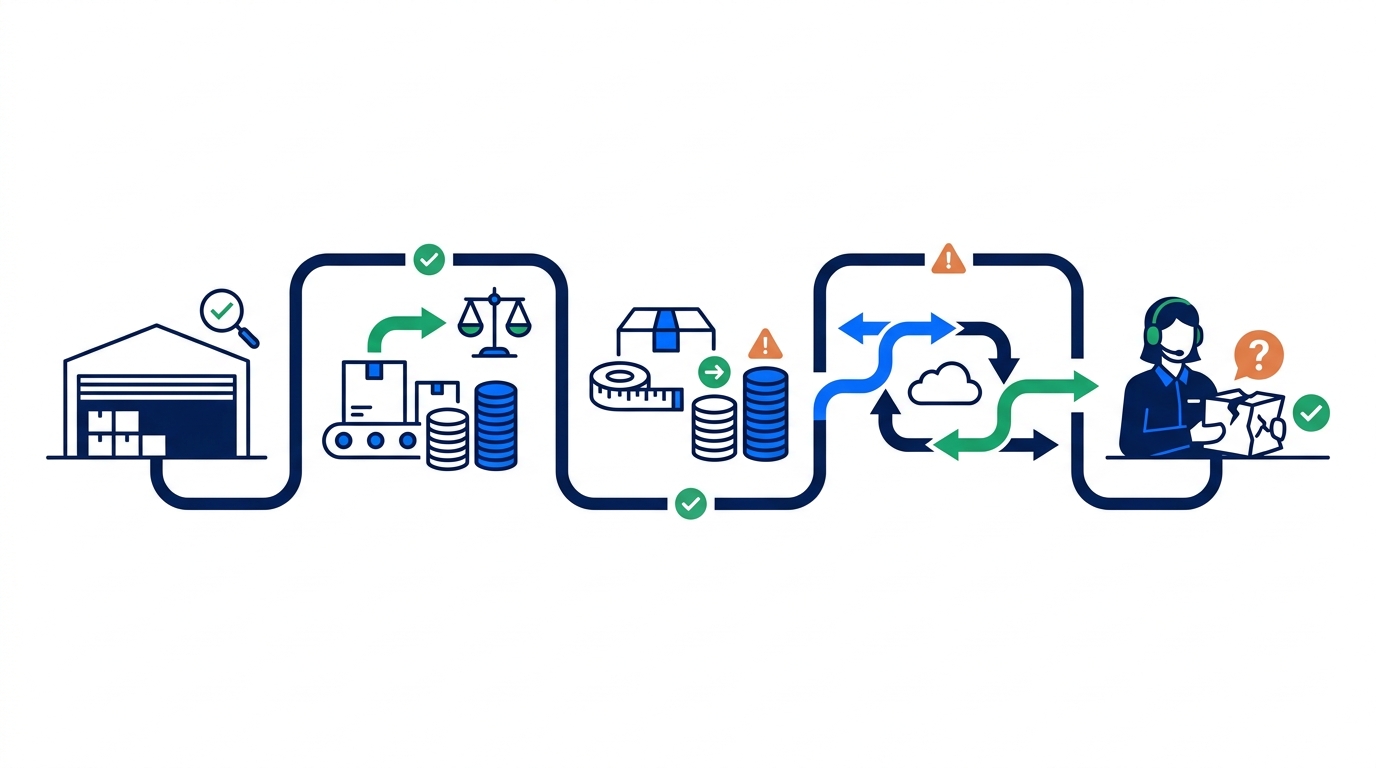
A warehouse map tells you where a company has capacity. It does not tell you where your stock will sit, who will touch it, or what happens when an order falls outside the standard flow.
Start with the facility. Which warehouse will receive the inventory? Is it operated by the provider or a partner? If stock is split, who decides the allocation and how is replenishment handled?
Then settle the commercial terms. Monthly order minimum and minimum spend are different. Ask for both, along with storage, receiving, project fees, peak surcharges, and the cost of removing inventory later.
Receiving deserves its own conversation. Find out how long stock normally takes to move from the dock into sellable inventory. If the product needs lot tracking, serial numbers, expiry dates, or FEFO handling, ask to see how those rules appear in both the software and the warehouse process.
For outbound orders, confirm the cutoff time and the dispatch SLA. “Same-day fulfillment” means the warehouse processes the order that day; it does not promise same-day delivery. Peak-season plans should cover labor, carrier capacity, changed cutoffs, and surcharges.
The integration also needs a real test. Check order import, SKU mapping, inventory updates, cancellations, tracking, returns, and any bundle logic. An authorization screen proves that two systems can connect. It does not prove that the order loop works.
Finally, walk through one difficult order and one return. Include branded packaging, kitting, damage, or another exception the brand actually sees. Ask who owns the case and how quickly it is escalated. Where possible, start with a limited group of SKUs or one market before moving the full operation.
When Should You Switch 3PLs?
Do not move because of one bad day. Move when the same failure keeps returning and the provider cannot show how it will be fixed.
Inventory drift is a serious signal. If the warehouse count, Shopify, and the ERP rarely agree, purchasing and support are working with guesses. Repeated promotion backlogs, wrong items, missing units, damage, and late dispatches point to a similar problem: the operation is producing customer-service work faster than the team can close it.
Invoices can become another trigger. Receiving, storage, handling, shipping, returns, and project charges should reconcile with the rate card. If they do not, the brand cannot forecast margin or check whether a change actually saves money.
Sometimes the 3PL has not deteriorated; the business has outgrown it. A new market, B2B channel, subscription program, or branded packaging requirement may sit outside the warehouse’s design. For China-sourced products, the gap may be further upstream. A destination warehouse can ship what arrives, but it cannot repair an inconsistent production batch after the fact.
A controlled move
- Clean the SKU file. Align product names, barcodes, variants, bundles, and pack sizes.
- Count the stock. Reconcile physical inventory before anything leaves the old facility.
- Price both sides of the move. Include counting, palletization, freight, receiving, relabeling, storage, and disposal.
- Keep a short overlap. Open orders and returns need a clear owner while both systems are active.
- Move a limited group first. One product family or one market is enough to expose most workflow problems.
- Test the full loop. Order routing, inventory updates, tracking, packaging, cancellations, and returns all need to work.
- Avoid a bad date. Do not cut over immediately before peak season, a launch, or a major promotion.
A new warehouse only helps if it removes the reason the old setup stopped working.
Frequently Asked Questions
What is the best ecommerce fulfillment company?
There is no universal winner. ShipBob is built around distributed DTC fulfillment; Red Stag around heavy and difficult products; Amazon MCF around shared Amazon inventory; Bigblue around European commerce. FFOrder is the stronger fit when China sourcing, product control, inventory, packaging, and fulfillment need one operating owner.
What is the difference between a fulfillment company and a 3PL?
A fulfillment company usually handles receiving, storage, pick-and-pack, shipping, and returns. A 3PL may also cover freight, customs, distribution, or broader supply-chain work. The labels overlap, so the contract matters more than the category name. Check exactly where responsibility starts and where it ends.
When should an ecommerce business use a 3PL?
Use a 3PL when packing orders is pulling time away from growth, storage is restricting inventory, volume is stable enough to absorb minimum fees, or customers need faster delivery from another market. There is no reliable order-count rule that works for every product and margin.
How much does a 3PL cost per order?
There is no standard figure. Receiving, storage, picks, packing materials, shipping, returns, project work, and monthly commitments can all sit on separate lines. Compare providers with the same SKU dimensions, order mix, destinations, and peak volume, then calculate the total cost per shipped order.
Which 3PL is best for Shopify?
ShipBob and ShipMonk are relevant when a Shopify brand needs warehouse technology and multichannel fulfillment. Amazon MCF works when the stock already sits with Amazon. FFOrder makes more sense when the Shopify order is only the final step in a China-based workflow that also includes sourcing, QC, inventory, and packaging.
Which fulfillment company is best for small businesses?
eFulfillment Service is a practical starting point because it advertises no setup fee, no order minimum, and pay-as-you-go service. A flexible regional 3PL may work just as well. Ask for the full rate card: no order minimum does not remove storage, labor, packaging, returns, or shipping charges.
Conclusion: Choose the Operating Model, Not the Largest Logo
A good 3PL fits the work already in front of it. A small store may need a low-commitment US warehouse. A scaling DTC brand may need stronger inventory software. Heavy products need different floors, packaging, and carrier economics. European expansion needs local delivery and returns.
China-sourced products create a different question. By the time finished stock reaches a destination warehouse, the important decisions about supplier version, quality standard, packaging, and replenishment have already been made. A low pick-and-pack rate cannot recover a bad production batch or packaging stock that ran out at the wrong time.
That is the gap FFOrder is designed to close: one operating workflow for sourcing, product control, inventory, branded fulfillment, shipping, and physical exceptions.
FFOrder Team
FFOrder helps growing brands run dropshipping and fulfillment as one system — from sourcing across 40,000+ factories to global shipping and structured after-sales.
Request an Ecommerce Fulfillment Review
Send your core SKUs, sourcing location, destination markets, normal and peak order volume, current inventory position, and packaging requirements. FFOrder can map the handoffs and identify which parts of the workflow can sit with one operating team.
-1200x628%20(14).png)