
6 Best China 3PL Providers for Ecommerce in 2026
Compare FFOrder, NextSmartShip, SendFromChina, ChinaDivision, Wefulfil, and Fulfillmen by sourcing, QC, warehousing, branding, integrations, shipping, and operating scope.

FFOrder is best for China-sourced products that need sourcing, product-specific QC, private inventory, branded packaging, fulfillment, and after-sales coordination in one workflow.
NextSmartShip is best for structured DTC fulfillment, crowdfunding projects, subscription boxes, kitting, and Amazon FBA preparation.
SendFromChina is best for conventional China warehousing, pick and pack, and global parcel fulfillment.
ChinaDivision is relevant for sellers seeking a lower entry barrier and API-based order, inventory, and tracking synchronization.
Wefulfil is best suited to Shopify DTC brands shipping from China into Europe and Australia.
Fulfillmen is relevant for brands that want sourcing, storage, branded packing, and global shipping within one provider relationship.
Compare providers using the same SKU, dimensions, order volume, destinations, packaging rules, and shipping conditions—not only the advertised pick fee.
6 Best China 3PL Providers at a Glance
What Is a China Ecommerce 3PL?
A China ecommerce 3PL receives inventory, records it by SKU, stores it, and processes customer orders. When an order arrives, the warehouse picks the items, packs them to the agreed instructions, passes the parcel to a carrier, and returns tracking information to the store. Kitting, inserts, relabeling, and returns support may sit inside the same operation.
That is different from simply booking transport. A freight forwarder may arrange air, sea, rail, or parcel movement and help with customs paperwork without holding SKU-level inventory or packing a single consumer order. A fulfillment warehouse, meanwhile, may execute every order well but have no role in choosing a factory, approving a sample, or identifying a recurring production defect.
This boundary is where many comparisons lose their usefulness. A parcel can leave the warehouse on time and still create refunds because the wrong accessory was delivered by the supplier, the finish changed between batches, or the branded insert was never sent to the warehouse.
Shopify describes a 3PL as an external operator that can handle receiving, warehousing, picking, packing, shipping, tracking, and returns. Its 3PL selection guide is right to put operational fit, technology fit, and cost fit ahead of warehouse-count claims.
FFOrder extends the workflow further upstream. Its China 3PL fulfillment service can begin with a supplier, an existing SKU, or a sourcing brief. Approved samples, written specifications, and product-level QC checkpoints can then inform purchasing, inbound checks, packaging, and fulfillment. That will not make every supply-chain problem disappear. It does give the brand one operating thread from product preparation through delivery.
Why Use a China 3PL?
The case for a China 3PL is strongest when the products are made there. Inventory stays close to suppliers, so replenishment, supplier consolidation, kitting, and packaging preparation do not require an extra international move before the first customer order ships.
That is especially practical for multi-supplier orders. A product, its insert, a branded box, and a bundle component can be received into one operation and checked before dispatch. It is also useful when demand is spread across several countries or is still uncertain. Long-tail SKUs, crowdfunding projects, launches, and seasonal collections do not always justify placing a large batch in one destination market before the sales pattern is clear.
There is a limit to this logic. Heavy or bulky goods can be expensive to ship one parcel at a time. A brand promising next-day delivery normally needs local stock. High-return categories may need domestic exchanges rather than a long cross-border return journey. Duties, tax treatment, compliance, and importer responsibility must be clear before a route is sold to customers.
Many brands land in the middle. Their proven best-sellers sit in a local warehouse; new products, low-volume variants, and replenishment stock remain in China. That is not indecision. It is a deliberate inventory rule.
How We Evaluated the 6 Providers
We treated these companies as operating partners, not carrier lists.
The first question was the handoff point. Does the provider receive finished goods and fulfill orders? Does it also offer sourcing, samples, inspections, or supplier coordination? We then looked at receiving, SKU visibility, pick and pack, kitting, packaging, tracking, returns, and the practical store or API workflow.
Commercial terms mattered just as much. A provider can advertise no order minimum while charging for storage, handling, packaging, special projects, or monthly account requirements. Those terms should not be collapsed into one “MOQ” label. We also reviewed route options, customs support, claims, and the stated handling of exceptions.
Every company has a limitation. The right 3PL for a standard lightweight parcel may be wrong for an expiry-dated product, a complex kit, or a brand that needs supplier-level control.
This is a documentation-based comparison. Assigned facilities, routes, service scope, fees, and minimums can change. The final source of truth is a current written quote and service agreement built around the actual product and destination mix.
Full Comparison Table
Product MOQ, packaging MOQ, minimum order volume, and minimum monthly spend are separate terms. A free app or API is not free fulfillment. Do not use a single fast route as a global delivery promise; confirm DDP/DDU treatment, duties, taxes, warehouse allocation, and carrier responsibility for the actual product and route.
The 6 Best China 3PL Providers
1、FFOrder — Best for Integrated Sourcing, QC and Branded Fulfillment
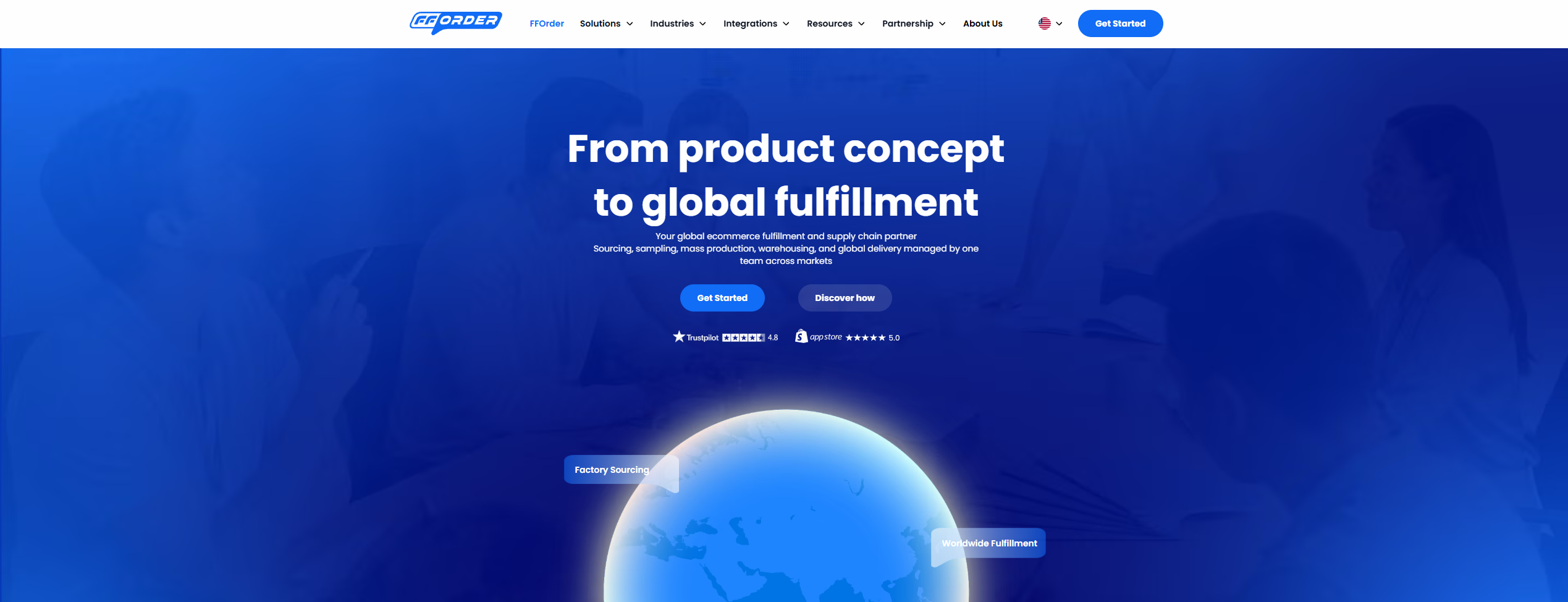
FFOrder makes most sense when the warehouse is only one part of the problem.
It can take over from an existing SKU, a supplier contact, or a product brief. The broader workflow may include sourcing, sample approval, written specifications, product-level QC, private inventory, replenishment, packaging stock, fulfillment, shipping, and after-sales coordination. That matters when the issue is a wrong label, a missing component, a changed product finish, or an insert that has not reached the warehouse—not merely a late dispatch.
The operational advantage is continuity. Approved samples and written product requirements can become references for later work. Private inventory and branded packaging can be planned together rather than held by unrelated suppliers. The custom packaging service covers sampling and execution rules for boxes, bags, labels, and inserts; its integrations connect orders, inventory, SKU mapping, tracking, and exceptions across supported stores.
FFOrder is not automatically the best fit for a locally sourced brand that only needs standard US or EU storage and dispatch. It is most relevant when product control, inventory, brand presentation, and customer delivery need to be managed as one operating system.
2、NextSmartShip — Best for Technology-Led Ecommerce and Crowdfunding
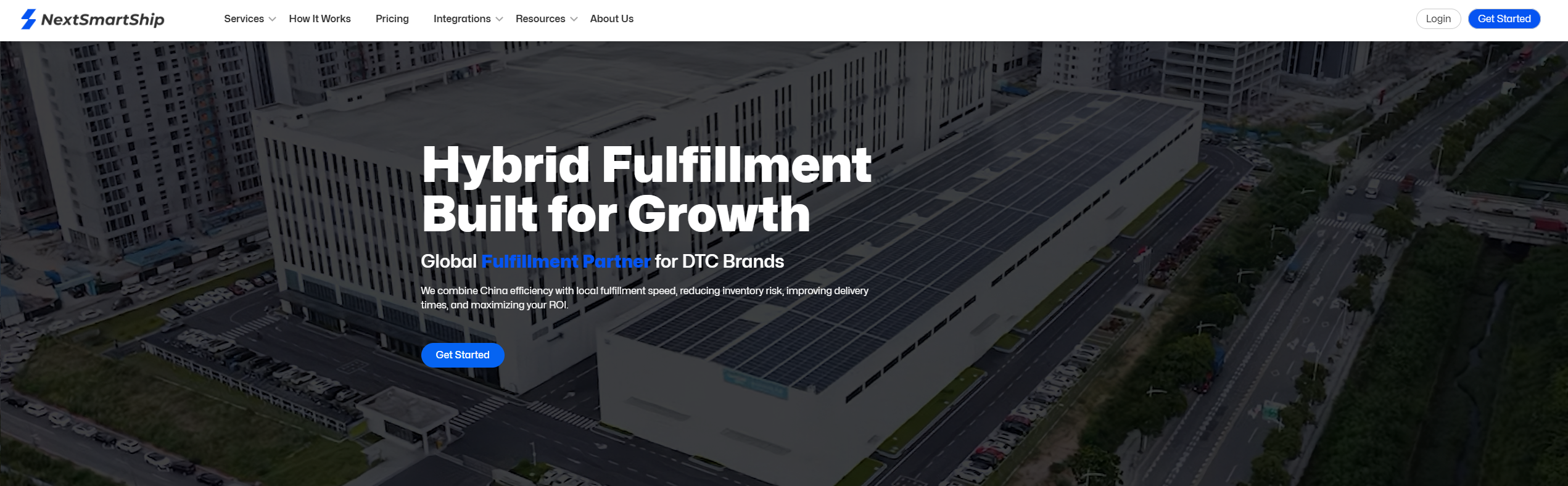
NextSmartShip is built around structured ecommerce fulfillment. Its public services include DTC fulfillment, subscription boxes, custom packaging, crowdfunding support, and Amazon FBA prep.
That makes it a credible option for campaign rewards, recurring boxes, bundles, or marketplace stock that needs labeling and preparation before it moves. The useful due-diligence work is not admiring the integration list; it is testing how orders enter the system, how inventory changes are reflected, and how tracking and exceptions make their way back to the store.
Before signing, ask for the commercial detail behind the standard flow. Subscription assembly, crowdfunding projects, FBA prep, custom packaging, special labeling, and non-standard inventory work may not be priced like a simple one-item order. Storage terms, assigned facilities, project fees, and monthly requirements should be clear before inventory is transferred.
3、SendFromChina (SFC) — Best for Established China Warehousing and Global Parcel Fulfillment
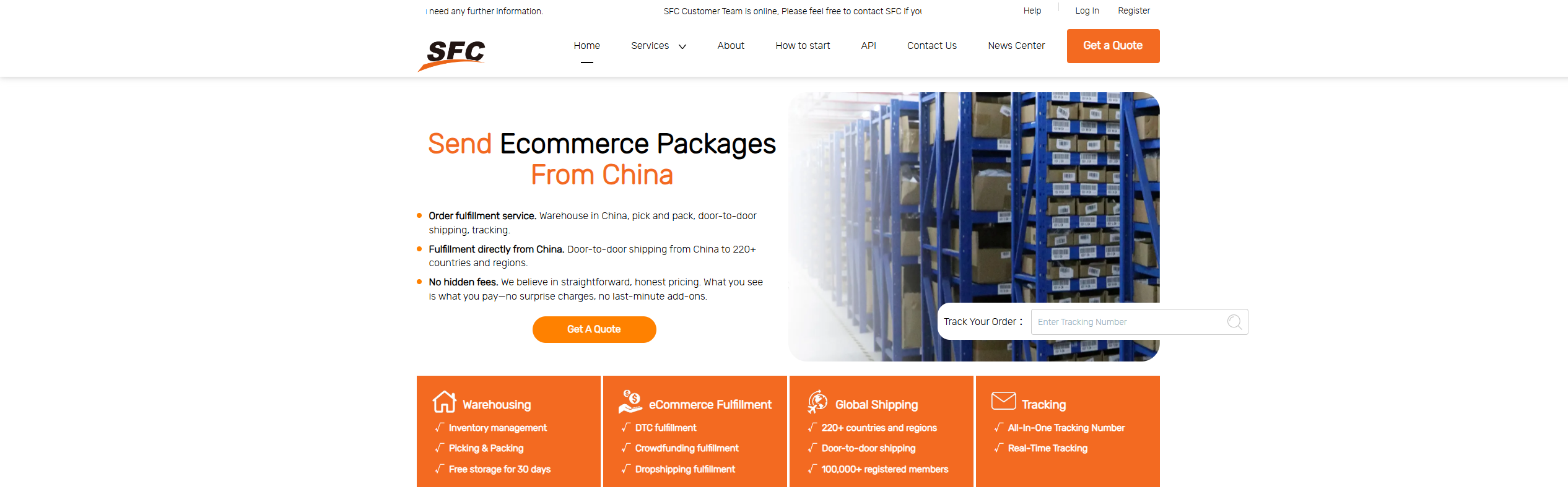
SendFromChina is a China-based ecommerce fulfillment provider built around the warehouse-to-customer model. Its site lists warehousing, order fulfillment, pick and pack, inspection, value-added work, crowdfunding fulfillment, Amazon prep, platform integrations, and international shipping.
SFC is a reasonable shortlist candidate for sellers with finished inventory that need one China-based operation to receive, store, process, and ship customer orders. It is also relevant for campaigns and brands that want several parcel-shipping options under one fulfillment relationship.
Avoid treating any headline delivery claim as a universal outcome. Price, transit time, customs handling, claims, and returns depend on the destination, product, carrier line, declared value, and service level. A useful quote should model the actual order mix—and explain what happens when a parcel is undeliverable or comes back.
4、ChinaDivision — Best for Low-Entry China 3PL and Store API Access
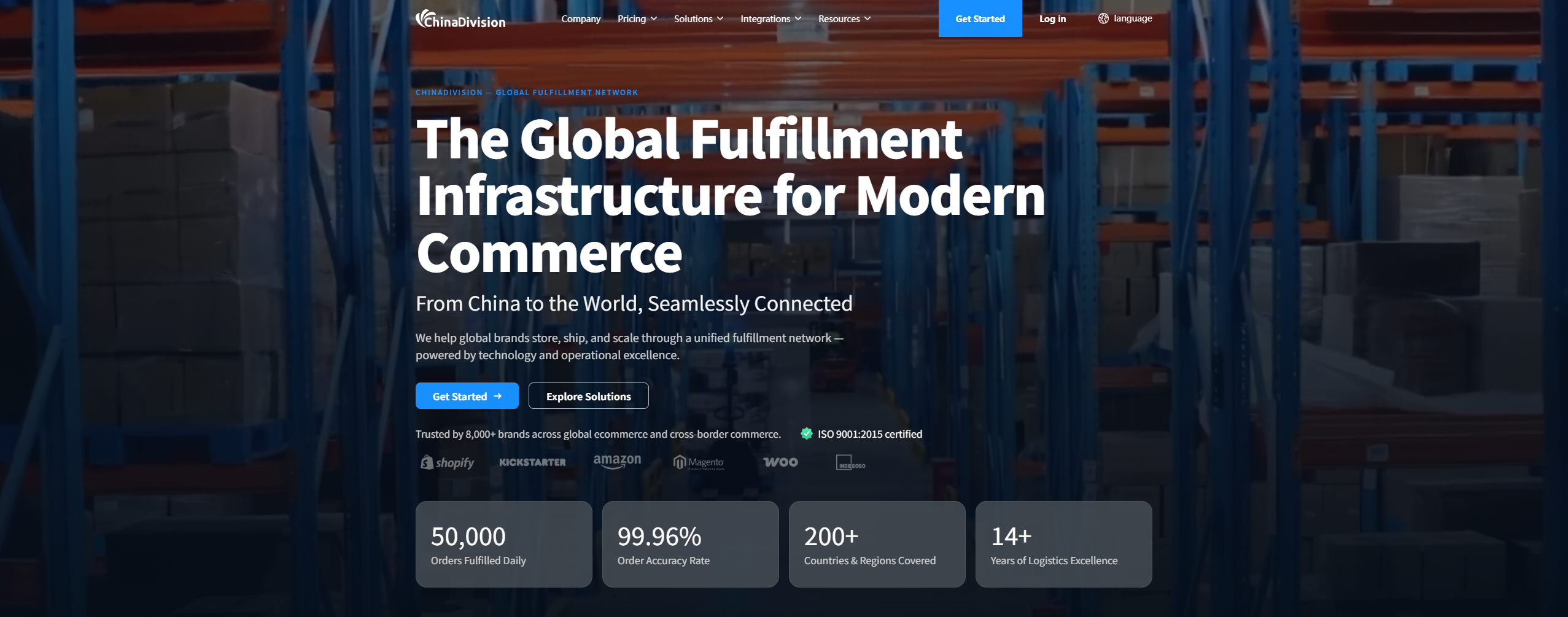
ChinaDivision positions itself around system access and a lower barrier to entry. Its public pricing page says the Store API is free and that there is no minimum order quantity. The API is intended to synchronize orders, inventory updates, and tracking across supported channels.
That can be useful for a seller that wants to connect a store quickly or start with modest volume. But free access and free execution are different things. Receiving, storage, pick and pack, packaging, shipping, returns, and project work can still create a bill. Ask for a line-item model instead of treating “no minimum” as a summary of the commercial relationship.
Confirm the assigned warehouse, inbound procedure, storage basis, inventory-discrepancy process, and any limit on sourcing or product-level QC before onboarding.
5、Wefulfil — Best for Shopify Brands Serving Europe and Australia from China
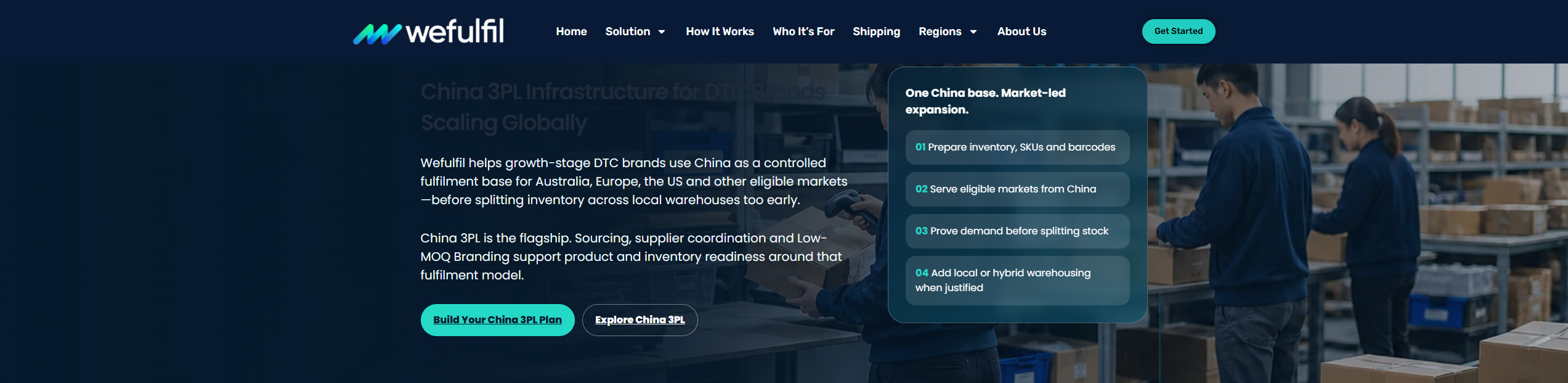
Wefulfil presents itself as a China-based 3PL for DTC brands, with a particular emphasis on Europe and Australia. Its Shopify listing covers product sourcing, low-MOQ branding, warehousing, cross-border fulfillment, inventory, tracking, labels, and custom inserts.
For a Shopify brand that wants China-side stock without opening local warehouses in every market, that regional focus can be more useful than a generic global-delivery claim. The real question is whether the available route fits the SKU and destination.
Delivery expectations, DDP availability, tax treatment, remote-area charges, and product restrictions should be checked market by market. A route that works for a lightweight parcel into Australia may be the wrong choice for a regulated product, a bulky item, or a category with frequent returns.
6、Fulfillmen — Best for Flexible Sourcing, Storage and Global Shipping
Fulfillmen combines sourcing, storage, pick and pack, branded packaging, multi-carrier shipping, and global fulfillment. Its public positioning includes no minimums and no lock-in.
The offer suits brands that would rather not split supplier coordination, warehousing, packaging, and delivery across separate vendors. Still, the word “sourcing” can mean many things. It may stop at supplier discovery, or it may include sampling, production communication, inspection, packaging approval, and replenishment. Those are not interchangeable services.
Before committing stock, define whether QC is product-specific, whether an approved sample can guide checks, and who owns the communication when a supplier issue affects warehouse inventory or customer orders. The broad service menu is useful only if the responsibility boundaries are equally clear.
How Much Does a China 3PL Cost?
A low pick fee is not the same as low fulfillment cost.
The invoice can start before the stock reaches the shelf. Supplier collection, domestic freight, consolidation, receiving, counting, labeling, inspection, and mixed-carton handling may all be separate charges. Storage can be billed by pallet, shelf, bin, unit, or cubic volume, sometimes with extra rules for slow-moving stock.
Outbound work has its own layers. A first-item pick fee may be followed by an additional-item charge. Kitting, relabeling, inserts, branded boxes, gift notes, photography, or a special packing instruction can add labor and materials. None is unusual; they simply need to be visible in the quote.
Shipping is normally the largest moving part. Packed dimensions, actual or dimensional weight, destination, service level, product category, and carrier route all affect the final rate. Fuel, peak-season, remote-area, and address-correction surcharges can sit outside the base shipping line. Ask whether each route is DDP or DDU, and who owns duties, taxes, customs paperwork, and importer obligations.
Returns can add receiving, inspection, photography, restocking, relabeling, reshipping, disposal, or stock-transfer fees. Account management, onboarding, monthly minimums, and inventory removal belong in the same calculation.
The useful comparison is total 3PL cost per successfully delivered order:
Supplier pickup + receiving + storage + fulfillment labor + packaging + shipping + surcharges + returns + account fees + minimum commitments ÷ delivered orders
Give every provider the same brief: SKUs, quantities, packed dimensions, weights, average items per order, normal and peak volume, destination mix, inventory level, supplier locations, packaging rules, and returns assumptions. Ask for a normal-month model and a peak-month model. Without the same brief, the quotes are not comparable.
China 3PL vs Local 3PL vs Hybrid Inventory
A China 3PL is useful for lightweight products, multi-market testing, long-tail SKUs, crowdfunding, and seasonal ranges. A local warehouse earns its place when orders are concentrated in one market, speed affects conversion, or returns must stay domestic.
Hybrid fulfillment separates proven demand from uncertain demand. Best-sellers sit locally; new products, slower variants, seasonal items, or backup stock remain in China. Shopify supports multi-location inventory and order-routing rules, but the operating design still needs a clear owner for each SKU. Without that, the brand gets split shipments, overselling, and unnecessary support work.
Use weight, dimensions, destination concentration, delivery expectations, return rate, importer capability, inventory turnover, margin, and packaging complexity to decide. The goal is not to commit every SKU to one warehouse forever. It is to put each product where the balance of speed, total cost, and inventory risk makes sense.
How to Choose a China 3PL Provider
A provider should be able to explain how inventory moves from supplier to customer—not just send a rate card.
Start with the facility. Ask for the address, operating entity, and whether the warehouse is owned, leased, or managed by a partner. Then work through supplier delivery, collection, receiving, counting, labeling, discrepancies, and the time required before stock becomes sellable.
Test the system with real data. Which order, SKU, inventory, cancellation, fulfillment, tracking, and return fields sync with the store? If the product has bundles, lots, serial numbers, or expiry dates, ask to see the warehouse process rather than a dashboard screenshot.
Define QC without vague language. Quantity checks, visual inspection, functional testing, accessory counts, label verification, and checks against an approved sample are different tasks. Document what is included and what needs a separate inspection project.
Separate the commercial terms: product MOQ, packaging MOQ, storage requirements, order minimums, and minimum monthly spend. Request each cost line—supplier pickup, receiving, storage, first and additional picks, materials, kitting, shipping, returns, and inventory removal—on its own.
For each route, confirm DDP or DDU treatment, importer responsibility, duties, taxes, restricted-goods handling, dimensional weight, remote-area fees, and peak surcharges. Finally, ask who owns lost parcels, damage, wrong SKUs, refused deliveries, and returns. A claim process should state the required evidence, decision owner, escalation path, and available remedy.
Pilot One SKU Before Moving Inventory
Do not begin with the full catalog. Start with one SKU that has steady demand and clear product and after-sales records.
Freeze the test conditions: product version, variants, accessories, packed dimensions, destination, shipping service, packaging, and volume. Approve a physical sample and write the QC points down. “Please inspect quality” is not an operating instruction.
Send the same brief to two or three providers. Test supplier delivery or receiving, inventory availability, order import, SKU mapping, pick and pack, tracking write-back, cancellation handling, and one real exception.
Place a genuine order to the destination market. Check the final invoice, delivery, packaging, tracking, support response, and how the provider closes a problem—not just how quickly a sales contact replies. Compare the total cost per delivered order. If the pilot works, expand to a related SKU or a second market.
For broader operating context, read FFOrder’s dropshipping fulfillment guide and its comparison of ecommerce fulfillment platforms.
Frequently Asked Questions
What is the best China 3PL provider for ecommerce?
There is no universal winner. FFOrder suits brands that need sourcing, product-level QC, inventory, branded packaging, and fulfillment connected. NextSmartShip fits structured ecommerce, crowdfunding, and FBA-prep workflows. SFC and ChinaDivision are practical standard fulfillment options. The best choice depends on the SKU, markets, volume, and required responsibility boundary.
What services does a China 3PL provide?
A China ecommerce 3PL can receive inventory, store it, manage SKUs, pick and pack orders, apply packaging or inserts, arrange cross-border shipping, return tracking to the store, and support returns. Some add sourcing, QC, kitting, FBA prep, and branding.
What is the difference between a China 3PL and a freight forwarder?
A 3PL manages warehouse operations and individual orders. A freight forwarder mainly coordinates transport, booking, customs paperwork, or bulk delivery and may never hold SKU-level stock.
How much does a China 3PL cost?
Costs can include receiving, storage, picks, packaging, shipping, surcharges, returns, account fees, and minimum commitments. Compare total cost per successfully delivered order using the same operating profile.
Can a China 3PL integrate with Shopify?
Many can through an app, API, or direct connection. Confirm that orders, inventory, cancellations, tracking, bundles, returns, and fulfillment locations actually sync.
Do China 3PL providers require an MOQ?
It varies. No order minimum does not rule out product, packaging, storage, project, or monthly-spend requirements. Ask about each separately.
Can a China 3PL perform QC and custom packaging?
Many provide receiving checks, labels, inserts, kitting, and branded materials. Product-level QC against a sample or written specification should be scoped and priced explicitly.
Should I use a China 3PL or a US warehouse?
China fulfillment is useful for supplier proximity, flexible replenishment, long-tail SKUs, and multi-market testing. A US warehouse is usually better for stable US demand, faster delivery, and local returns.
Can I use China and local inventory together?
Yes. Keep proven best-sellers locally and use China inventory for testing, long-tail SKUs, seasonal products, replenishment, or backup stock. Clear routing and inventory rules are essential.
How do I test a China 3PL before sending inventory?
Pilot one stable SKU in one destination market. Test receiving, inventory, store data, packaging, tracking, support, and an exception before expanding.
Conclusion
A standard China 3PL is enough when the product is finalized, suppliers are under control, and the job is warehousing, pick and pack, and cross-border dispatch.
FFOrder is more relevant when those steps still need to be joined: sourcing, samples, product-level QC, private inventory, branded packaging, and order fulfillment. Rather than handing work from supplier to inspector to warehouse to carrier, the brand can run the workflow through one operating partner.
FFOrder Team
FFOrder helps growing brands run dropshipping and fulfillment as one system — from sourcing across 40,000+ factories to global shipping and structured after-sales.
Find the Right China 3PL Setup
Share your core SKUs, supplier locations, destination markets, normal and peak order volume, inventory position, packaging requirements, and current fulfillment challenges with FFOrder.
-1200x628%20(14).png)