
AI Dropshipping in 2026: How AI, Automation, and Fulfillment Work Together
Learn how AI supports product research, store building, marketing, and order automation—and why reliable fulfillment and human oversight still determine the customer experience.

- AI dropshipping is traditional dropshipping enhanced by AI and workflow automation; it is not a separate fulfillment model.
- AI can accelerate product research, review analysis, store content, creative testing, and routine customer communication.
- Automation can synchronize inventory, transfer orders, update statuses, return tracking information, and route exceptions for review.
- AI and automation depend on accurate supplier data, inventory records, SKU mapping, permissions, and operating rules.
- Product approval, compliance, supplier management, quality control, packaging tests, and complex refunds still require human judgment.
- AI generates and recommends, automation moves information, and fulfillment handles the physical product.
- A supplier or fulfillment partner is still required to source, inspect, store, pick, pack, ship, and support physical orders.
- FFOrder connects ecommerce orders with sourcing, quality control, inventory, fulfillment, global shipping, tracking, customization, and after-sales support.
Introduction
AI can move a dropshipping idea from research to market much faster than a small team could manage on its own. It can narrow a product list, pull patterns from customer reviews, draft a Shopify page, produce ad variations, and monitor changes in price, stock, orders, and tracking.
To follow that workflow, this article uses LumaNest as a working example: a two-person Shopify store testing a rechargeable cordless table lamp in Europe. AI helps the team develop a “no wiring required” angle, prepare the first product page, and create ten short-video hooks. One ad catches on, bringing in 500 orders over three days.
At that point, content is no longer the bottleneck. The team has to confirm that the lamp matches the listing, the black and white SKUs are mapped correctly, and enough stock is actually available. Then the physical fulfillment workflow begins: inspection, packing, dispatch, tracking, and dealing with orders that arrive late, damaged, or incorrect.
That handoff—from generating demand to delivering the order—is where most explanations of AI dropshipping become vague. AI can accelerate research and content. Automation can move information between systems. Neither can inspect a lamp, pack a parcel, or take responsibility for what reaches the customer.
Why Does AI Dropshipping Matter in 2026?
Running a dropshipping store rarely comes down to one difficult job. The pressure comes from accumulation: another product to check, another supplier price to catch, another campaign to prepare, another customer asking where an order is.
The Work Builds Up Quickly
Before a listing goes live, the seller has to compare products, study competitors, read customer reviews, check supplier pricing, and turn that information into a page customers can understand. Once sales begin, the workload shifts to inventory changes, new ad material, order issues, tracking requests, and customer support.
For a two-person team, these are not separate departments. They compete for the same hours. Time spent answering delivery questions is time not spent testing products. A supplier price change can make an active offer unprofitable before anyone notices.
AI Shortens the Test
AI reduces the distance between an idea and a market test. It can help shortlist products, extract recurring complaints from reviews, prepare store content, produce creative variations, and make early performance data easier to review. Connected automation can monitor prices and stock, pass order details to other systems, and return tracking updates.
For LumaNest, work that could have occupied several days is completed in two. The faster test is useful, but the 500 orders create a different problem: the supplier, warehouse, and shipping process now have to keep up.
AI helped the store reach the market faster. It did not turn 500 orders into 500 completed deliveries.
What Is AI Dropshipping?
AI dropshipping is traditional dropshipping with AI and automation added to selected parts of the workflow. It is not a separate fulfillment model.
AI can analyze product data, summarize reviews, draft content, prepare routine replies, and suggest a next step. Automation carries orders, inventory changes, and tracking updates between connected systems. The physical product still has to be sourced, checked, stored, packed, shipped, and supported after delivery.
The Business Model Stays the Same
The seller still decides what to sell, builds the store, attracts customers, and accepts payment. After an order is placed, a supplier or fulfillment partner prepares and ships the product.
Responsibility remains with the seller. The listing must be accurate. Pricing and delivery promises must be realistic. Refunds, damaged products, and customer complaints still need a clear response. Adding AI changes how some work gets done; it does not transfer responsibility to the software.
AI, Automation, and Fulfillment Do Different Jobs
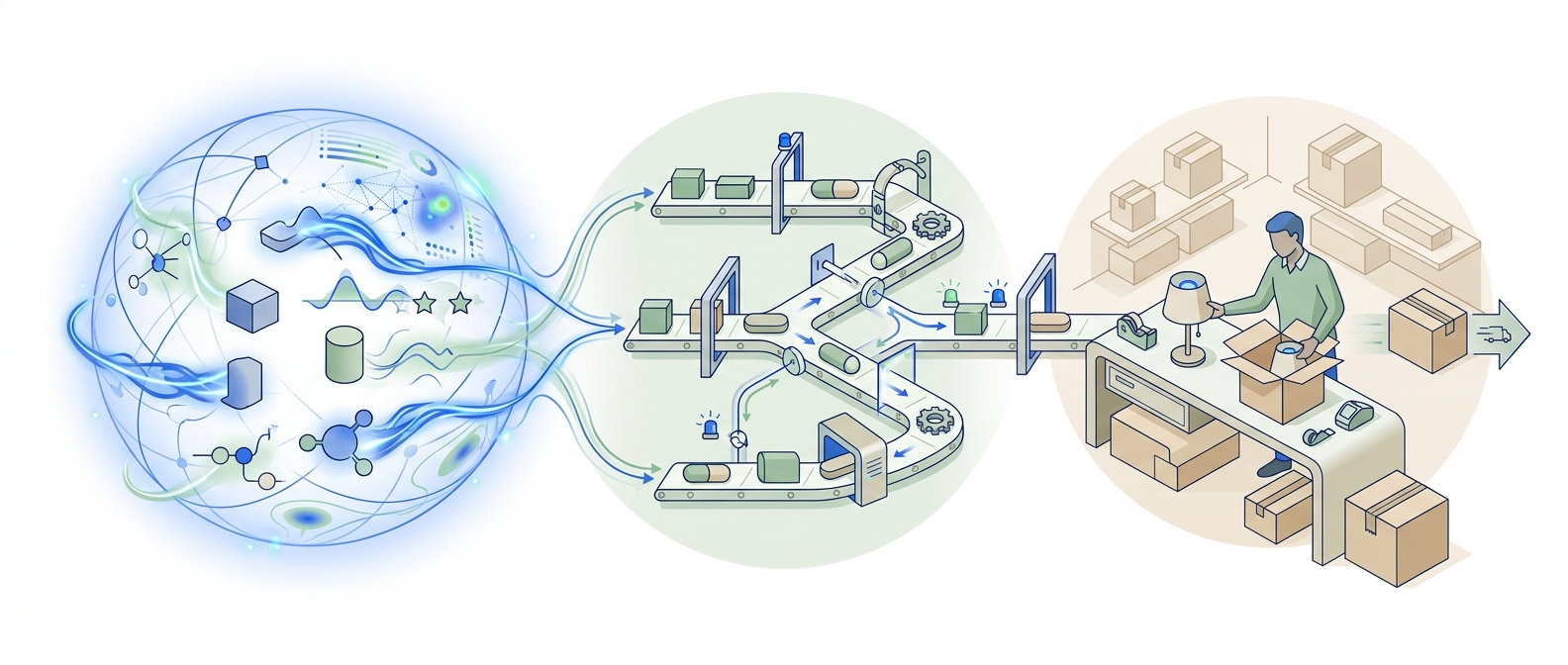
AI is useful when the team has too much information to review or needs a strong first draft. Automation is useful when a repeatable action can follow a clear rule. Fulfillment begins when a digital order has to become a real parcel.
If the black lamp is linked to the white SKU, automation may process the mistake perfectly—and ship the wrong product faster. If an AI-generated description includes a feature the supplier never confirmed, the warehouse cannot make that promise true.
AI recommends and generates. Automation moves information and triggers actions. Fulfillment handles the physical order.
What Is the Difference Between AI Chat, AI Tools, and AI Agents?
The main difference is not how intelligent they sound. It is how far they can reach.
AI Chat Works With the Context It Receives
AI chat is useful for developing ideas, writing product descriptions, summarizing reviews, planning content, or examining an uploaded spreadsheet.
Without a store connection, it cannot see live orders or current inventory. It does not know whether a supplier changed a price or whether a parcel left the warehouse. A confident answer is not evidence that the model checked the business system behind it.
AI Tools Handle Defined Tasks
Most AI tools are narrower. They generate product images, remove backgrounds, translate listings, create videos, review ad performance, or draft SEO content.
Some also connect to ecommerce platforms and include automation. The practical questions are simple: What information can the tool access, and what can it change? A video generator may create a convincing advertisement, but it cannot confirm that the advertised product is still in stock.
AI Agents Add Connections and Actions
An AI agent becomes more useful when it can work with store or operations data. Depending on its setup, it may retrieve an order, read recorded inventory, review refund patterns, compare available shipping options, or trigger a step in an existing workflow.
That access requires platform connections, permissions, and operating rules—not just a chat window. Shopify’s guidance on AI agents also emphasizes guardrails and human checkpoints for consequential actions.
An agent could send an approved order to a fulfillment system. It still cannot reach into a warehouse, inspect the item, or pack the parcel.
Faster Action Needs Tighter Limits
Address changes, cancellations, large refunds, and shipping-method changes can affect the seller, supplier, warehouse, and customer at the same time. These actions need approval thresholds and a record of what changed.
For LumaNest, a connected agent can read the 500 orders and the inventory shown in the system. If the supplier feed is stale, however, it may report stock that is no longer available. An agent can act on connected information. It cannot make that information accurate.
How Can AI Support Product Research, Store Building, and Marketing?

AI is strongest at the front of the process, where teams are sorting options, preparing pages, and testing ideas. It can make that work faster. It cannot make an unverified product ready to sell.
Product Research: Reduce the Search Space
Product research draws on search trends, competitor listings, customer reviews, social engagement, and supplier pricing. AI can bring those signals together and extract recurring complaints from large volumes of feedback.
The result should be a shortlist, not a final decision. Sellers should also compare dropshipping suppliers based on sourcing coverage, integrations, pricing, quality control, delivery performance, and after-sales support. If buyers repeatedly complain that a light is difficult to install, a simpler alternative may be worth investigating. That is a research lead, not proof of demand. Shopify’s product-research guidance still treats demand, competition, target customers, pricing, and product characteristics as separate checks.
A practical validation sequence is straightforward:
Build a shortlist instead of accepting the first AI recommendation.
Calculate product, shipping, payment, and after-sales costs.
Contact suppliers and confirm current availability.
Order samples and compare them with the supplier’s information.
Run a limited market test.
Expand only if sales and delivery results support it.
AI can reduce a long list to a few products worth checking. The sample decides whether any of them are worth selling.
Store Building: Start Faster, Then Verify
AI can draft homepage sections, product titles, descriptions, selling points, FAQs, metadata, emails, and translated versions. That removes the blank page, but it does not remove the need for an editor who has access to the product.
Materials, dimensions, functions, accessories, certifications, battery life, and delivery estimates should come from confirmed samples and supplier documentation. If the supplier has not verified a feature, the product page should not promise it.
Marketing: Produce More Tests, Not More Certainty
One product angle can quickly become several TikTok hooks, Reels scripts, Shorts concepts, UGC outlines, ad headlines, emails, and SEO drafts. Sellers that want to test demand without relying entirely on advertising can also combine these assets with an organic dropshipping strategy built around short-form content, search visibility, communities, and email.
The advantage is volume, not prediction. Change one main variable at a time—such as the hook, customer problem, product benefit, audience, or platform—then judge the result using clicks, conversions, refunds, and actual profit. An AI score is not a reason to increase the budget.
For LumaNest, review analysis points to “no wiring required” as a possible angle for renters. The sample then exposes what the screen missed: its color differs from the supplier image, the packaging lacks protection under pressure, and some generated product claims are not supported by the available documentation.
The page, advertisements, and packaging all need revision. AI can shape the offer; the product still decides what the offer can honestly promise.
Which Dropshipping Operations Can Be Automated?
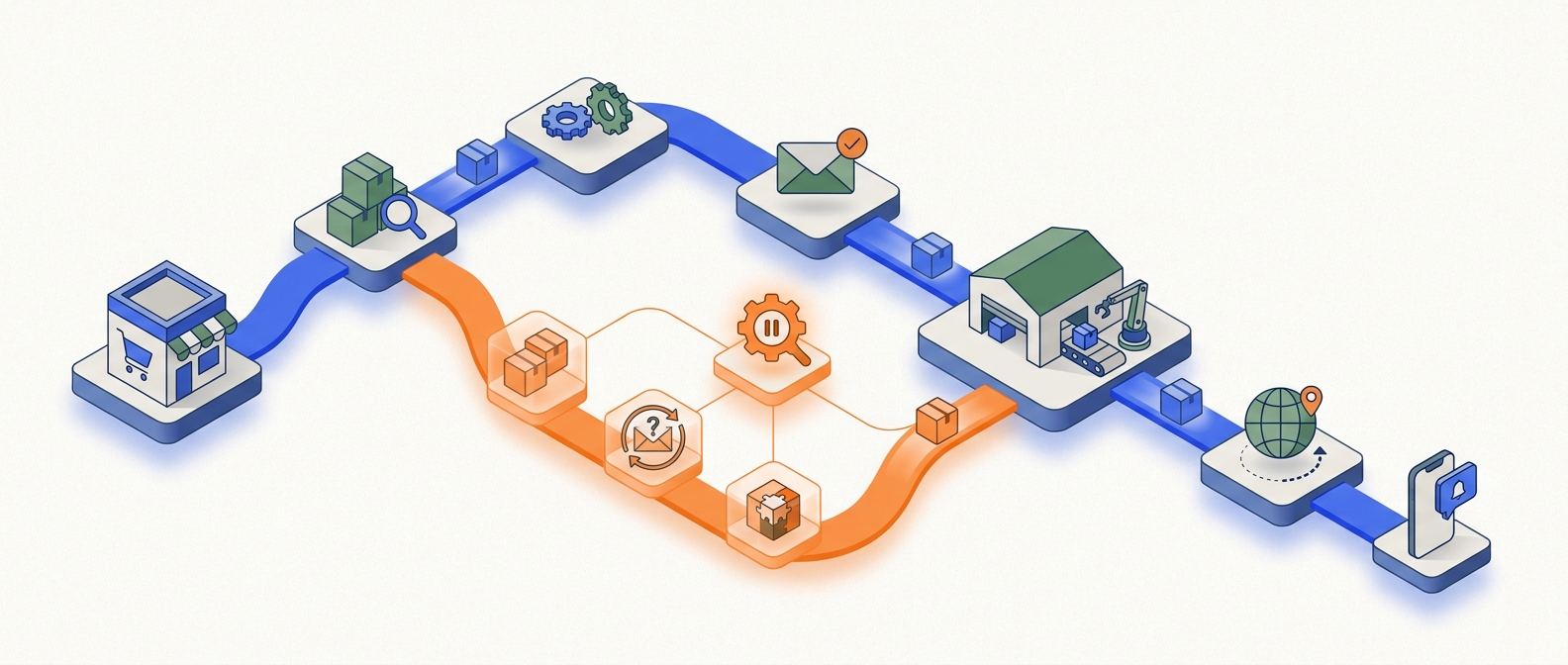
Automation earns its place after orders start arriving. Through connected ecommerce integrations, it can keep prices and stock aligned with supplier data, pass order details into the next system, return tracking updates, and handle routine customer questions. Shopify describes automated dropshipping in similar terms: connecting stores with suppliers so inventory, orders, and tracking can move without constant manual entry.
The limit is easy to miss. Automation follows data and rules; it does not confirm that either one is correct.
Price and Inventory
A connected system can watch supplier prices, update available quantities, issue low-stock alerts, and pause a listing when inventory falls below a set level. Pricing rules can also protect a minimum margin when product or shipping costs change.
This depends on the supplier feed being current. An old stock figure can leave an unavailable product on sale. A badly configured rule can keep accepting orders after the margin disappears. Useful safeguards include stock buffers, minimum-margin rules, alerts for unusual changes, and manual review outside an expected range.
Order Processing and Tracking
After checkout, automation can import the order, identify the selected variant, capture delivery details, and send the information to a supplier, warehouse system, or fulfillment partner. Status and tracking updates can then flow back to the store.
Not every order should move straight through. Shopify’s fulfillment controls allow orders to be held for inventory checks, fraud review, or other exceptions. An incomplete address, a variant change, or a cancellation request should stop the order before anything is purchased or shipped.
A tracking number is also only a piece of data. It does not prove that the correct product is inside the parcel or that the carrier has physically received it. Invalid numbers, delayed scans, and mismatched orders still need investigation.
Routine Customer Support
AI can answer common questions about delivery times, order status, and store policies. With the right connection, it can retrieve order information, summarize a complaint, and send a difficult case to a person.
The handoff should happen before the system makes a decision about responsibility or money. Quality disputes, unusual refunds, compensation, and policy exceptions rarely fit a standard reply.
Automation Can Scale the Error Too
When LumaNest’s 500 orders enter the system, most are ready to proceed. Some are not. Several addresses are incomplete, some customers want a different lamp color, a few orders appear twice, and the black and white SKUs are mapped incorrectly.
Clean orders can continue. The others need to be held for review. Without that stop, the workflow could purchase the wrong colors, create duplicate shipments, or send parcels using incomplete addresses.
Automation can process order data at speed. It cannot guarantee that the address, SKU mapping, stock figure, or supplier record is accurate.
What Can AI Still Not Do Reliably?
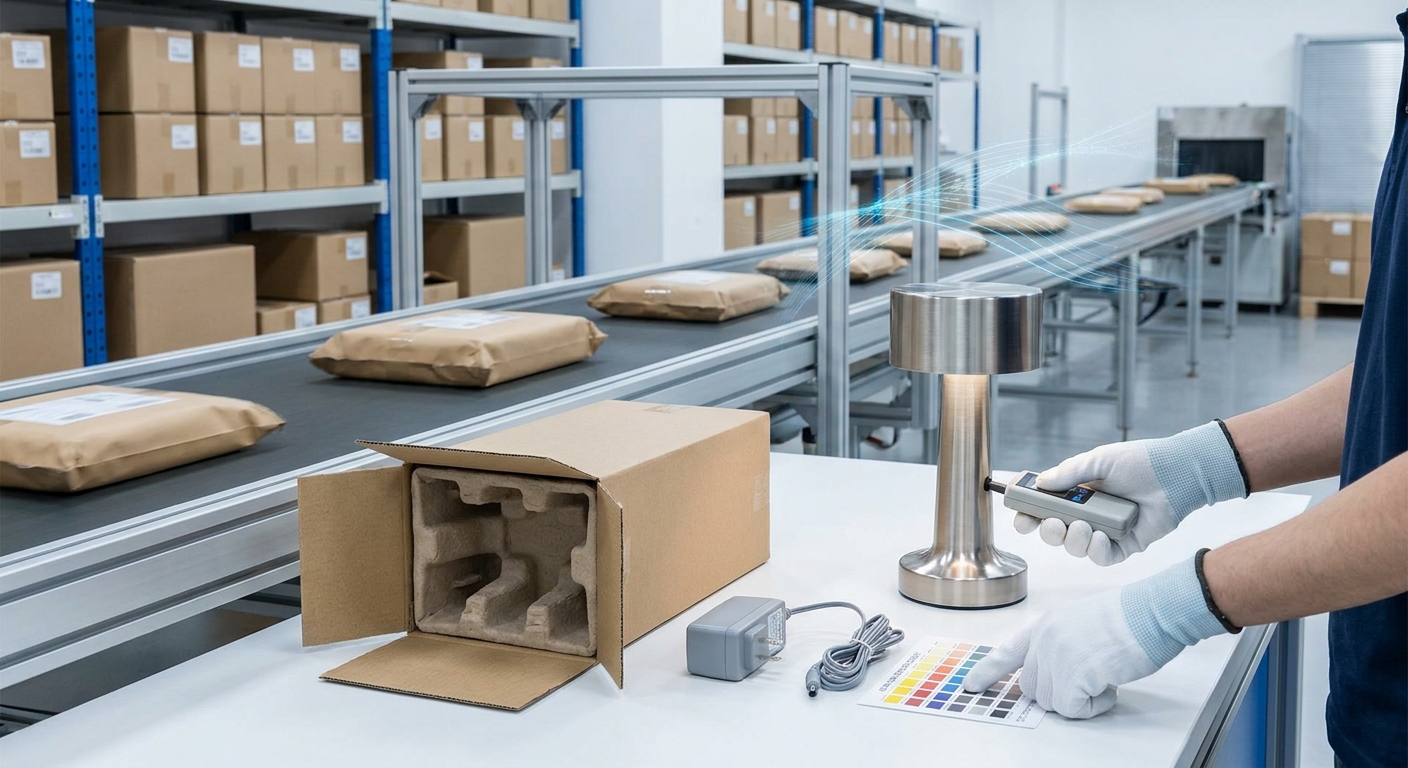
AI works well when the task is to sort information, spot a pattern, or prepare a recommendation. Its limits become clearer when the answer depends on physical evidence, commercial judgment, or responsibility for what happens next.
The Final Decision Still Belongs to the Seller
AI can compare products, estimate margins, summarize supplier information, and model possible outcomes. Every result rests on the quality of the data and the assumptions behind it.
The seller still decides whether a product fits the brand, whether the margin justifies the risk, and whether the supplier can remain reliable beyond the first order. Payment terms, production capacity, quality standards, lead times, and the response to a failed batch do not fit neatly into a score.
Compliance also requires more than a generated answer. Shopify states that dropshipping merchants are responsible for the laws and regulations governing the products they sell, just as a retailer would be.
Physical Verification Cannot Be Generated
AI can write an inspection checklist. It cannot open the sample, test the lamp, feel that the material differs from the listing, or place pressure on the box to see whether the packaging holds.
Supplier evaluation, sample approval, quality control, picking, packing, and international transport still depend on people and a reliable ecommerce 3PL fulfillment operation. When a parcel arrives damaged or goes missing, the investigation may require packing photos, warehouse records, carrier scans, and the customer’s report. AI can organize the evidence. It cannot replace it.
Responsibility Cannot Be Handed to a Model
Routine questions are suitable for automation. Decisions involving large refunds, compensation, quality claims, payment disputes, or policy exceptions need a higher bar.
Human review does not have to slow every routine case. It belongs where the cost of a wrong decision is meaningful.
Before LumaNest releases its 500 orders, the team must confirm that the lamp matches the page, the two variants are mapped correctly, the supplier can provide the required quantity, the packaging is reliable, and the shipping route suits the product.
AI can flag a possible problem. Someone still has to inspect the product, investigate the order, and take responsibility for the outcome.
At this stage, another AI tool is not enough. The seller needs an operating partner that can connect digital orders with physical supply chain execution.
How Does FFOrder Support AI-Assisted Dropshipping?
Once an order is placed, the work shifts from digital creation to physical execution. Products must be sourced, checked, packed, shipped, and supported after delivery. FFOrder connects these two sides of the business.
Connecting Orders With Execution
FFOrder’s Shopify app connects store orders with its fulfillment workflow. It supports product publishing, order processing, inventory visibility, shipment status, and tracking updates. FFOrder also works with channels including WooCommerce, TikTok Shop, Amazon, eBay, Etsy, Yampi, and Nuvemshop.
The connection reduces manual transfers, but products, variants, and SKUs still need accurate mapping. Orders with incomplete addresses or conflicting information should be held for review rather than passed directly to the warehouse.
From Sourcing to Delivery
FFOrder can coordinate supplier sourcing, quotations, samples, purchasing, and production communication. Once a sample is approved, its specifications can become the reference for quality control and bulk production.
The same operation can cover receiving, inspection, storage, private inventory, picking, packing, global shipping, tracking, and order exceptions. When a parcel is damaged, delayed, or lost, FFOrder can coordinate information from the supplier, warehouse, and logistics provider to support the appropriate resolution.
Branding After Validation
Once a product shows repeatable demand, FFOrder can support low-MOQ customization, logos, custom packaging, inserts, private inventory, OEM, ODM, and POD.
The sequence matters. Packaging and customization cannot repair weak demand or inconsistent quality. They add value after the seller understands the product, delivery performance, and reorder potential.
FFOrder’s Role
FFOrder is not an AI content tool and does not guarantee that an AI-recommended product will sell. It does not replace the seller’s brand, commercial, or compliance decisions.
For LumaNest, FFOrder turns a product decision into an executable workflow: comparing suppliers, arranging samples, confirming specifications, connecting Shopify orders, matching SKUs, checking products, packing parcels, returning tracking data, and handling exceptions.
AI helps sellers move faster. Automation connects the workflow. Fulfillment determines whether the customer receives what was promised.
FAQ
What is AI dropshipping?
AI dropshipping is traditional dropshipping with AI and workflow automation added to parts of the operation. AI supports research, content, analysis, and routine communication; suppliers and fulfillment teams still handle the product.
Can AI run a dropshipping store automatically?
Not completely. AI can take over repetitive work, but product approval, supplier management, compliance, quality control, major refunds, and business strategy still require human judgment.
Can AI find winning products?
AI can find promising candidates, not guaranteed winners. It can compare demand signals, competitors, prices, and customer reviews, but real sales, product quality, and delivery performance determine whether a product can scale.
What is the difference between AI and dropshipping automation?
AI analyzes information, generates content, and suggests actions. Automation follows predefined rules to update inventory, transfer orders, change statuses, and return tracking information.
How are AI chat, AI tools, and AI agents different?
AI chat responds to the information provided in a conversation. AI tools handle defined tasks, while connected AI agents can read business data and take permitted actions inside a store or operating system.
Which dropshipping tasks can be automated?
Price monitoring, inventory updates, order synchronization, status changes, tracking notifications, and routine support can all be automated. Address changes, SKU conflicts, cancellations, and large refunds should usually be held for review.
What still requires human judgment?
People still need to approve products, negotiate with suppliers, review compliance, inspect samples, set quality standards, test packaging, and resolve complex delivery or customer disputes.
Do I still need a supplier or fulfillment partner?
Yes. AI cannot purchase, receive, inspect, store, pick, pack, or transport a physical product. A supplier or fulfillment partner is still needed to turn an online order into a delivered parcel.
How does FFOrder support AI-assisted dropshipping?
FFOrder connects store orders with supply chain execution. Its role covers supplier coordination, quotations, samples, purchasing, quality control, warehousing, fulfillment, global shipping, tracking, and after-sales support.
Does FFOrder select products or create AI marketing content?
No. FFOrder is not an AI content or advertising tool, and it does not guarantee that a recommended product will succeed. It helps sellers execute sourcing and fulfillment after product requirements and order details have been confirmed.
When should a seller add branded packaging or private inventory?
After the product shows repeatable demand. Quality, delivery performance, refund costs, and reorder potential should be understood before the seller adds inventory or pays for customization.
Can automation prevent every fulfillment error?
No. Automation reduces manual work, but it can also process incorrect data at scale. Reliable inventory, accurate SKU mapping, clear exception rules, and human review are still necessary.
FFOrder Team
FFOrder helps growing brands run dropshipping and fulfillment as one system — from sourcing across 40,000+ factories to global shipping and structured after-sales.
Ready to Turn AI-Assisted Growth Into Reliable Fulfillment?
Connect your ecommerce orders with FFOrder’s sourcing, quality control, warehousing, fulfillment, global shipping, tracking, customization, and after-sales workflow.
-1200x628%20(14).png)